Skip to content
AgingResearch.News app

AgingResearch.NewsFree on Google Play

Open app
AgingResearch.News
  • HomeHome
  • SearchSearch
  • AskAsk
  • FollowingFollowing
  • SavedSaved
Join freeSign inSign inSign in
AgingResearch.NewsJoin free
  • Top
  • Latest
  • For you

Latest: Model organisms · Preprints · Open access

Filter

Clear filters

Evidence

  • All
  • Prevention & practice
  • Human trials
  • Human studies
  • Animals
  • Model organisms
  • Cells
  • In silico
  • Reviews

Status

  • All
  • Peer-reviewed
  • Preprints
  • All
  • Most significant
  • All
  • Open access
  • All
  • Prevention & practice
  • Human trials
  • Human studies
  • Animals
  • Model organisms
  • Cells
  • In silico
  • Reviews
  • All
  • Most significant
  • All
  • Open access
Status
  • All
  • Peer-reviewed
  • Preprints
FooterIn your assistantComparePrivacyTermsAboutStandardsContactRSSPricingFollow on X© 2026 AgingResearch.News
Sidebar

    Join AgingResearch.News

    Free: every story, saved papers, follows, the weekly email and 3 questions a day to Ask.

    Continue with email

    By continuing, you agree to our Terms and Privacy Policy.

    News

    See allSee all news
    Engineered gut bacteria increase bile acid deconjugation, improving aged mice’s metabolic healthResearchGEN +5Engineered gut bacteria increase bile acid deconjugation, improving aged mice’s metabolic healthLater-born generations reach old age with better memory and slower declineResearchMedical Xpress +1Later-born generations reach old age with better memory and slower declineCastration at 240 days extends median lifespan 32.9% in male UM-HET3 miceResearchFight Aging! +1Castration at several ages extends male lifespan and reveals age-dependent effects of testicular factors on survival.

    Trials

    See allSee all trials
    Modulation Effects of Baduanjin Exercise on Subjective Cognitive DeclineResults posted Nov 6, 2026, Massachusetts General HospitalPsilocybin Effects on Healthy Aging Biomarkers and Purpose in LifePhase 1Now recruiting Nov 17, 2026, Charles RaisonPhase I Trial of a Single Administration of aKLmRNA-Mediated Protein Replacement TherapyPhase 1Now recruiting Nov 12, 2026, Klothea Bio Inc

    Trending

    See allSee all trending stories
    SLEEPGeneOlder adults had weaker brain fluid flow waves during sleepBilobetinInterventionBilobetin eased infection-driven immune aging in miceMizagliflozinInterventionFirst trial results posted: Effect of Mizagliflozin Repeat Dosing on Adverse Events and Postprandial Glucose…LY3437943InterventionFirst trial results posted: A Study of Retatrutide (LY3437943) on Renal Function in Participants With Overweight or…Royal jellyInterventionRoyal jelly increased stem cell activity in aged miceImmune responseProcessIn the news: 9 stories this week. Immune signal keeps brown fat in a low-heat state in mice, and 1 more story this week

    Topics

    See allSee all topics
    Mechanisms386Interventions830Biomarkers544Populations822AI & data163Industry & policy36SupplementsPeptidesProtocols
    Footer
    • In your assistant
    • Compare
    • Privacy
    • Terms
    • About
    • Standards
    • Contact
    • RSS
    • Follow on X
    • © 2026 AgingResearch.News

    TodayTue, Nov 17Tuesday, November 171 paper

    bioRxiv·8 h

    Drug Repurposing of Rapamycin Mitigates Amyloid-β-Associated Proteotoxicity in Caenorhabditis elegans Models of Alzheimer's Disease

    Preprint: experiments in wormsRapamycin
    Paper

    YesterdayMon, Nov 16Monday, November 161 paper

    bioRxiv·Yesterday

    Reducing a brain-development protein shortened life in flies

    Experiments reducing Ankle2 in adult fly nerve cells also impaired movement and accelerated nerve-cell loss, suggesting a role in maintaining neurons as they age.Experiments reducing Ankle2 in adult fly nerve cells also impaired movement and accelerated nerve-cell loss, suggesting a role in maintaining neurons as they age.

    Neurons with broken branches and dense tagged protein clusters sit beside intact neurons with sparse proteins and a magnified fruit fly.
    Preprint: fly studyMechanisms
    Who was studiedAdult fruit flies
    What changedReducing Ankle2 in adult fly nerve cells shortened lifespan
    The catchReported rescue outcomes cover movement and protein accumulation, not lifespan
    Paper

    Fri, Nov 134 papers

    bioRxiv·Nov 13

    Gut cell loss and repair wait for oxygen to return in flies

    Low oxygen prepared gut cells to die and activated signals in stem cells in adult flies, but cell death and stem-cell division waited until oxygen returned.Low oxygen prepared gut cells to die and activated signals in stem cells in adult flies, but cell death and stem-cell division waited until oxygen returned.

    Fruit fly gut lining with intact gray cells beside shedding cells and dividing stem cells, surrounded by oxygen molecules and a magnified fly.
    Preprint: fly studyGut and microbiome
    Who was studiedAdult fruit flies, against flies under low oxygen
    What changedGut cell loss and stem-cell multiplication began after oxygen returned, but did not occur during low oxygen
    The catchStem-cell proliferation and intestinal length are stand-ins for restored gut function
    Paper
    bioRxiv·Nov 13

    Cell architecture shifted abruptly at midlife in worms

    Experiments in living worms tracked six internal cell structures across adulthood and found that most age-related remodeling appeared suddenly rather than gradually.Experiments in living worms tracked six internal cell structures across adulthood and found that most age-related remodeling appeared suddenly rather than gradually.

    A magnified worm curves beneath two cells, one with evenly spaced internal structures and the other with enlarged, clustered folds.
    Preprint: worm studyMechanisms
    Who was studiedCaenorhabditis elegans worms, throughout adulthood
    What changedMost remodeling of cell architecture appeared abruptly at midlife in individual worms rather than accumulating gradually
    The catchImaging excluded reproductive-cell architecture
    Paper
    bioRxiv·Nov 13

    Human protein supplied in food extends lifespan in worms
    Laboratory experiments found that worms fed the protein through bacteria lived longer and stayed healthy longer without reduced fertility.Laboratory experiments found that worms fed the protein through bacteria lived longer and stayed healthy longer without reduced fertility. HSP90 is a protein that helps other proteins keep their shape.

    A dark blue-green worm beside a folded protein has fuller tissue than a gray worm; both contain similar clusters of white eggs.
    Preprint: worm studyInterventions
    Who was studiedCaenorhabditis elegans worms
    What changedWorms fed human HSP90 through bacteria lived longer
    The catchNo numerical lifespan gain is provided, preventing assessment of the benefit's size
    Paper
    bioRxiv·Nov 13

    cWnt signaling regulates the early proliferative response and the differentiation of the neural, muscle and parenchymal tissues during planarian whole-body regeneration

    Preprint: experiments in flatwormsWnt/β-catenin signaling
    Paper

    Thu, Nov 122 papers

    bioRxiv·Nov 12

    Changes in reproductive cell structures track age in worms

    In experiments with Caenorhabditis elegans worms, an image-based clock predicted age from changes in two structures within reproductive cells.In experiments with Caenorhabditis elegans worms, an image-based clock predicted age from changes in two structures within reproductive cells.

    A magnified worm contains reproductive cells, with nearby cell clusters showing evenly arranged granules above and more varied groupings below.
    Preprint: worm studyBiomarkers
    Who was studiedCaenorhabditis elegans worms
    What changedReproductive-cell structures changed with age, allowing an image-based clock to predict worms’ chronological age
    The catchThe clock predicts chronological age, not how long worms can reproduce
    Paper
    bioRxiv·Nov 12

    Boosting a gene-regulating enzyme extended lifespan in worms

    Worm experiments showed that increasing the enzyme preserved health during aging and strengthened stress responses.Worm experiments showed that increasing the enzyme preserved health during aging and strengthened stress responses. It also reduced the age-related decline in protein breakdown by the cell’s disposal machinery.

    A large dark blue-green worm has sparse protein clumps beside a smaller gray worm packed with clumps and a cluster of folded proteins.
    Preprint: worm studyInterventions
    Who was studiedCaenorhabditis elegans worms
    What changedWorms lived longer when researchers increased the PCAF-1 enzyme
    The catchThe amount of PCAF-1 increase needed for lifespan extension is not reported
    Paper

    Tue, Nov 101 paper

    bioRxiv·Nov 10

    An elongated lifespan is associated with higher oxidative protection of flight tissue in Heliconiini butterflies

    Preprint: experiments in model organismsMechanisms
    Paper

    Mon, Nov 91 paper

    bioRxiv·Nov 9

    Tardigrades survive reversible dormancy during spaceflight: In-orbit revival, post-flight recovery, and transcriptomic responses

    Preprint: experiments in model organismsMechanisms
    Paper

    Wed, Nov 42 papers

    bioRxiv·Nov 4

    Nutrient-sensing circuit guides gut cell development in flies

    Fruit fly experiments identified signals that controlled the development of nutrient-absorbing gut cells; disrupting the circuit impaired renewal during aging and…Fruit fly experiments identified signals that controlled the development of nutrient-absorbing gut cells; disrupting the circuit impaired renewal during aging and shortened lifespan.

    Fruit fly gut tissue with many small developing cells contrasts with gray tissue with fewer developing cells, beside a magnified fruit fly.
    Preprint: fly studyNutrient sensing
    Who was studiedFruit flies
    What changedIn fed flies, PWP1 was needed for immature gut cells to become nutrient-absorbing cells and could trigger that development
    The catchThe abstract omits group sizes for the lifespan experiments
    Paper
    bioRxiv·Nov 4

    Brief stress-response activation promotes healthy aging in flies

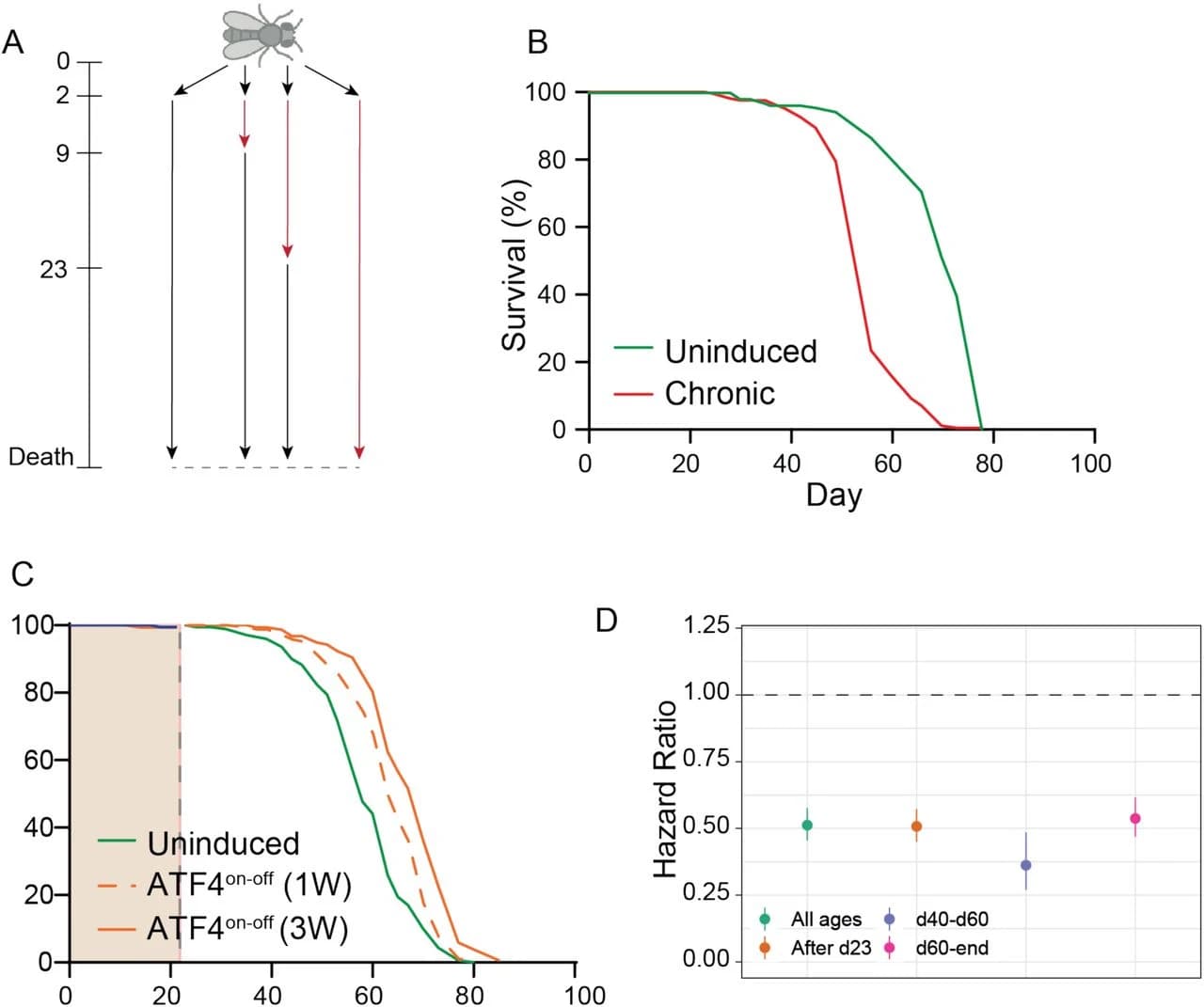
    Early-adulthood activation of a stress-response protein reduced mortality risk by approximately 50% across all ages and improved nerve and muscle function in aged flies.Early-adulthood activation of a stress-response protein reduced mortality risk by approximately 50% across all ages and improved nerve and muscle function in aged flies.

    a) Schematic diagram of the experimental setup.
    Preprint: fly studyIntegrated stress response
    Who was studiedOnce-mated female flies, one week, against uninduced vehicle-fed flies
    What changedDeath risk was lower with brief neuronal ATF4 activation than without activation (hazard ratio 0.55)
    The catchThe induction drug RU486 itself changed control survival, although effects varied in direction
    Paper

    Sun, Nov 12 papers

    bioRxiv·Nov 1

    Tardigrade stress proteins shortened lifespan in worms

    Experiments in genetically engineered worms found that each of four proteins impaired movement and reproduction and failed to improve resistance to most environmental…Experiments in genetically engineered worms found that each of four proteins impaired movement and reproduction and failed to improve resistance to most environmental stresses.

    Somatic DSUP expression reduces lifespan and healthspan C. elegans.
    Preprint: worm studyInterventions
    Who was studiedCaenorhabditis elegans worms, against wild-type control worms
    What changedWorms continuously expressing tardigrade stress proteins in somatic tissues had shorter lifespans than wild-type controls
    The catchExcluding worms with bagging, intestinal extrusion, or other non-aging deaths could bias lifespan comparisons
    Paper
    bioRxiv·Nov 1

    A persistent virus benefited flies under temperature stress

    Experiments in fruit flies found that persistent Nora virus infection extended lifespan and improved reproductive output and behavioral performance under ongoing…Experiments in fruit flies found that persistent Nora virus infection extended lifespan and improved reproductive output and behavioral performance under ongoing temperature stress.

    Fruit flies face beneath heat waves; the dark blue-green fly has virus particles and many offspring, while the gray fly has fewer offspring.
    Preprint: fly studyMechanisms
    Who was studiedFruit flies
    What changedUnder temperature stress, flies with persistent Nora virus infection lived longer
    The catchThe temperatures tested are not reported, obscuring which thermal conditions produced benefits
    Paper

    Fri, Oct 302 papers

    bioRxiv·Oct 30

    DNA copy differences tied to lifespan in seed beetles

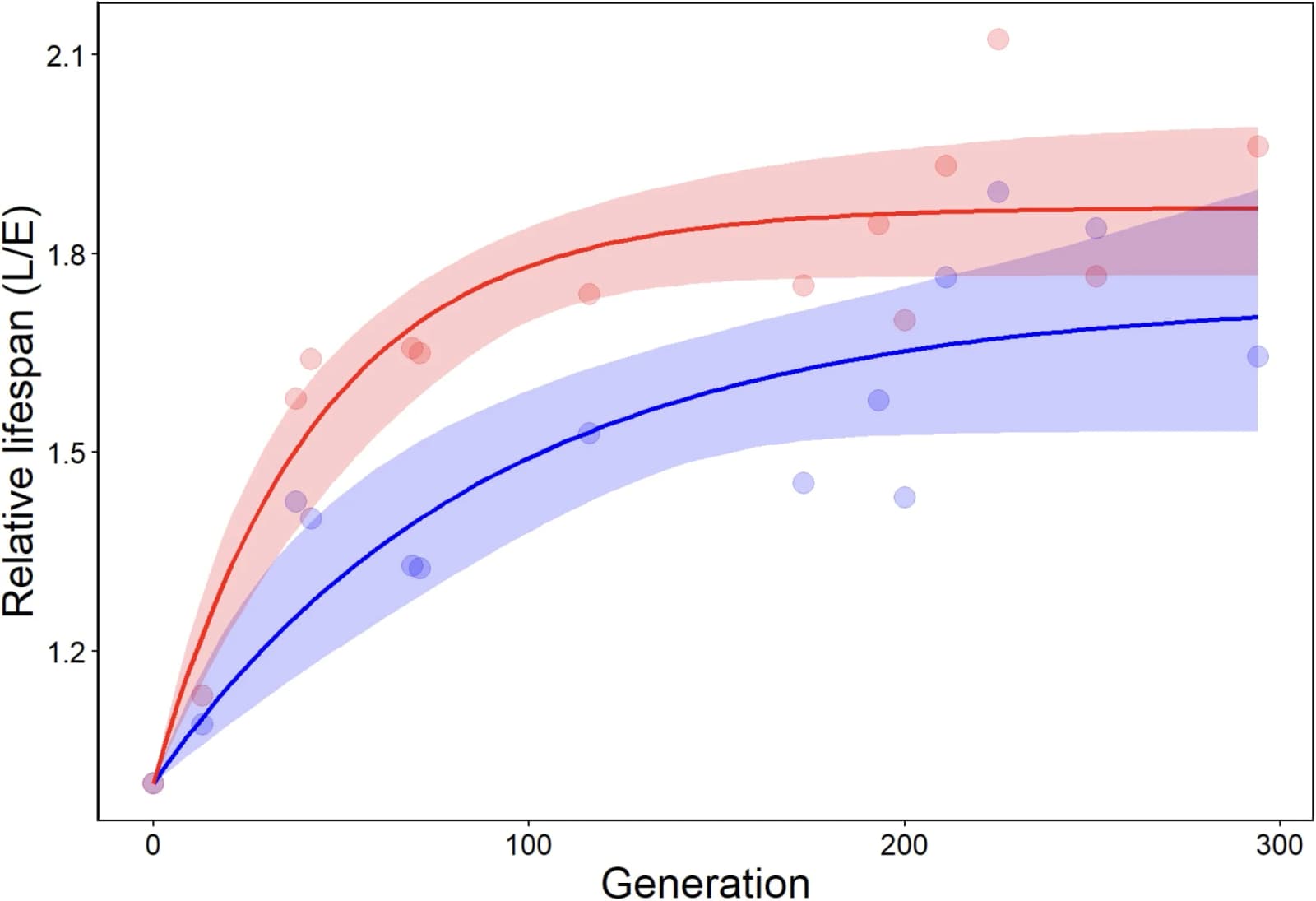
    After more than 200 generations, populations selected for long life showed a near doubling of lifespan compared with those selected for short life.After more than 200 generations, populations selected for long life showed a near doubling of lifespan compared with those selected for short life.

    Mean divergence in lifespan between L and E lines in females (red) and males (blue) over the course of experimental evolution.
    Preprint: genetic association studyMechanisms
    Who was studied1,334 seed beetles
    What changedDNA copy differences clustered near genome regions linked to lifespan in seed beetles
    The catchNearby selective sweeps can confound links between DNA copy differences and lifespan
    Paper
    Research Square·Oct 30

    Effect of Metformin on tau pathology and proteostasis in cellular and a Drosophila model of Tauopathy

    Preprint: experiments in fliesMetformin
    Paper

    Thu, Oct 291 paper

    bioRxiv·Oct 29

    A novel function of neuroligin 3: Beyond sociality, Regulating lifespan in Drosophila

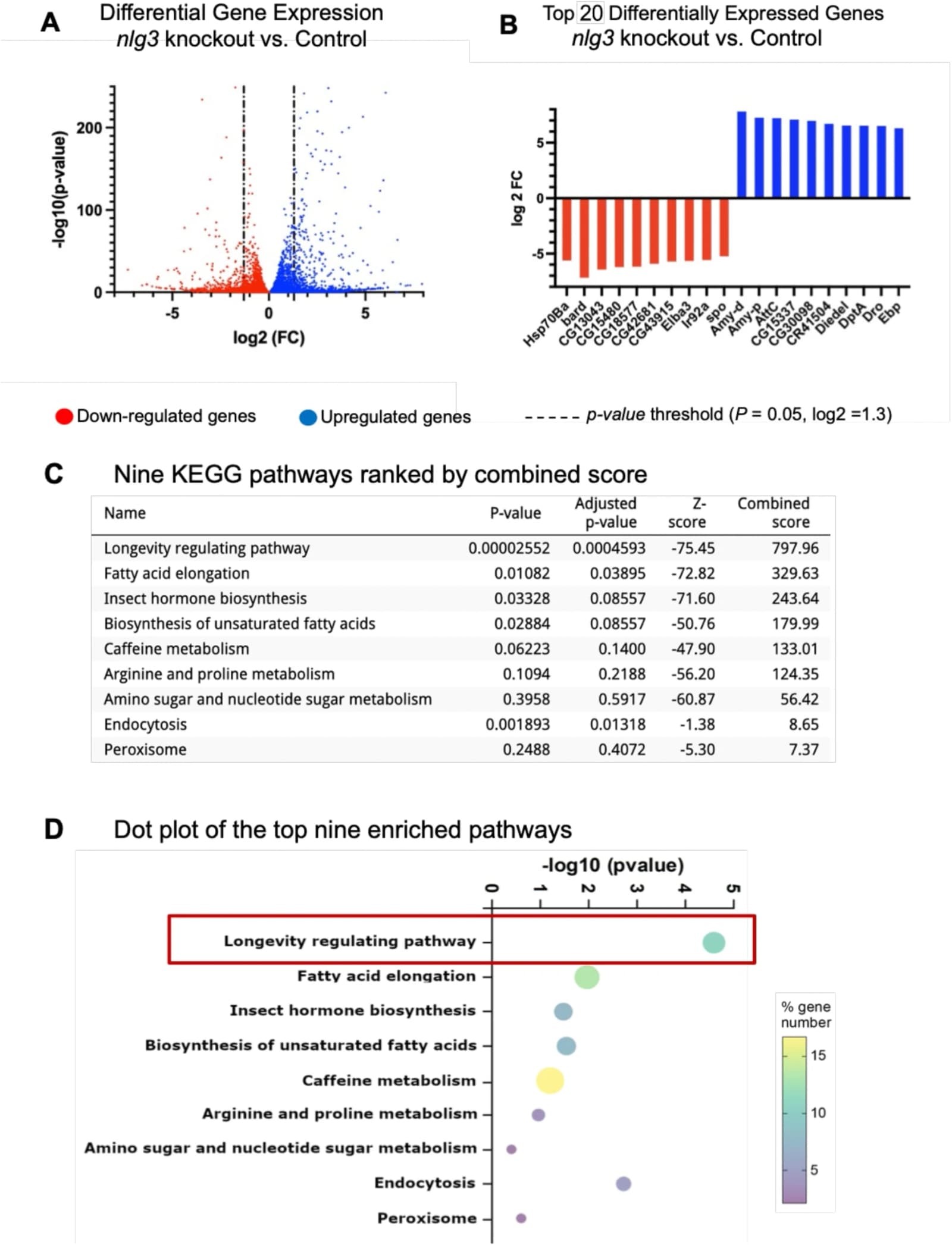
    Transcriptome changes following nlg3 loss of function.
    Preprint: experiments in fliesMechanisms
    Paper

    Sat, Oct 242 papers

    bioRxiv·Oct 24

    Androgen Receptor SUMO site mutations ameliorate toxicity in Drosophila models of SBMA

    Generation of SUMO-site mutant SBMA flies.
    Preprint: experiments in fliesMechanisms
    Paper
    bioRxiv·Oct 24

    Co-administration of simvastatin mitigates clozapine-induced lifespan extension and mitochondrial functional recovery in Drosophila melanogaster

    Survival analysis of male Drosophila melanogaster exposed to DMSO (vehicle control), clozapine (CLZ), simvastatin (SIM), or clozapine and simvastatin combined (CLZSIM).
    Preprint: experiments in fliesSimvastatin
    Paper

    Wed, Oct 211 paper

    bioRxiv·Oct 21

    Protein segment supports cellular waste breakdown in worms

    Genetic experiments also identified a role for the segment in heat resistance associated with the removal of worms’ reproductive cells. In C.Genetic experiments also identified a role for the segment in heat resistance associated with the removal of worms’ reproductive cells. In C.

    atg-16.2(ΔWD40) mutants do not show impairment in healthspan readouts.
    Preprint: worm studyMechanisms
    Who was studiedAdult C. elegans worms, against wild-type worms
    What changedWorms lacking the protein segment broke down less cellular waste in neurons than wild-type worms
    The catchLipidation measurements cannot distinguish autophagosome membranes from other membranes
    Paper

    Mon, Oct 191 paper

    bioRxiv·Oct 19

    Worms lacking a protein quality-control pathway survive stress better

    Experiments in worms found that disabling the pathway strengthened a response to protein stress and improved survival under that stress.Experiments in worms found that disabling the pathway strengthened a response to protein stress and improved survival under that stress. Researchers experimented with Caenorhabditis elegans worms carrying mutations that disabled…

    Loss of the UFM-1 pathway promotes activation of the UPRER under proteotoxic stress.
    Preprint: worm studyProteostasis
    Who was studiedYoung adult C. elegans worms, 24h, against wild-type worms
    What changedWorms lacking UFM-1 pathway components survived protein-folding stress better than wild-type worms
    The catchDTT survival was followed only through 24h, leaving later deaths uncounted
    Paper

    Sun, Oct 181 paper

    bioRxiv·Oct 18

    Warmth shifts rather than speeds transcriptomic ageing in the malaria mosquito Anopheles gambiae

    Design and the two questions it can answer.
    Preprint: experiments in model organismsMechanisms
    Paper

    Fri, Oct 161 paper

    bioRxiv·Oct 16

    Genome-wide chromatin reset at the onset of leg regeneration in pancrustaceans

    Developmental and epigenomic framework for studying leg regeneration in the cricket Gryllus bimaculatus.
    Preprint: experiments in model organismsChromatin
    Paper

    Thu, Oct 151 paper

    bioRxiv·Oct 15

    Food perception alone stimulates oviposition through serotonin signaling in Drosophila

    Yeast odor stimulates oviposition in D. melanogaster through olfactory detection.
    Preprint: experiments in fliesSynaptic transmission
    Paper

    Tue, Oct 132 papers

    bioRxiv·Oct 13

    The Neural Protective Effects of Intermittent Fasting in Adult Drosophila Following Traumatic Brain Injury Exposure

    Trauma Longevity and Mortality Profiles with Intermittent Fasting.
    Preprint: experiments in fliesIntermittent fasting
    Paper
    bioRxiv·Oct 13

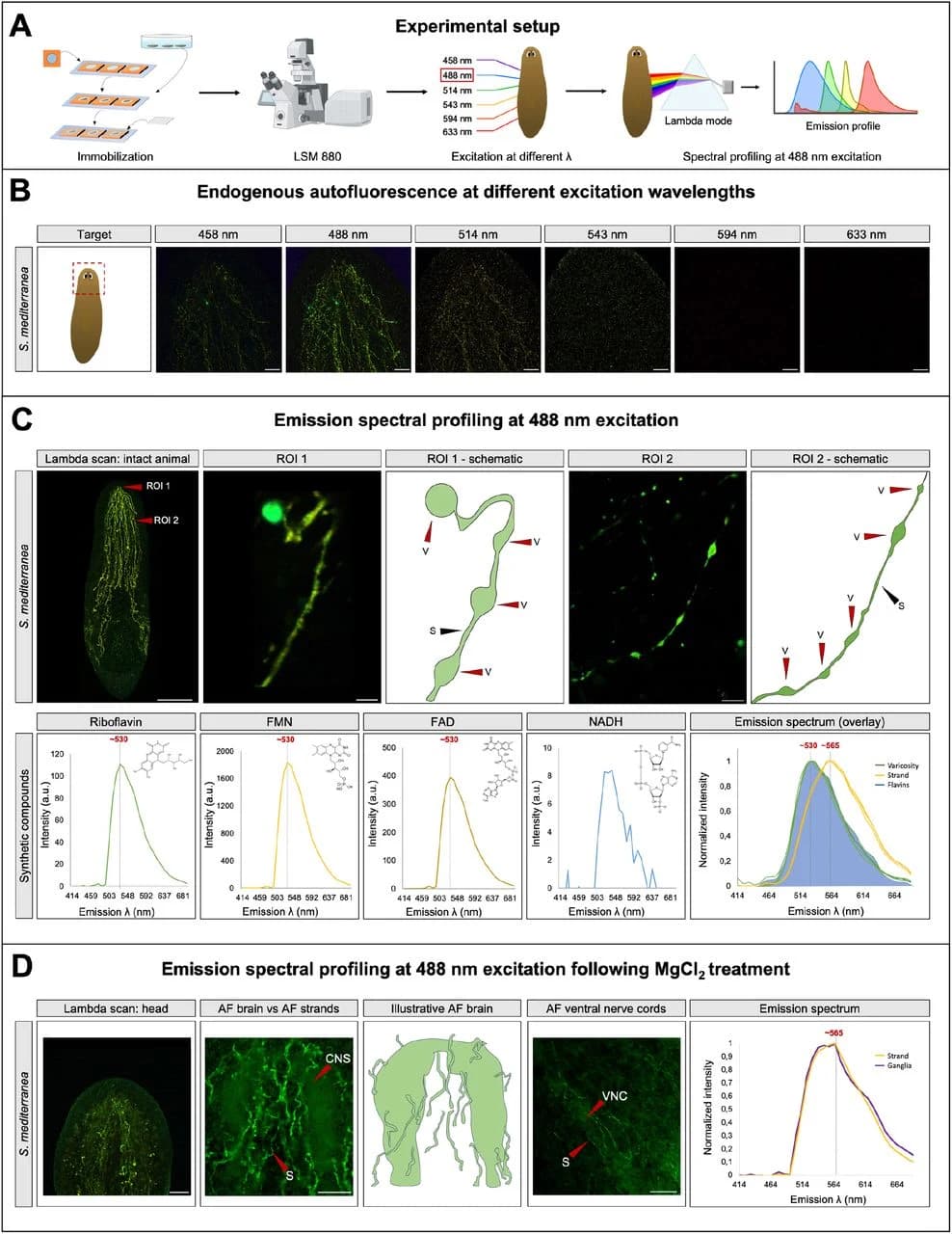
    Flavins in Focus: Vitamin B2 as a Metabolic Keystone for Neuronal Repair in Regenerating Planarians

    Spectral profiling identifies endogenous flavin autofluorescence in live Schmidtea mediterranea.
    Preprint: experiments in model organismsMechanisms
    Paper

    Mon, Oct 122 papers

    bioRxiv·Oct 12

    Chemical signals support regeneration in planarian flatworms

    Researchers examined 51 genes for signaling molecules and found that 16 supported efficient regeneration, stem cell function or both in asexual planarian flatworms.Researchers examined 51 genes for signaling molecules and found that 16 supported efficient regeneration, stem cell function or both in asexual planarian flatworms.

    Identification of planarian neuropeptide processing enzyme-encoding genes.
    Preprint: experiments in model organismsMechanisms
    Paper
    bioRxiv·Oct 12

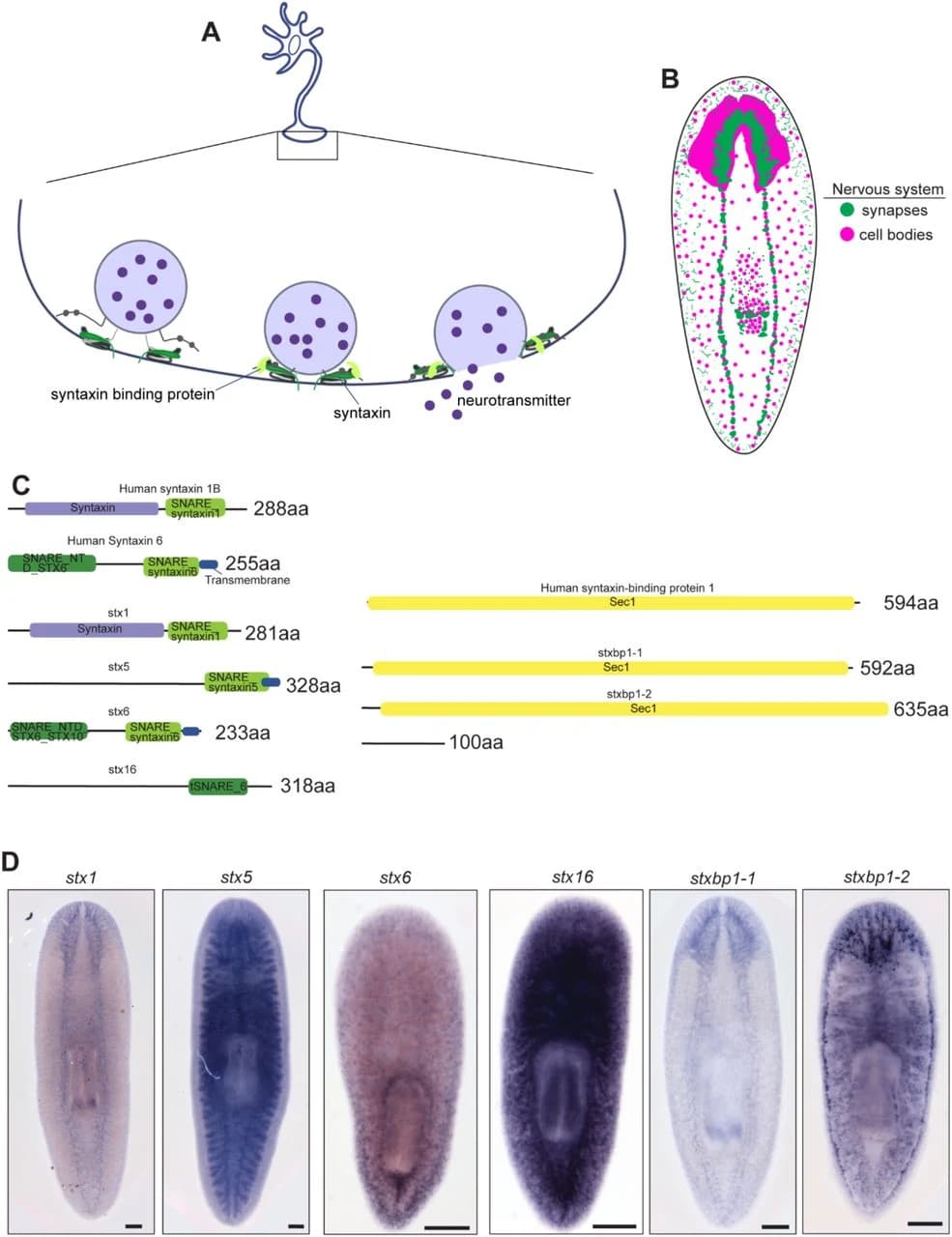
    Syntaxin-1 and syntaxin binding protein 1-1 are required for planarian behavior and brain regeneration

    Planarians have four syntaxin homologs and two syntaxin-binding protein homologs.
    Preprint: experiments in model organismsMechanisms
    Paper

    Fri, Oct 91 paper

    bioRxiv·Oct 9

    Low-dose zinc improves health and stress defense in worms

    In aged roundworms, a low dose of zinc restored organismal zinc after an approximately 90% drop in zinc-to-sulfur ratio, improving healthspan and stress resistance.In aged roundworms, a low dose of zinc restored organismal zinc after an approximately 90% drop in zinc-to-sulfur ratio, improving healthspan and stress resistance.

    Whole-body zinc declines steeply in post-reproductive animals, and late-life zinc supplementation extends survival and improves locomotion in a zinc-dependent manner.
    Preprint: experiments in wormsInterventions
    Paper

    Thu, Oct 84 papers

    bioRxiv·Oct 8

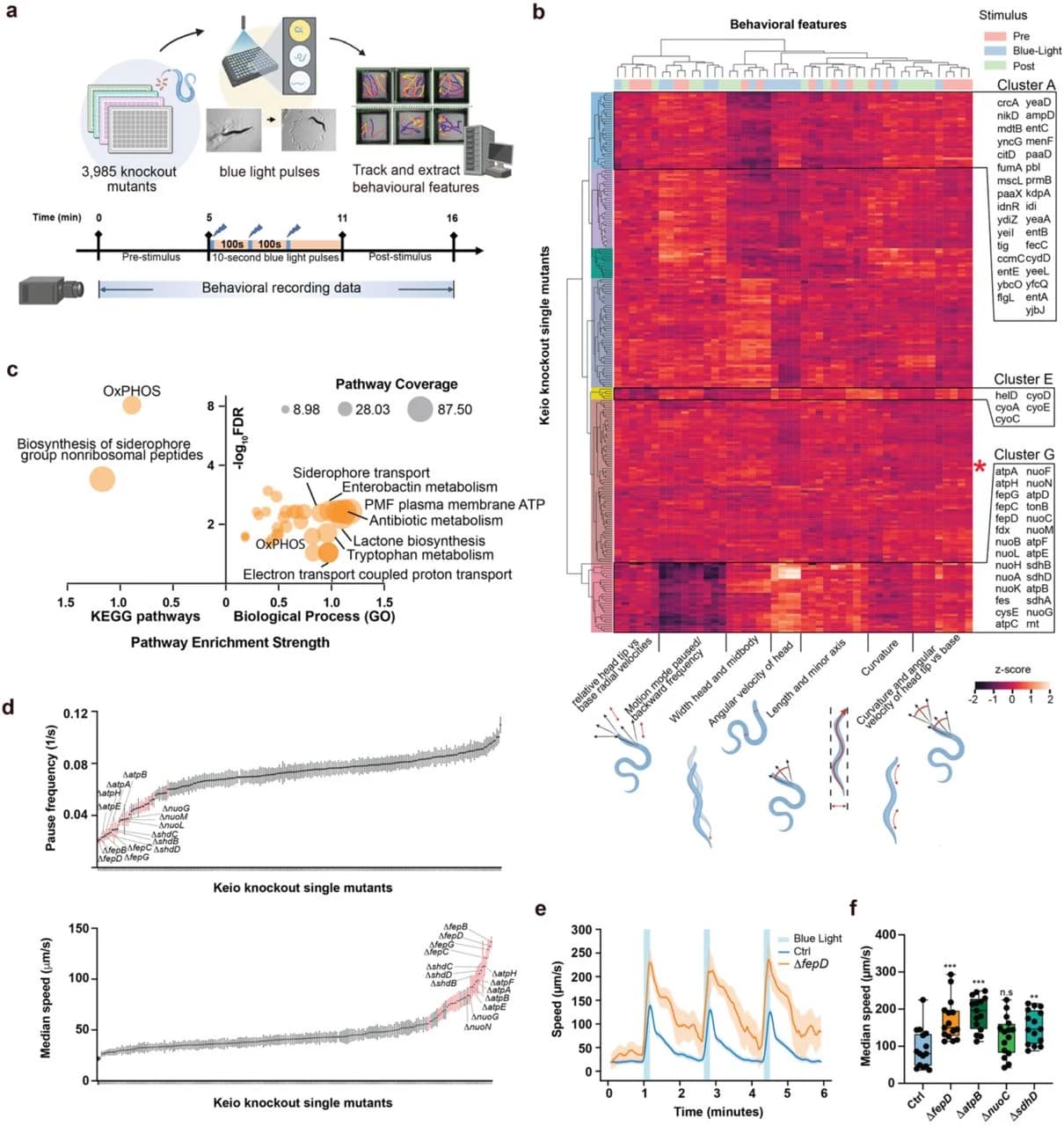
    Bacterial molecule shapes behavior and lifespan in worms

    A screen of 3,985 bacterial strains identified an iron-gathering molecule whose effects in worms depended on a stress response in cells’ energy-producing structures.A screen of 3,985 bacterial strains identified an iron-gathering molecule whose effects in worms depended on a stress response in cells’ energy-producing structures.

    Quantitative tracking reveals clusters of E. coli mutations in several pathways that affect host behavior.
    Preprint: experiments in wormsMechanisms
    Paper
    bioRxiv·Oct 8

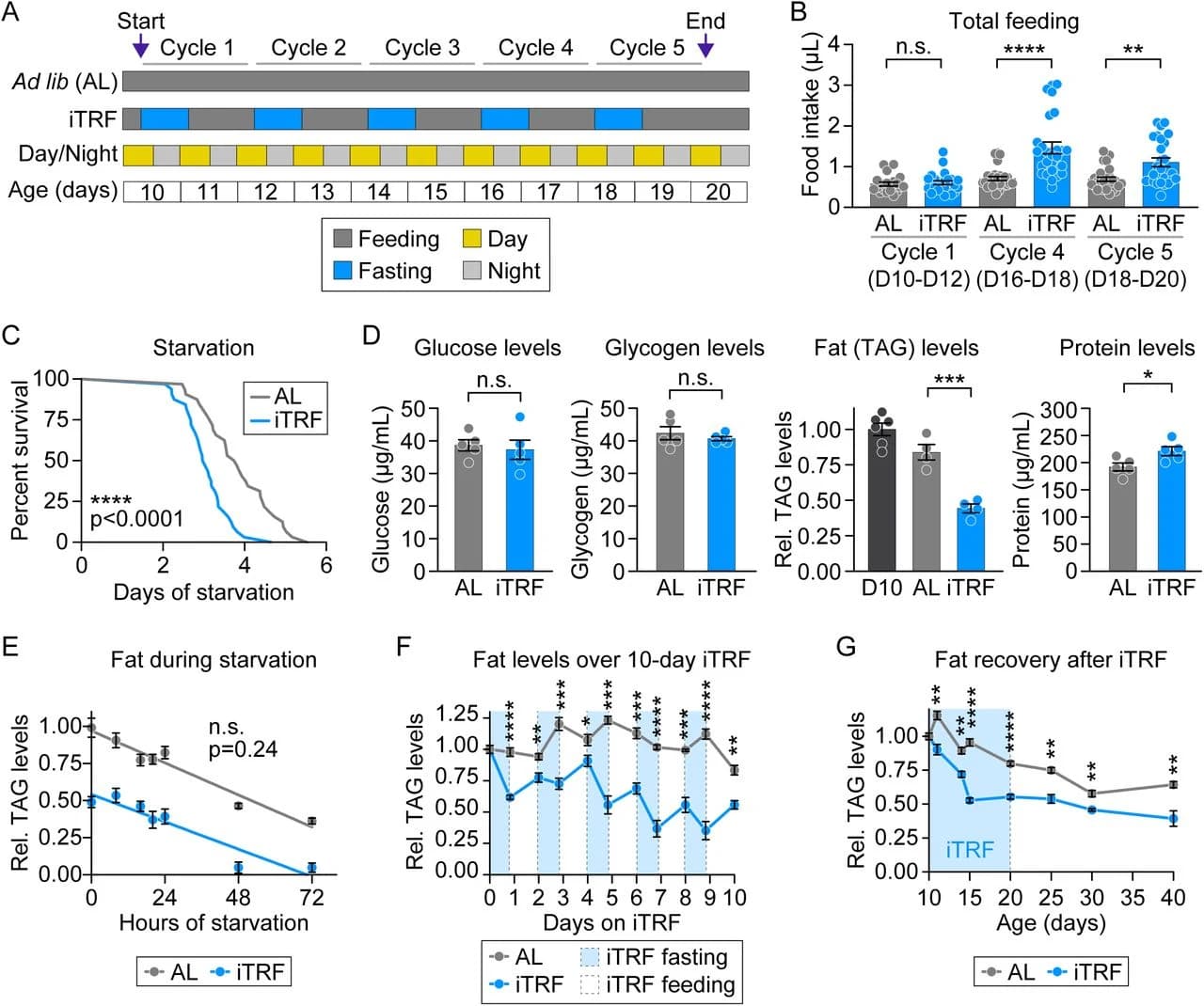
    Restricting eating hours led to lasting fat loss in flies

    In a fly experiment, ten days of restricted feeding reduced stored fat compared with unrestricted feeding, and the loss persisted when unrestricted feeding resumed.In a fly experiment, ten days of restricted feeding reduced stored fat compared with unrestricted feeding, and the loss persisted when unrestricted feeding resumed.

    Flies lose fat during intermittent, time-restricted feeding and do not regain it.
    Preprint: experiments in fliesDietary restriction
    Paper
    bioRxiv·Oct 8

    Automated screen finds drugs that help worms resist heat

    A screen of 2,782 drugs approved by US regulators identified 31 that reproducibly increased heat-stress resistance in worms.A screen of 2,782 drugs approved by US regulators identified 31 that reproducibly increased heat-stress resistance in worms. In experiments in Caenorhabditis elegans worms, researchers screened 2,782 drugs approved by US…

    Building a framework for automated worm scoring.
    Preprint: experiments in wormsInterventions
    Paper
    bioRxiv·Oct 8

    Disrupting protein entry delays signs of muscle aging in worms

    Genetic experiments in worms found that disrupting a muscle protein’s entry into cell nuclei preserved gene activity for the machinery of contraction during aging.Genetic experiments in worms found that disrupting a muscle protein’s entry into cell nuclei preserved gene activity for the machinery of contraction during aging.

    Identification of UNC-27 as a regulator of sarcomeric gene expression during adulthood.
    Preprint: experiments in wormsMuscle
    Paper

    Wed, Oct 71 paper

    Proteomics·Oct 7

    Protein comparisons identify new longevity regulators in worms

    Researchers compared five protein-measuring methods in worms with mutations in an insulin-related signaling system, then used genetic screening to identify longevity…Researchers compared five protein-measuring methods in worms with mutations in an insulin-related signaling system, then used genetic screening to identify longevity regulators.

    Summary of quantitative proteomics using different methods.
    Experiments in wormsMechanisms
    Paper

    Tue, Oct 61 paper

    bioRxiv·Oct 6

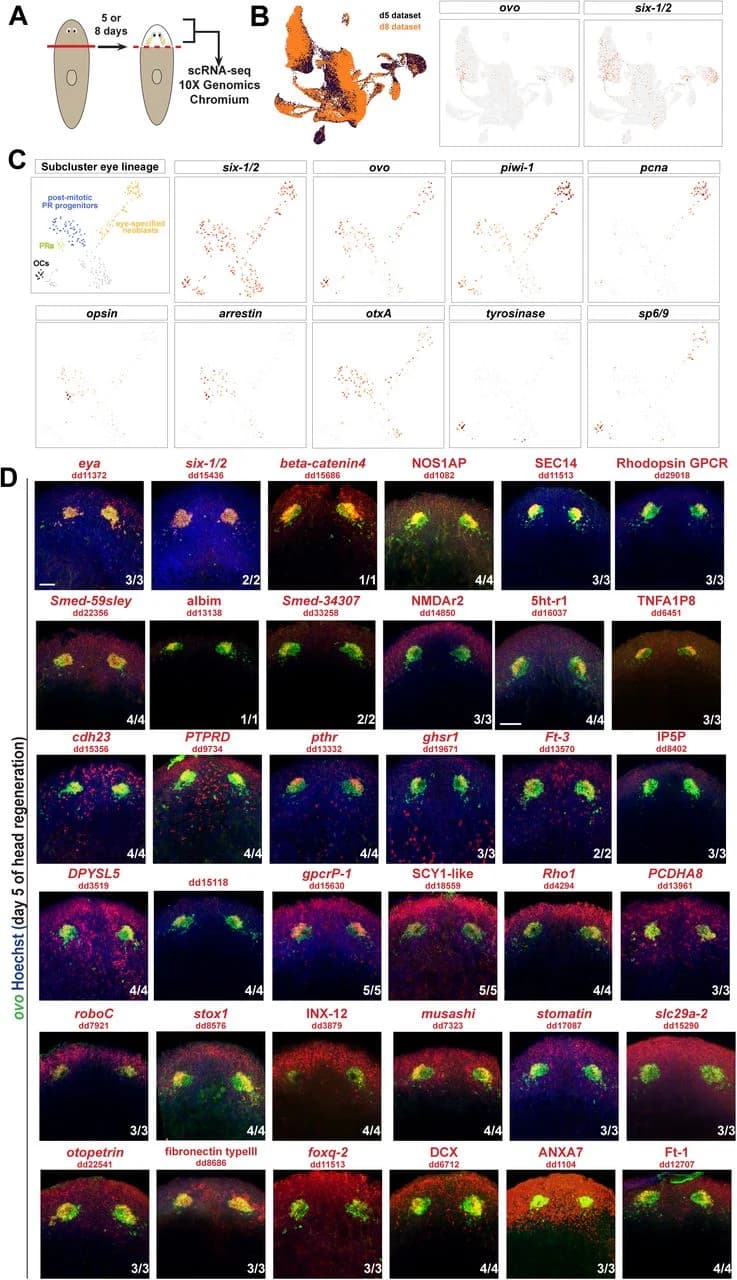
    DDR and TMEM132 genes control progenitor targeting and regenerative assembly of the planarian eye

    Single-cell RNAseq and FISH to identify genes expressed in the planarian visual system.
    Preprint: experiments in flatwormsEye
    Paper

    Mon, Oct 51 paper

    bioRxiv·Oct 5

    Restoring Tyr1R signaling aids motor function in flies

    Overexpressing the receptor in adrenergic-like neurons prolonged lifespan, restored calcium signaling, and improved locomotor performance in aged fruit flies.Overexpressing the receptor in adrenergic-like neurons prolonged lifespan, restored calcium signaling, and improved locomotor performance in aged fruit flies.

    Aging in Drosophila increases the number and area of brain vacuoles, alters brain metabolism and reduces climbing capability.
    Preprint: experiments in fliesInterventions
    Paper

    Fri, Oct 2

    bioRxiv·Oct 2

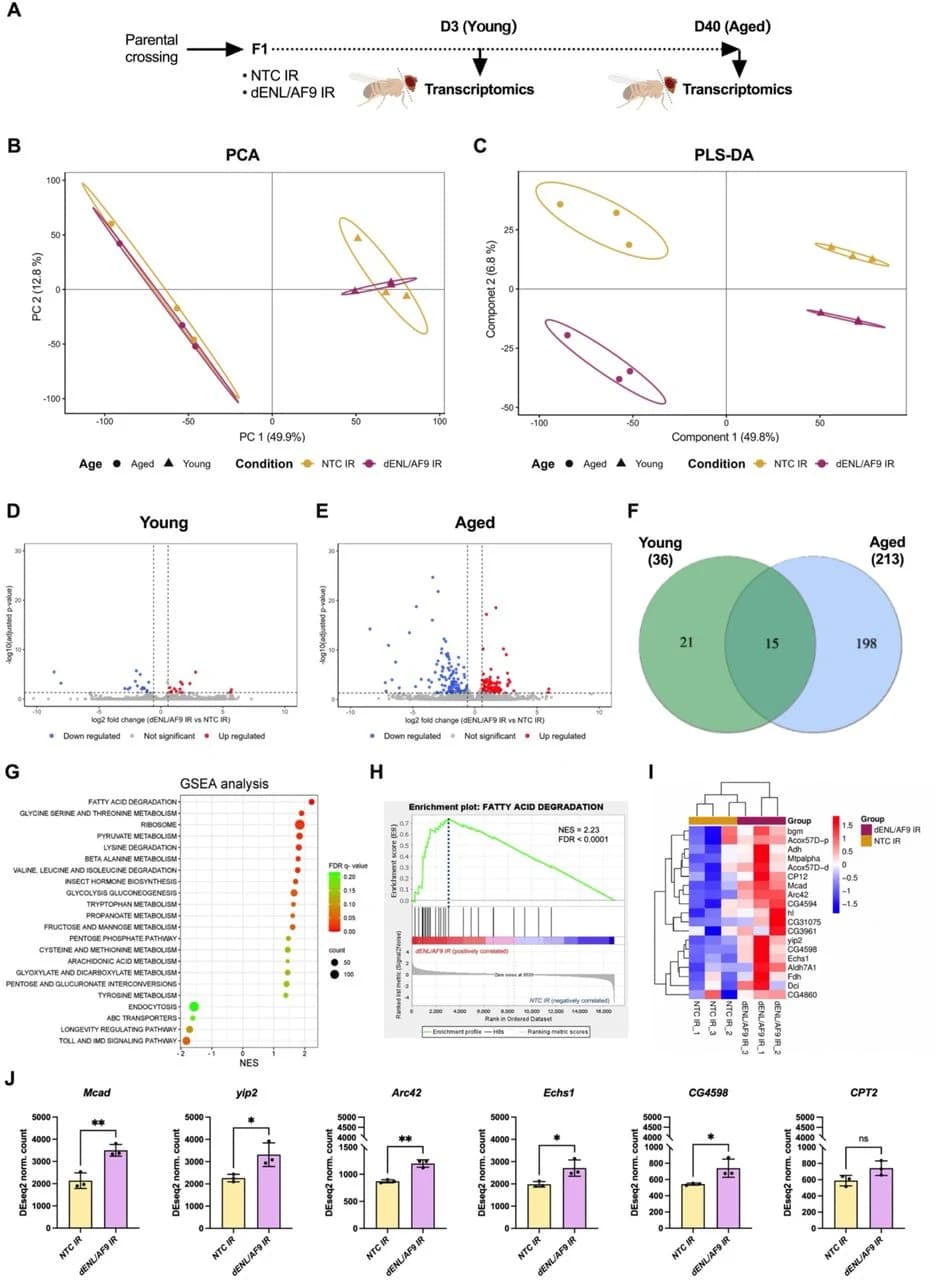
    Suppressing neuronal dENL/AF9 shifts metabolic and energetic profiles in aged flies

    Multi-omics profiling in Drosophila links chromatin regulation to increased ATP, higher NAD-to-NADH ratios, and altered lipid metabolism in aged heads.Multi-omics profiling in Drosophila links chromatin regulation to increased ATP, higher NAD-to-NADH ratios, and altered lipid metabolism in aged heads.

    Pan-neuronal dENL/AF9 knockdown elicits a stronger transcriptomic response in aged than young fly heads, with prominent enrichment of fatty acid degradation.
    Preprint: experiments in fliesPurine metabolism
    Paper
    bioRxiv·Oct 2

    Neural stem cell exhaustion disrupts central nervous system renewal in aging colonial chordates

    Researchers identified a conserved neural progenitor pool that drives weekly brain regeneration in Botryllus schlosseri but collapses during aging.Researchers identified a conserved neural progenitor pool that drives weekly brain regeneration in Botryllus schlosseri but collapses during aging.

    Experimental workflow and index-sorting pipeline for single-cell transcriptomic analysis of the adult Botryllus schlosseri brain.
    Preprint: experiments in model organismsStem cell maintenance
    Paper
    bioRxiv·Oct 2

    Progressive behavioral and cognitive decline in Drosophila harboring AD- associated APOE4 variants

    Rotenone exposure alters survival in flies expressing humanized APOE3 or APOE4.
    Preprint: experiments in fliesAPOE
    Paper
    bioRxiv·Oct 2

    Depletion of the isocitrate dehydrogenase 3 subunit IDHA-1 licenses germ cell-to-neuron direct reprogramming

    Depletion of mitochondrial IDH3 subunits permits CHE-1-induced ASE fate reporter expression in the C. elegans germline.
    Preprint: experiments in wormsEpigenetic regulation of gene expression
    Paper