Disrupting protein entry delays signs of muscle aging in worms
Genetic experiments in worms found that disrupting a muscle protein’s entry into cell nuclei preserved gene activity for the machinery of contraction during aging.
bioRxiv
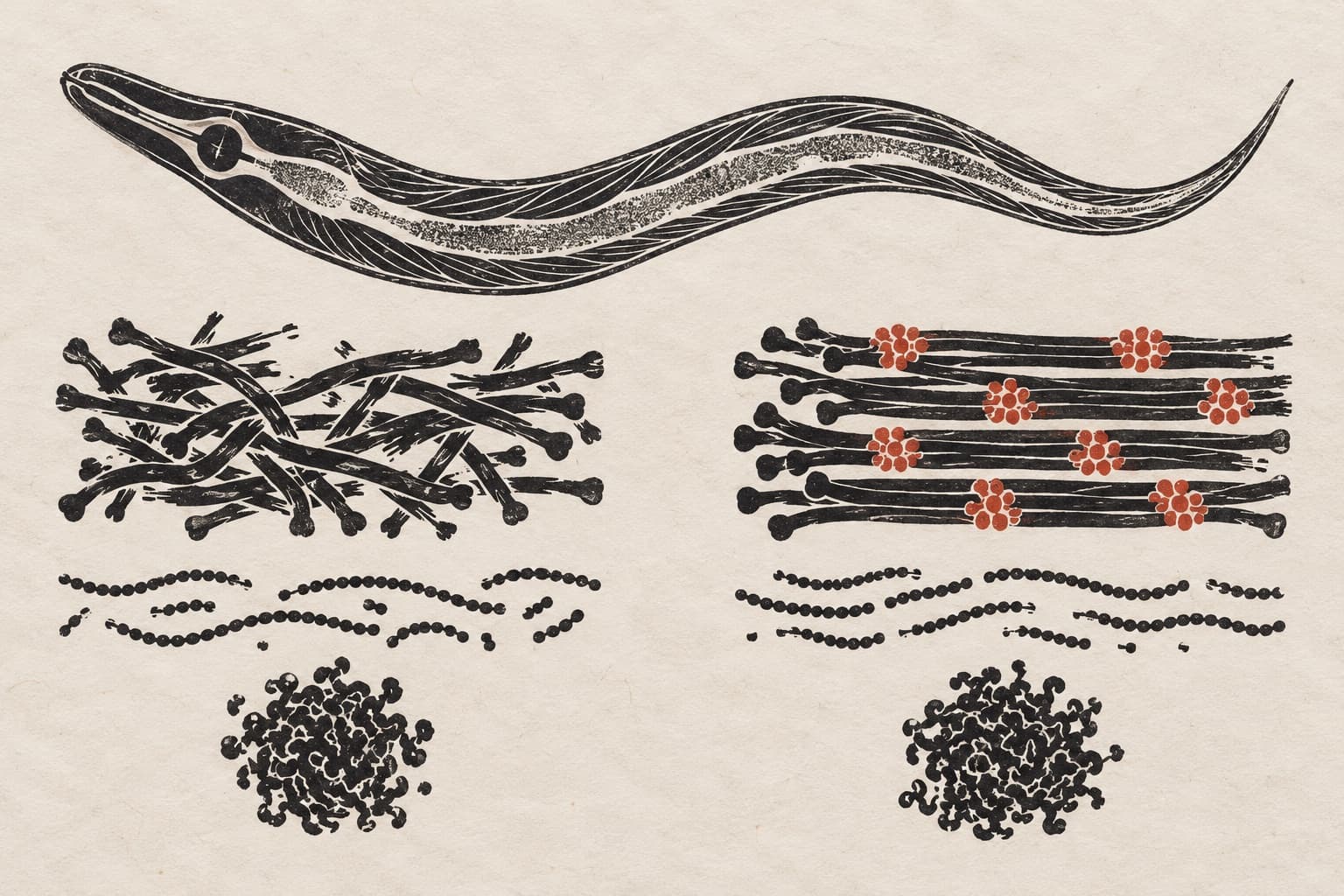
In Caenorhabditis elegans worms, researchers used a genetic screening experiment to track muscle aging in cells and whole animals. They identified a mutation in unc-27, the gene for troponin I, a protein that helps regulate muscle contraction. The mutation delayed the age-related fall in gene activity for sarcomeres, the repeating units that enable muscles to contract.
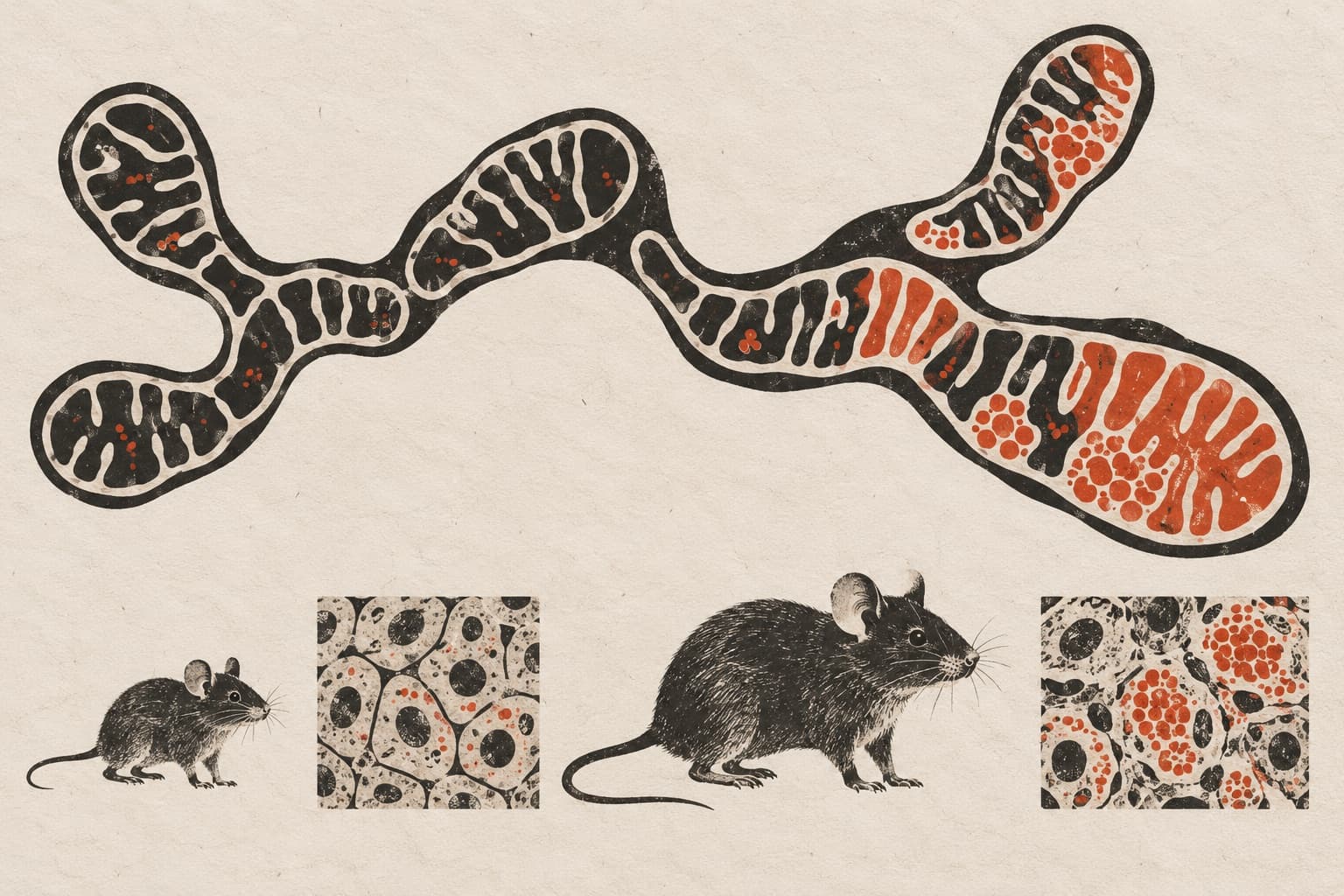
The protein entered muscle cell nuclei, the compartments that hold DNA, from early adulthood onwards. Disrupting this entry preserved gene activity for sarcomeres during aging. It also delayed early signs of muscle decline: an imbalance in protein maintenance and fragmentation of mitochondria, the cell’s energy-producing structures. Further analysis found that the protein in nuclei selectively regulated the activity of genes for structural parts of muscle in adult worms.
Why it matters
Age-related changes in the machinery for muscle contraction raise questions about how muscle cells maintain it. The findings support a proposed monitoring system in which a structural muscle protein takes on a gene-regulating role.
Caveats
The experiments were in worms, so they do not establish that the mechanism operates in human muscle. The paper is a preprint and has not been peer-reviewed.
- unc-27
- Mitochondrial fission and fusion
- Proteostasis
- Mitochondrial fragmentation
- Proteostatic imbalance
- C. elegans
The paper
bioRxiv · 10 Aug 2026 · Preprint, not peer-reviewed