Worms lacking a protein quality-control pathway survive stress better
Experiments in worms found that disabling the pathway strengthened a response to protein stress and improved survival under that stress.
Limit: Lifespan benefits concern polyglutamine-induced harm, not extension of normal lifespan
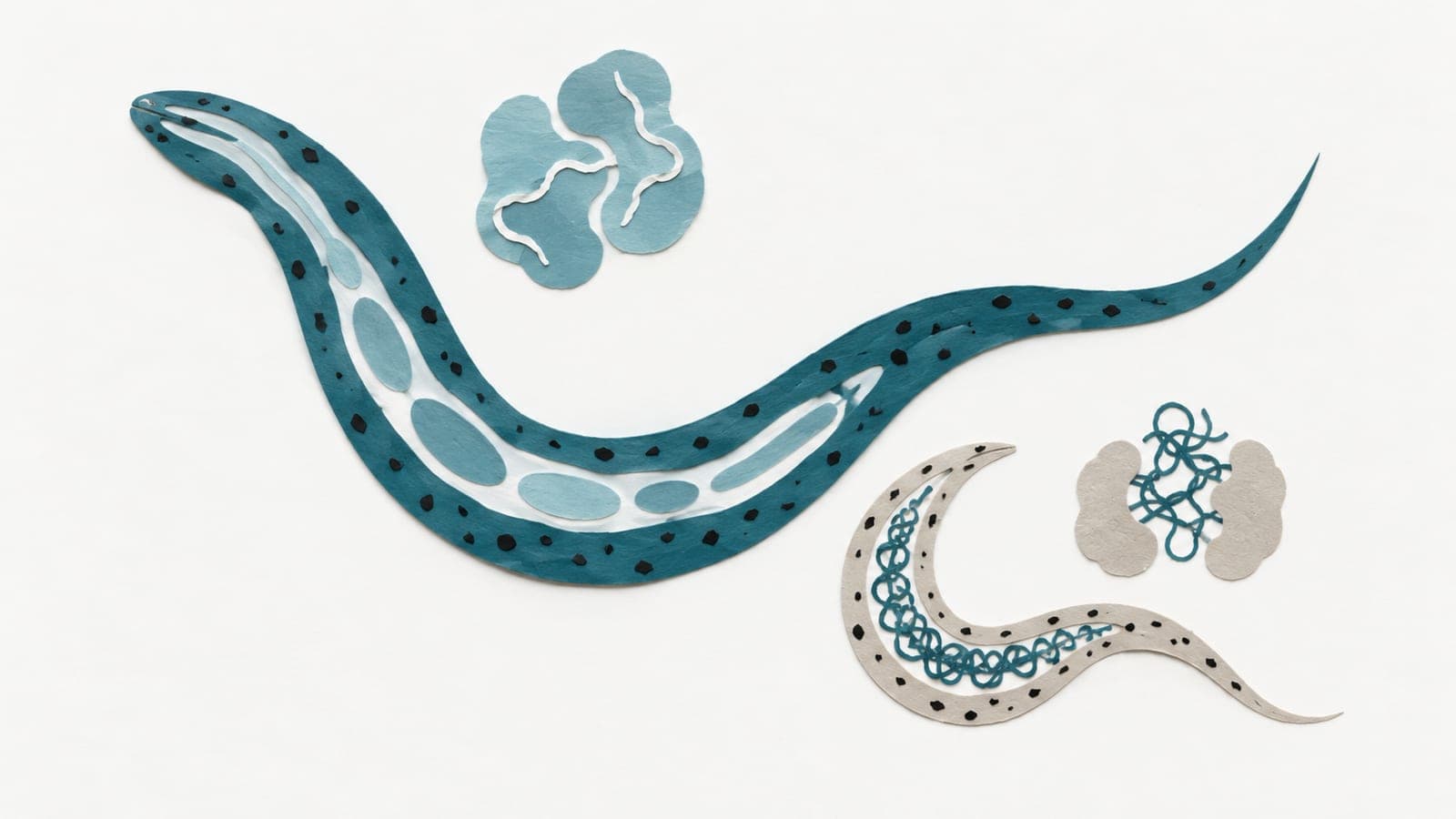
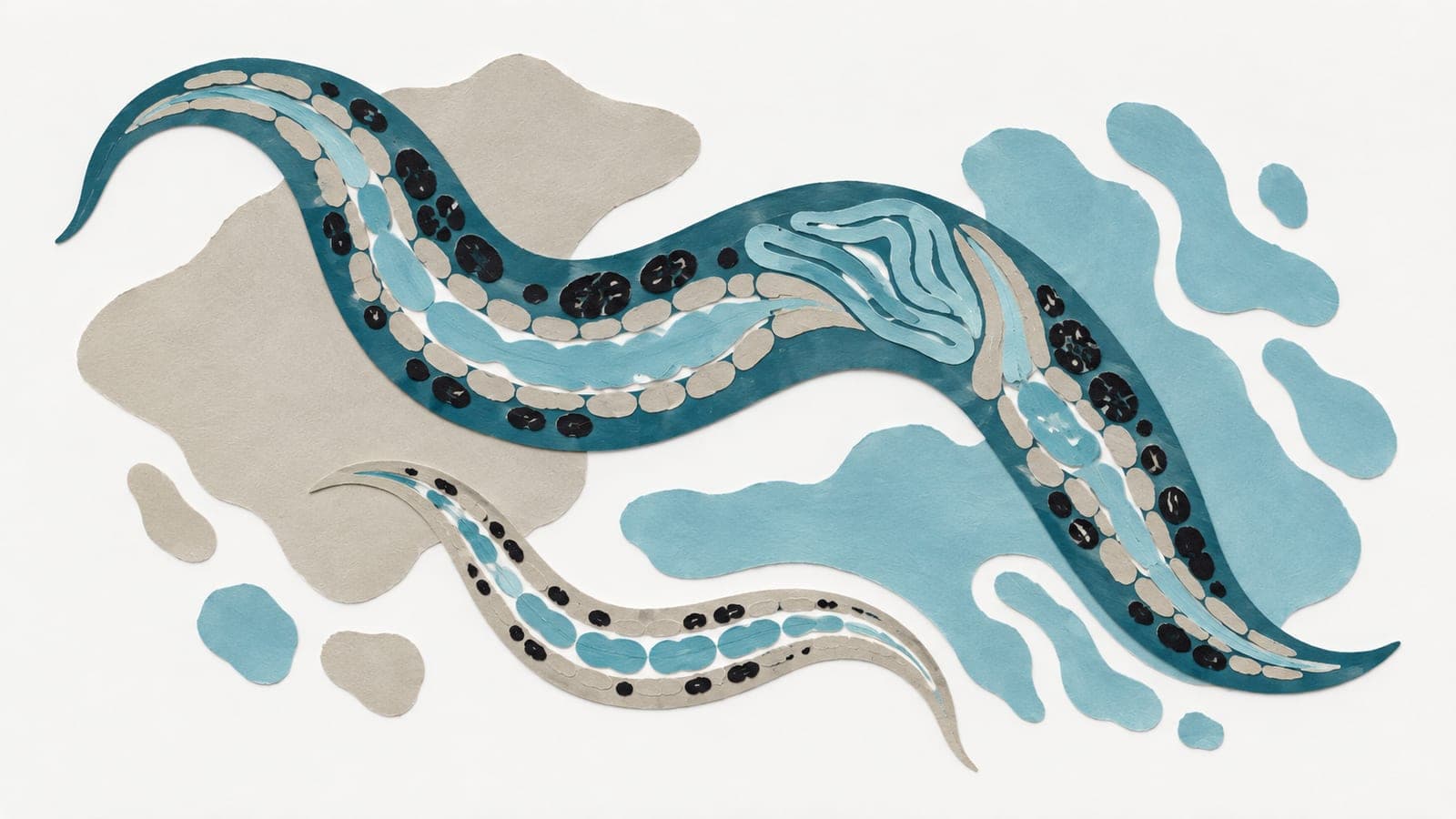
Researchers experimented with Caenorhabditis elegans worms carrying mutations that disabled the UFM-1 pathway, a system involved in protein quality control. Under protein stress, the mutants showed greater activation of a response to misfolded proteins in the endoplasmic reticulum, a cell compartment that processes proteins.
The mutants survived protein stress better and had more intact intestinal barriers in old age. They also developed more muscle clumps of polyglutamine, a protein segment prone to clumping, and the clumps’ composition changed. Despite the increased clumping, disabling the pathway counteracted the harmful effects of polyglutamine production on lifespan.
Why it matters
The work examines whether changing protein quality control can help sustain health and lifespan when proteins put cells under stress.
Caveats
These were experiments in worms; the reported lifespan benefit concerned harm from polyglutamine production, not a demonstrated extension of normal lifespan. The study is a preprint and has not been peer-reviewed.
- Endoplasmic reticulum
- ER unfolded protein response
- Proteostasis
- Polyglutamine aggregate composition
- Polyglutamine aggregate number
- C. elegans
The paper
Tufts University School of Medicine
bioRxiv, Oct 19, 2026, Open access, Preprint, not peer-reviewed