Low-dose zinc improves health and stress defense in worms
In aged roundworms, a low dose of zinc restored organismal zinc after an approximately 90% drop in zinc-to-sulfur ratio, improving healthspan and stress resistance.
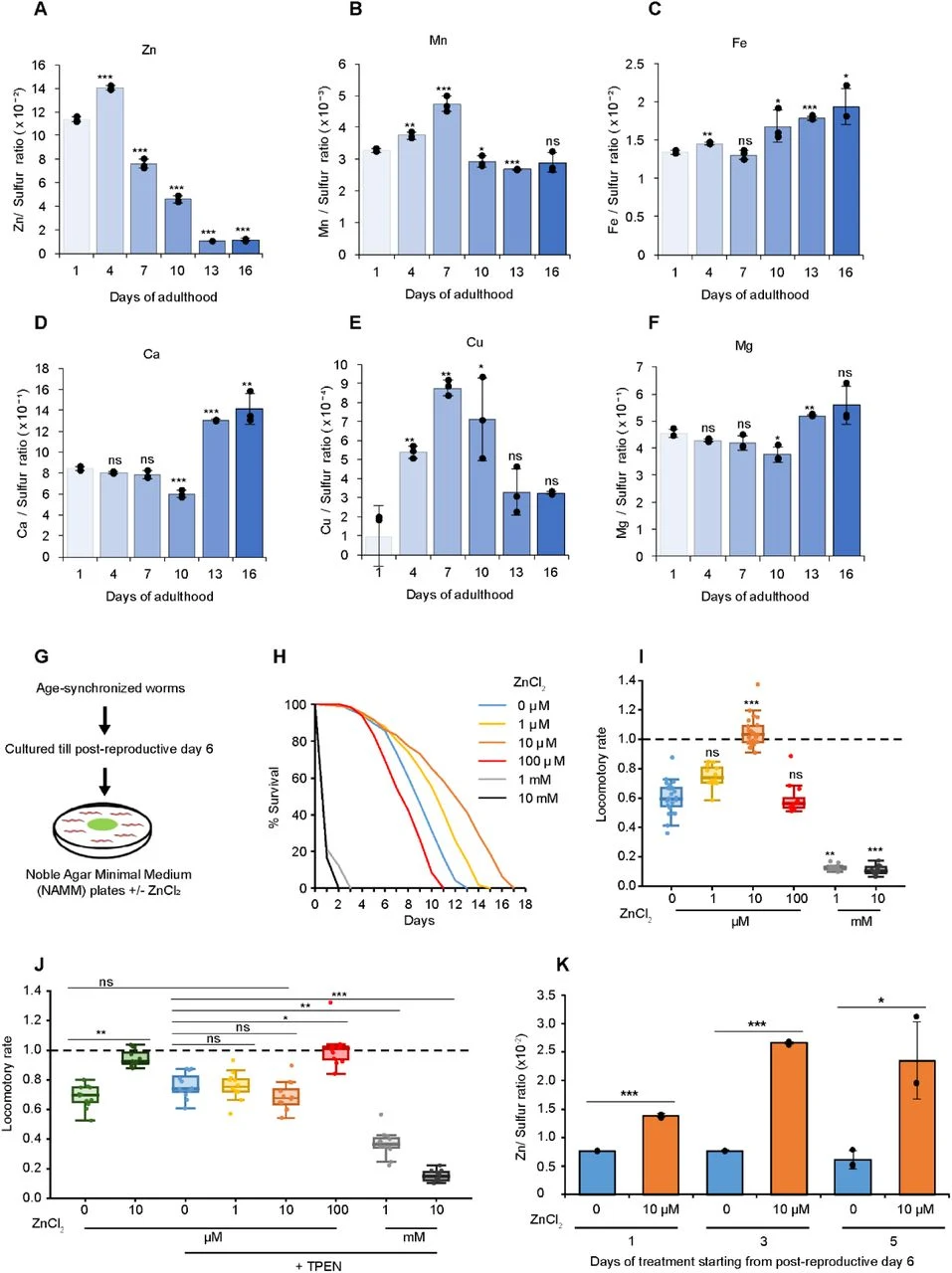
In an experiment in the roundworm Caenorhabditis elegans, researchers observed that the whole-body zinc-to-sulfur ratio declined by about 90% between day 1 and day 13 of adulthood. Supplementing aged worms with a low dose of zinc chloride restored organismal zinc levels. The supplement improved healthspan, heat tolerance, and resistance to oxidative stress, whereas higher doses were toxic. Quantitative analysis showed that structural parts of ribosomes, the molecular machines that build proteins, were the most altered category, accompanied by higher protein synthesis. Zinc also induced MTL-1, a metal-binding protein, and reversed age-associated declines in antioxidant, chaperone, and proteasome factors. In two separate worm models of protein toxicity, zinc suppressed polyglutamine aggregation and delayed paralysis caused by amyloid-beta.
Why it matters
The gradual failure of protein maintenance is a defining feature of aging. These findings suggest that zinc helps preserve the structure of the machinery that makes proteins, pointing to late-life zinc supplementation as a potential way to counteract age-related protein disorders.
Caveats
The findings come from an invertebrate model rather than mammals, and higher zinc doses were toxic. In addition, the paper is a preprint that has not yet undergone peer review.
- Zinc chloride
- Heat shock response and chaperones
- Oxidative stress and ROS signalling
- Zinc-to-sulfur ratio
- mtl-1
- C. elegans
The paper
Institute of Biochemistry and Biophysics, Polish Academy of Sciences
bioRxiv, Oct 9, 2026, Open access, CC BY-NC, Preprint, not peer-reviewed