A persistent virus benefited flies under temperature stress
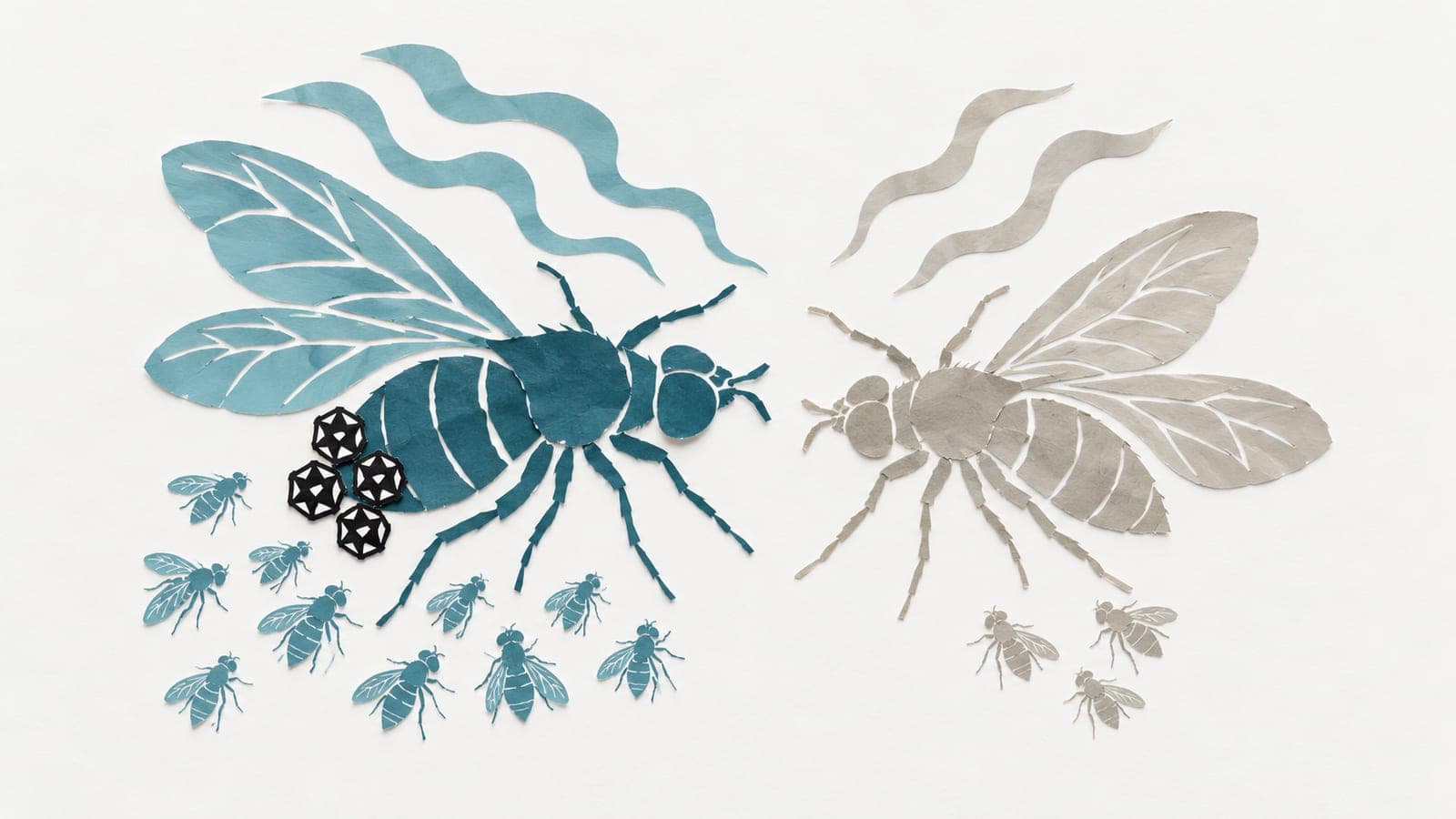
Experiments in fruit flies found that persistent Nora virus infection extended lifespan and improved reproductive output and behavioral performance under ongoing temperature stress.
Limit: The temperatures tested are not reported, obscuring which thermal conditions produced benefits
Edited by Boris Djordjevic · AgingResearch.News
In experiments with fruit flies (Drosophila melanogaster), researchers tested how chronic temperature stress affected infections with several naturally occurring viruses. The stress reduced the harm caused by the viruses studied.
For persistent Nora virus infection, the relationship shifted from harmful to conditionally beneficial. Under temperature stress, infected flies lived longer, had greater reproductive output and performed better on behavioral measures. The virus continued to persist. The authors attributed the shift to changes in the flies’ immune activity and metabolism—the chemical processes that sustain life—and to slower aging, rather than genetic changes in the virus.
Why it matters
The work addresses how persistent infections may shape aging and lifespan as environmental conditions change.
Caveats
These results come from fruit-fly experiments reported in a preprint that has not been peer-reviewed. The abstract does not report the temperatures tested or the size of the lifespan benefit.
Where the evidence stands
Nora virus infection
- 2 independent labs in 2 countries
- 1 finding against
- Funders: National Cancer Institute and 1 more
Thermal stress
- 4 independent labs in 4 countries
- Funders: Alzheimer's Association and 5 more
The paper
Parasitism to mutualism shift during a viral infection in Drosophila under thermal stress
Université Paris Cité
bioRxiv, Oct 31, 2026, Open access, CC BY-NC-ND, Preprint, not peer-reviewed
Comments
Be the first to comment.