DNA copy differences tied to lifespan in seed beetles
After more than 200 generations, populations selected for long life showed a near doubling of lifespan compared with those selected for short life.
Limit: Mapping does not identify which individual DNA changes cause lifespan differences
Edited by Boris Djordjevic · AgingResearch.News
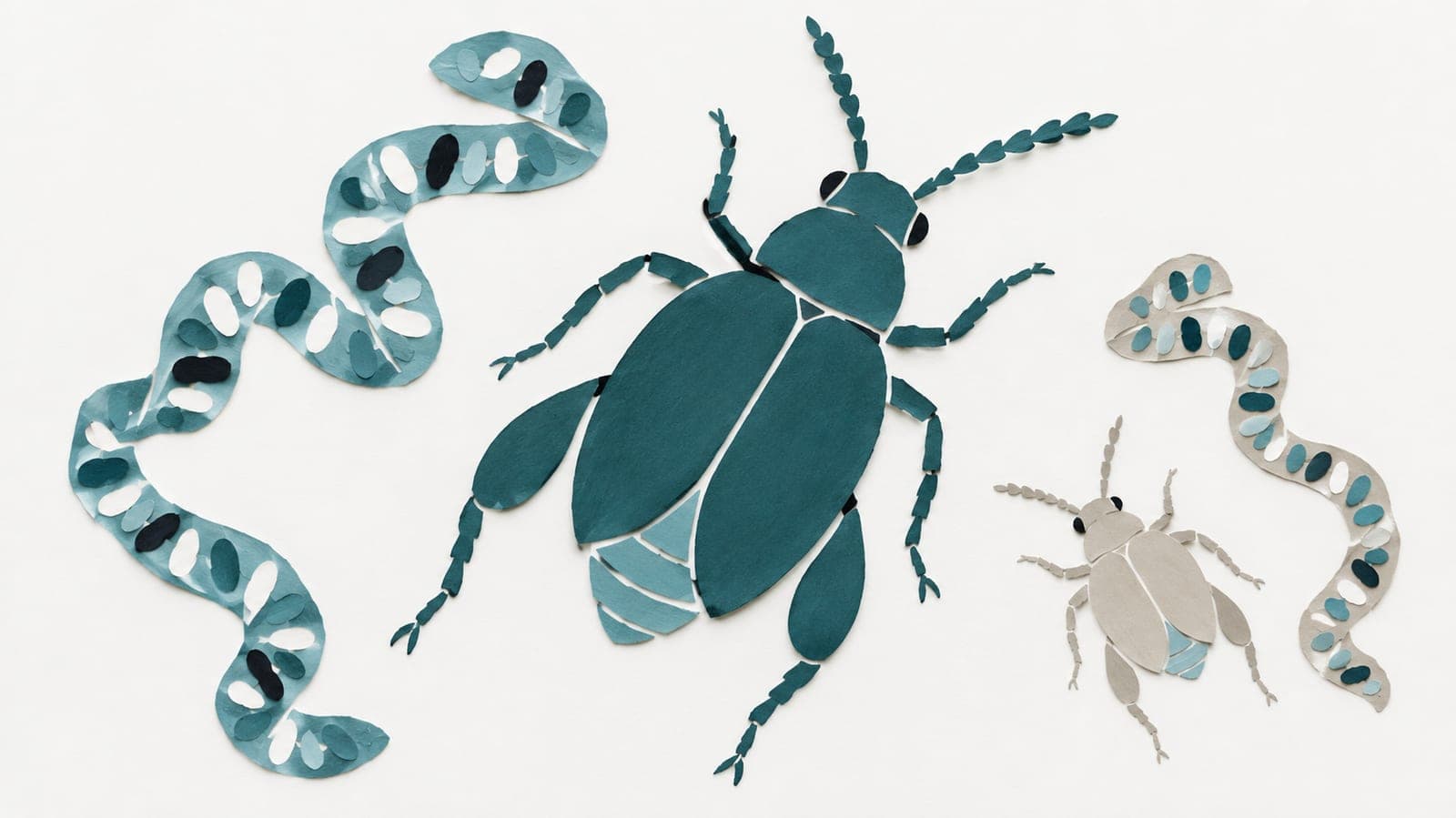
Researchers ran an experimental evolution study in a seed beetle, selecting replicated populations for short or long life over more than 200 generations. They compared whole genomes and used family relationships to map DNA regions linked to lifespan.
More than 700 genes showed consistent signs of selection in different directions between the short- and long-lived populations. The populations also differed consistently in regions containing DNA segments that varied in copy number, involving more than 600 genes. Several regions had large effects on lifespan, but many regions with medium or small effects dominated its genetic basis. Genetic effects on lifespan tended to align between males and females, although four regions showed pronounced sex differences. The authors concluded that structural DNA differences played a significant role in the evolution of longer life.
Why it matters
Lifespan evolution offers a way to investigate how inherited differences shape longevity, including whether the genetic routes to longer life are shared between males and females.
Caveats
Mapping lifespan-associated DNA regions does not by itself identify which individual DNA changes are responsible. The findings concern seed beetles, not people, and the preprint has not been peer-reviewed.
The paper
Uppsala University
bioRxiv, Oct 30, 2026, Open access, CC BY-NC-ND, Preprint, not peer-reviewed
Comments
Be the first to comment.