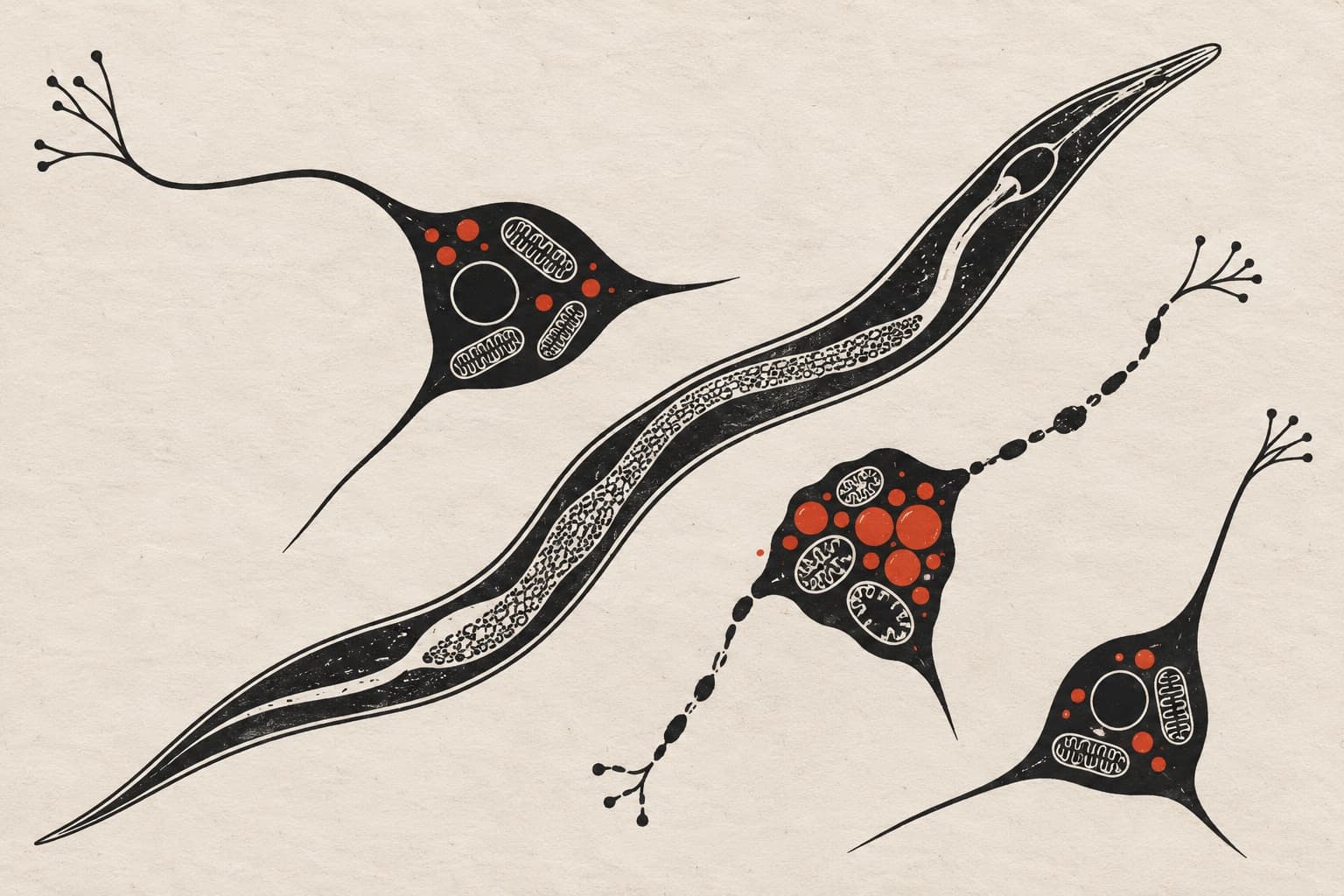
Restricting eating hours led to lasting fat loss in flies
In a fly experiment, ten days of restricted feeding reduced stored fat compared with unrestricted feeding, and the loss persisted when unrestricted feeding resumed.
bioRxiv
In Drosophila fruit flies, researchers tested intermittent time-restricted feeding, which limits the hours when food is available. They compared ten days on this schedule with unrestricted access to food. The restricted schedule reduced stored fat, and the effect persisted after the flies returned to unrestricted feeding. It also reduced obesity caused by diet or genetic changes and shrank fat-storage droplets in the flies’ fat tissue.
The flies had higher total and muscle-specific protein levels and better flight performance, suggesting a shift in body composition. Fasting also prompted increased activity, partly mediated by octopamine, the fly counterpart of the human stress hormone norepinephrine. Removing nerve cells that produce octopamine prevented the fat loss, protein increase and flight improvement. The researchers suggested that a “fight or flight” response underlay these effects.
Why it matters
This feeding schedule has been reported to extend lifespan and delay markers of aging in flies. Understanding why flies and humans respond differently may help identify targets for obesity therapies.
Caveats
This was an experiment in flies, not people, and the abstract does not say how long fat loss persisted after unrestricted feeding resumed. The paper is a preprint and has not been peer-reviewed.
The paper
Time-restricted eating promotes sustained fat loss in Drosophila
Show 13 more authors
Serena Pen, Letitia R Bortey, Jessica N Kwon, Lia Mahal, Holden S Kim, Leah Berhanu, Fatma Oduk, Megan R Rabon, Scarlet J Park, Erin L Barnhart, William W Ja, Nicholas Stavropoulos, Julie C Canman,bioRxiv · 10 Aug 2026 · Preprint, not peer-reviewed