Organoids

Papers on organoids

193 papers13 new in 30 days

Friday, November 20

bioRxiv

Human stem cells form centimeter-sized eye gel organoids

Centimeter-scale organoids made from human stem cells resembled human vitreous, the eye’s transparent gel, in transparency, molecular makeup and other features.Centimeter-scale organoids made from human stem cells resembled human vitreous, the eye’s transparent gel, in transparency, molecular makeup and other features.

A clear vitreous-like organoid with branching cells and a retinal rim sits beside a smaller organoid packed with dark protein deposits.
Preprint: experiments in human cellsEye

Saturday, November 14

Molecular Metabolism

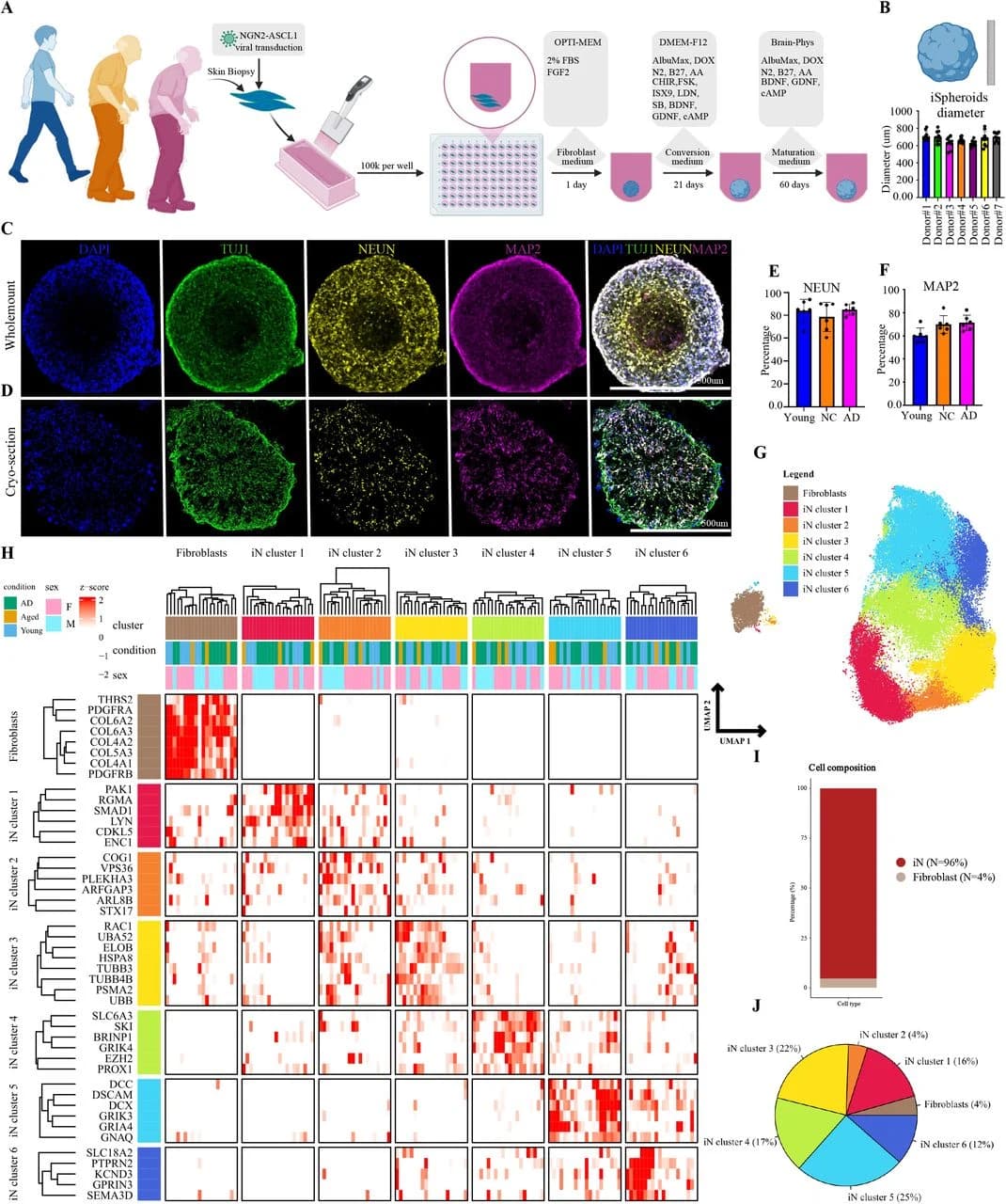
Lab-grown human muscle models mimic key exercise responses

Muscle models grown from human donor cells showed gene activity responses to electrical stimulation that overlapped with responses in those donors’ muscles after…Muscle models grown from human donor cells showed gene activity responses to electrical stimulation that overlapped with responses in those donors’ muscles after exercise.

Figure from Molecular Metabolism
Human cell studyExercise

Wednesday, November 11

Tuesday, November 10

Advanced Science

Drug may target lab-grown human cells with reduced TET2 gene function

A 48-hour screen of 489 compounds identified lanatoside C as a candidate for preferentially killing human immune cells with reduced TET2 gene function.A 48-hour screen of 489 compounds identified lanatoside C as a candidate for preferentially killing human immune cells with reduced TET2 gene function.

Figure from Advanced Science
Human cell studyInterventions

Monday, November 9

Monday, November 2

Wednesday, October 28

Monday, October 26

Saturday, October 24

Advanced Science

Bone-lining organoids support blood stem cells in the lab

The structures grew through more than 20 transfers to fresh cultures while preserving their mix of cell types and DNA integrity.The structures grew through more than 20 transfers to fresh cultures while preserving their mix of cell types and DNA integrity.

Figure from Advanced Science
Animal cell studyBones and joints

Tuesday, October 20

Thursday, October 15

Saturday, October 10

Thursday, October 8

Monday, October 5

bioRxiv

Disease mutations shift epigenetic age in organoids

In a preprint using iPSC-derived organoids, serial passaging re-established aging trajectories while disease-associated mutations drove additional cell-intrinsic shifts…In a preprint using iPSC-derived organoids, serial passaging re-established aging trajectories while disease-associated mutations drove additional cell-intrinsic shifts in epigenetic age.

Epigenetic age is reset during iPSC reprogramming and re-accumulates in alveolosphere organoids over extended culture.
Preprint: experiments in human cellsEpigenetic age

Sunday, October 4

Advanced Science

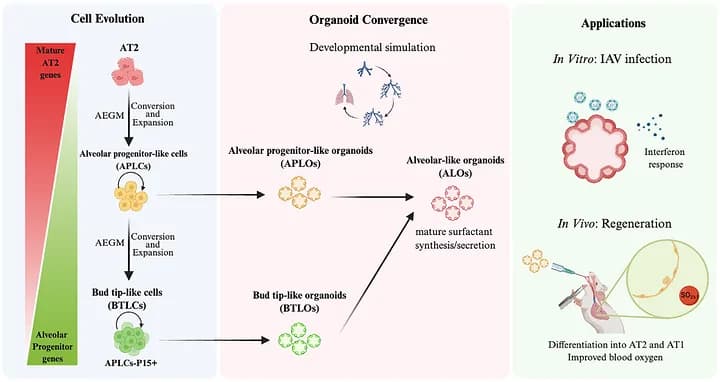
Adult human lung cells became expandable precursor-like cells

Experiments with adult human lung cells produced cells that could multiply extensively and form three-dimensional models resembling mature lung air sacs.Experiments with adult human lung cells produced cells that could multiply extensively and form three-dimensional models resembling mature lung air sacs.

Figure from Advanced Science
Experiments in human cellsLung

Friday, October 2

bioRxiv

Simulated microgravity raises transcriptomic age in organoids

Human neural, cardiac, and tonsil organoids exposed to 24 hours of simulated microgravity showed tissue-specific changes, including higher transcriptomic-age estimates in…Human neural, cardiac, and tonsil organoids exposed to 24 hours of simulated microgravity showed tissue-specific changes, including higher transcriptomic-age estimates in brain and heart models.

Tissue identity and correspondence with spaceflight-associated transcriptional signatures.
Preprint: experiments in human cellsMechanisms

Thursday, October 1

Tuesday, September 29

Saturday, September 26

bioRxiv

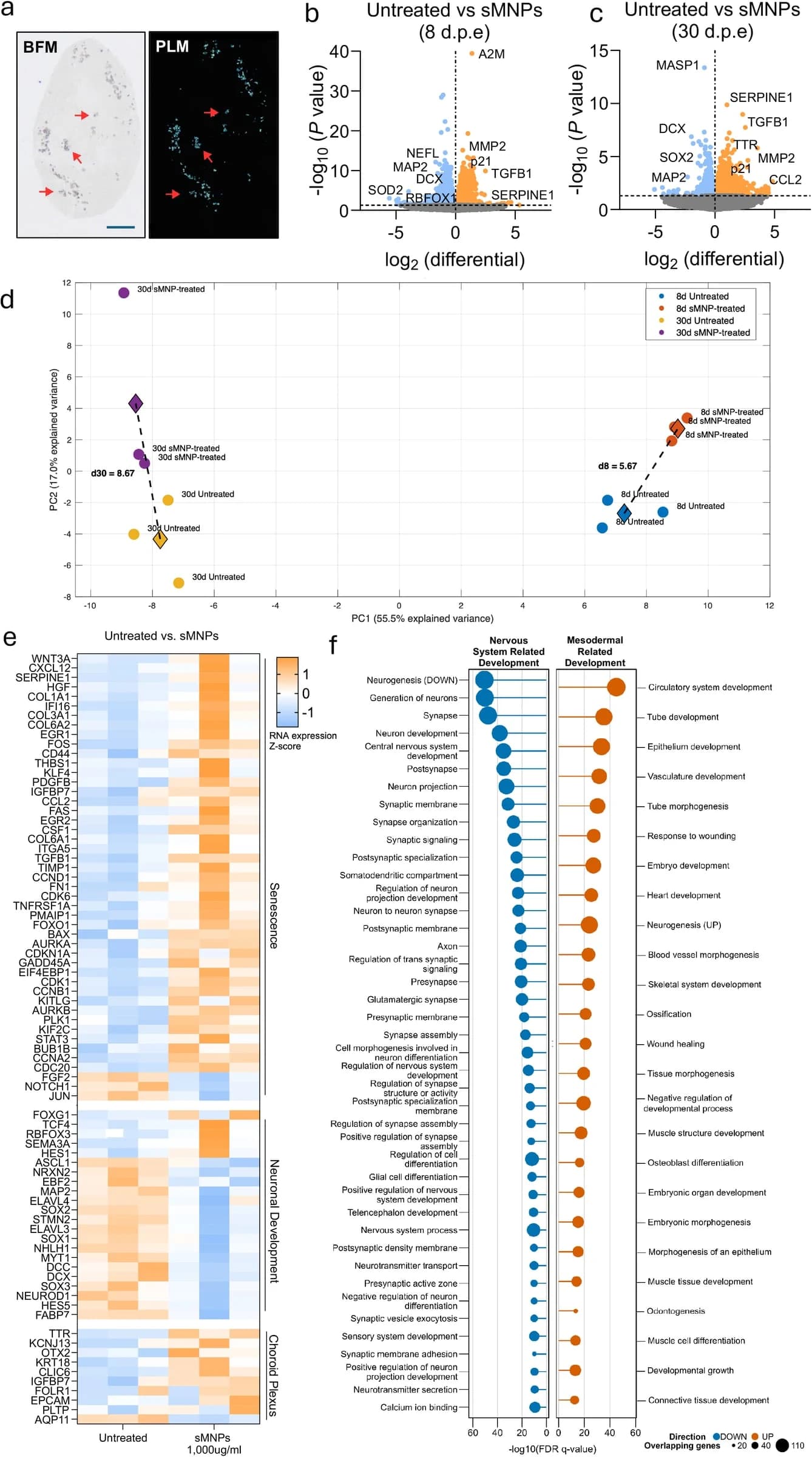
Microplastics induce senescence in human brain organoids

Exposures to synthetic and ocean-derived micro- and nanoplastics activated senescence pathways and altered neuronal network activity in region-specific cortical…Exposures to synthetic and ocean-derived micro- and nanoplastics activated senescence pathways and altered neuronal network activity in region-specific cortical organoids.

sMNP exposure suppresses neuronal developmental programs and promotes mesodermal and extracellular matrix remodeling in developing COs.
Preprint: experiments in human cellsCellular senescence

Wednesday, September 23

Tuesday, September 22