Airflow printing produces thymic organoids in large numbers
The method produced 21,500 stem-cell clusters per millilitre of cell-containing printing material for making thymic organoids.
Biofabrication
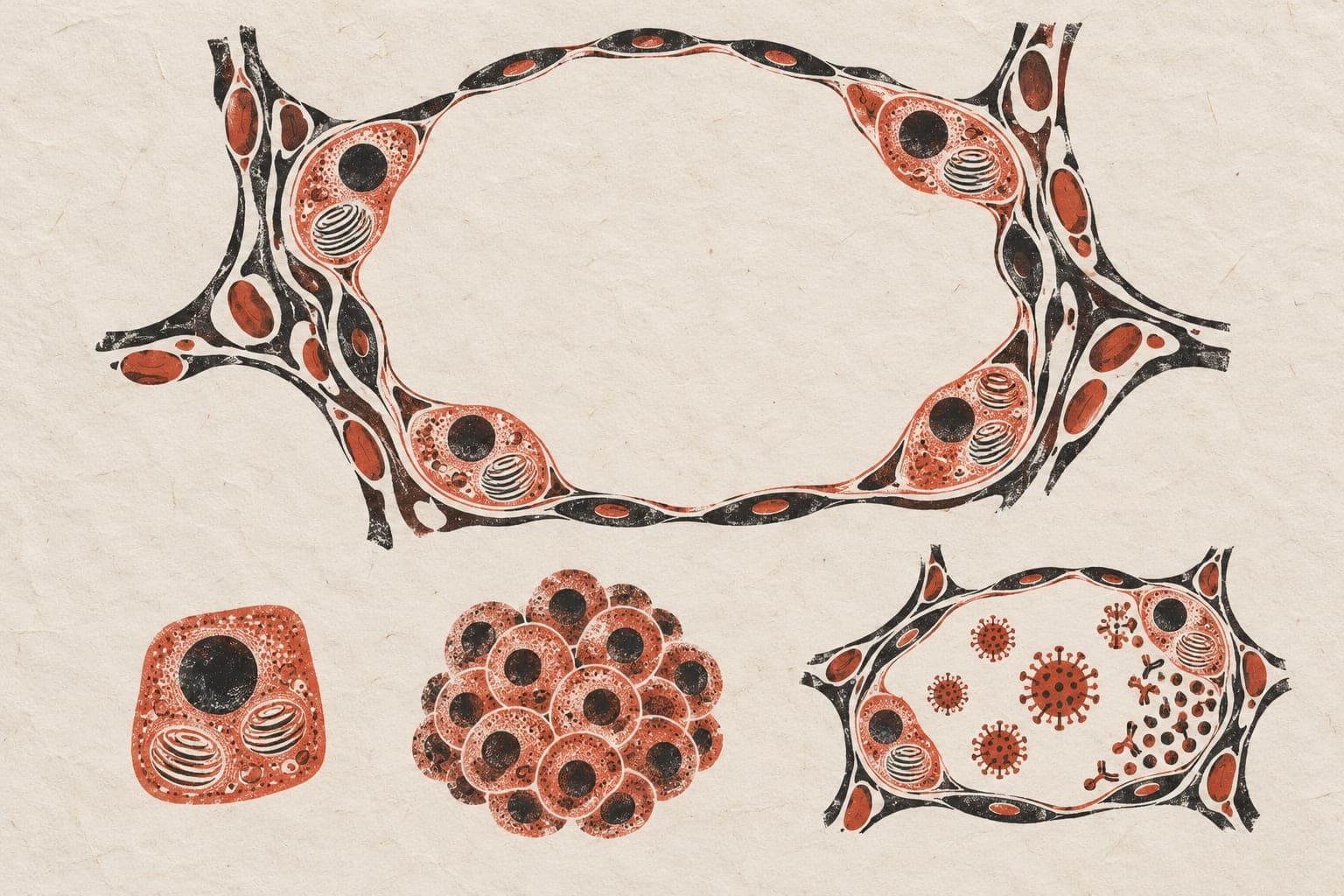
In a laboratory experiment, researchers used induced pluripotent stem cells—reprogrammed cells that can form many cell types—to make thymic organoids, lab-grown models of the thymus. The thymus supports the development of T cells, immune cells. The team used airflow to print droplets containing the stem cells into capsules.
Airflow controlled capsule size, while the chemicals linking the capsule material together affected its stability. The researchers identified settings that minimised printing variability and prevented cell clusters from escaping their capsules during development. They then removed the capsules and combined the organoids with a thymus scaffold stripped of its cells. These constructs generated functional mouse T cell populations in athymic nude mice, which lack a thymus.
Why it matters
The thymus progressively loses function as it ages. This work addresses how to produce stem-cell-derived models of that organ at a scale relevant to future clinical use.
Caveats
Functionality was tested in mice lacking a thymus, using organoids combined with a thymus scaffold. The results do not establish that printed organoids alone would work in people.
- Organoids
- Air-jetting droplet bioprinting
- Ipsc-derived thymic organoids
- Immune response
- Stem cell differentiation
- Mice
The paper
Show 12 more authors
Nathan Lingenfelter, Mirabella Stump, Elyse Barnes, Lydia Kutzer, Wen Liu, Jiahui Dai, Lauren McCarthy, Carl Engman, Prashant Nagesh Kumta, Kimberly F. Williams, Yong Fan, Bin Yang,University of Pittsburgh
Biofabrication · 30 Sep 2026