Cryopreservation of human cortical organoids using vitrification
Abstract
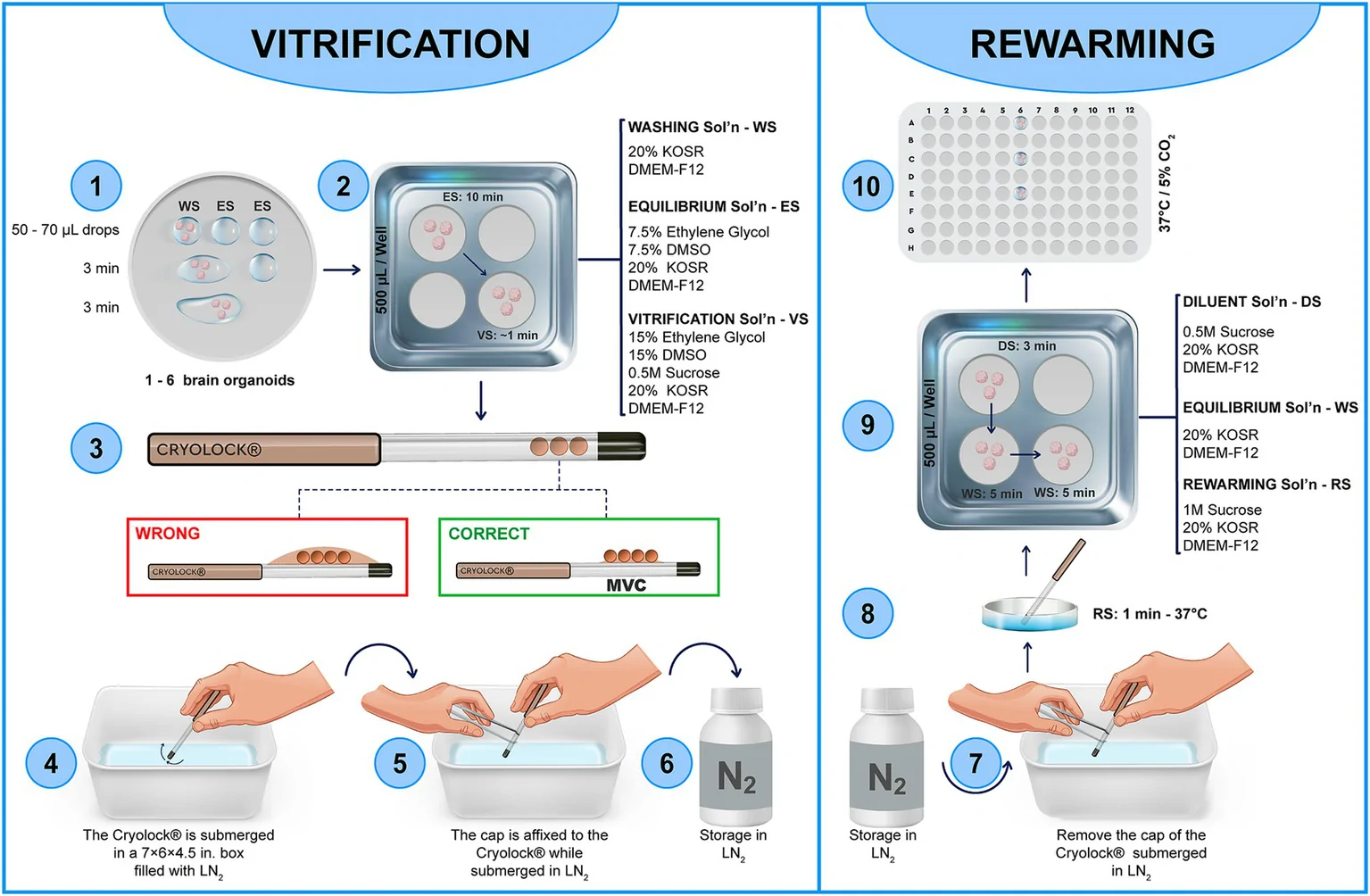
Vitrification is a fast-cooling cryopreservation technique that limits ice crystal formation and cryoprotectant toxicity. We adapted an established vitrification method used on oocytes and blastocysts and optimized it for the cryopreservation of single and multi-rosette cortical organoids. Vitrified and rewarmed organoids were compared to unvitrified controls using immunofluorescence, qRT-PCR, and electrophysiological recordings. Vitrified and rewarmed organoids generated using two different protocols showed similar levels of proliferating cells, cell death and cell-type specific markers as unvitrified controls. We also found via multielectrode array and patch-clamp recordings that the vitrified and rewarmed organoids showed similar activity to unvitrified controls. Preliminary evidence suggests that vitrified cortical organoids could be stored for over a year and shipped long distance with little detriment to the hCOs after rewarming. Our vitrification cryopreservation method allows for the long-term storage of hCOs at ultralow temperatures and rewarming with minimal impact on cell-type specification or electrophysiology. This method provides a useful alternative approach for bio-banking and cross-institutional collaboration using cortical organoids as a model system.
The paper
University of Michigan
Frontiers in Molecular Neuroscience, 8 Sep 2026