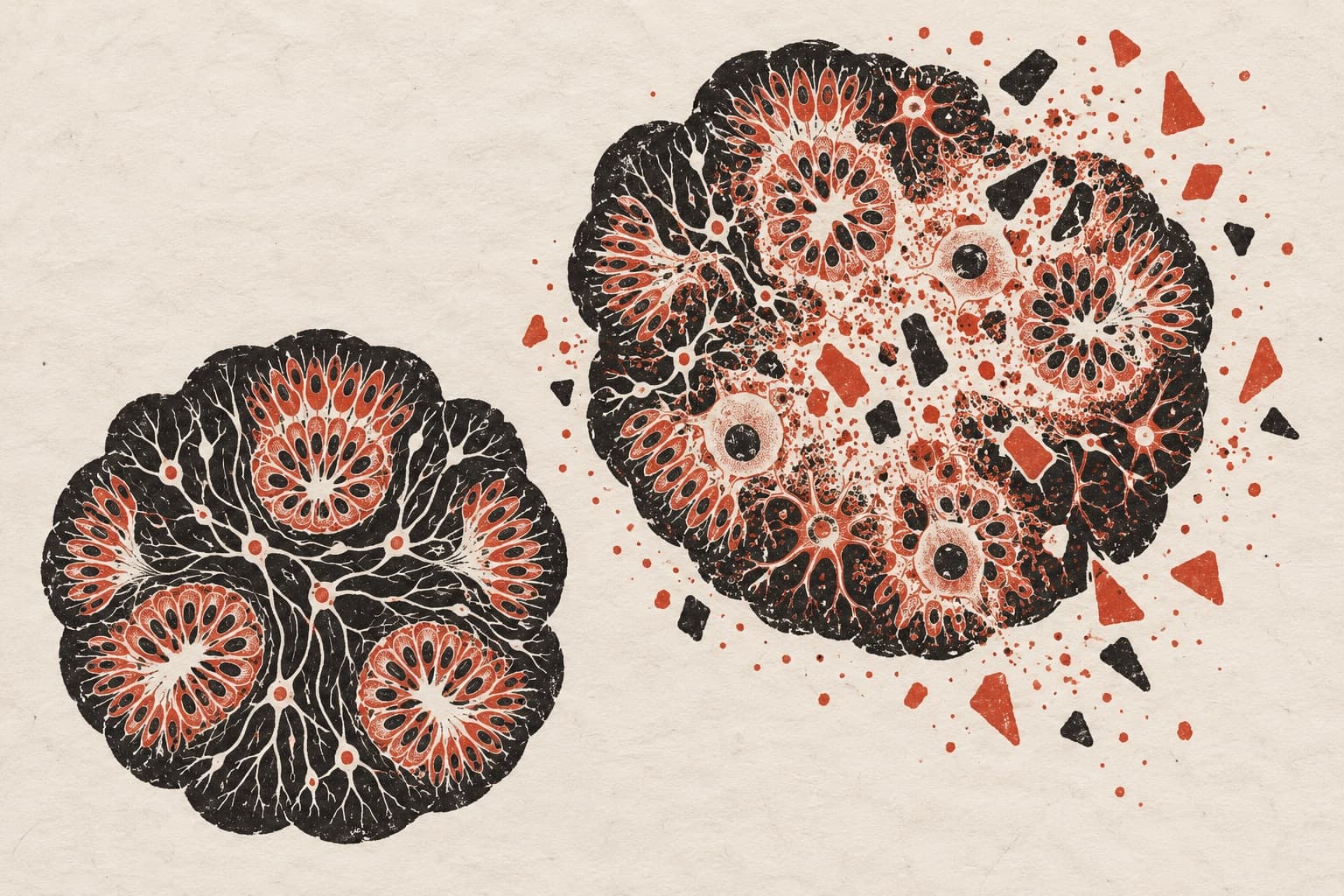
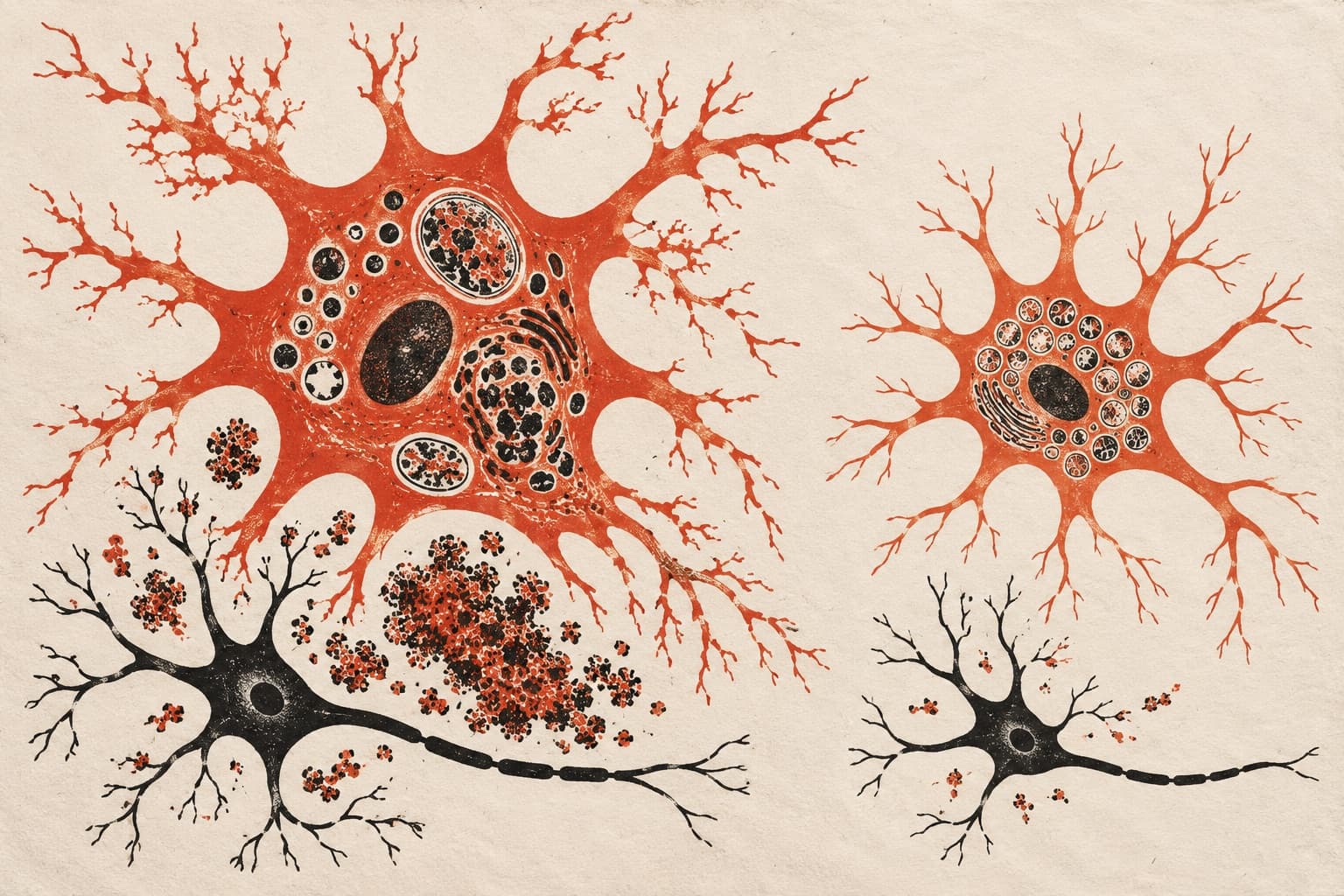
Directly converted human neuronal spheroids preserve donor age and model Alzheimer disease
The three-dimensional cell platform maintains biological aging markers while spontaneously developing hallmark pathologies of sporadic Alzheimer disease.
bioRxiv
In a new preprint, researchers developed directly induced neuronal spheroids using primary fibroblasts from young, unimpaired aged, and sporadic Alzheimer disease human donors, as well as non-human primates. The team converted fibroblasts directly into three-dimensional neuronal spheroids without pluripotency. Single-nucleus RNA sequencing confirmed that approximately 96% of cells acquired a neuronal identity. The resulting electrophysiologically active neurons preserved donor-specific epigenetic age and supported astrocytes and microglia. Spheroids from Alzheimer donors spontaneously displayed neuronal degeneration, amyloid-beta accumulation, progressive Tau pathology, and metabolic dysfunction. Multi-omics profiling separated physiological aging from Alzheimer disease. Drug tests showed oxaliplatin shifted cells toward oxidative metabolism, and trametinib modulated inflammatory and age-associated programs.
Why it matters
Reprogramming cells through pluripotency typically erases biological age, obscuring how aging drives late-onset neurodegenerative disorders. By preserving donor epigenetic age, this three-dimensional model offers a system to study the intersection of human aging and dementia.
Caveats
The findings are based on an in vitro model described in a preprint that has not yet undergone peer review. The study relies on cultured spheroids rather than intact tissue from patients.
The paper
An age-preserving neuronal iSpheroid platform for modeling human aging and Alzheimer disease
Show 21 more authors
Upendra Singh, Brian Kirk, Lisa E. Mitchell, Melissa Hernandez, Nicholas J. Skvir, Chynna Bowman, Kotaro Oiwa, Ravi Agarwal, Marjan Mahmoudi, Michael S. Cuoco, Elise MacDonald, Samuel Cranston, Raffaella Lucciola, Daniela Boassa, Joseph R. Herdy, Jeffrey R. Jones, Kazuori Yoshikiyo, Jérôme Mertens, Julio Martínez-Trujillo, Łukasz Jaremko, George J. Murphy,Salk Institute for Biological Studies
bioRxiv · 1 Oct 2026 · Preprint, not peer-reviewed