TP53

Papers on TP53

2,517 papers70 new in 30 days

Thursday, November 19

Antioxidants & Redox Signaling

Hydrogen sulfide may ease signs of heart aging in mice

In mice exposed to D-galactose, a hydrogen sulfide-releasing compound reduced signs of heart aging and activation of a protein involved in inflammation.In mice exposed to D-galactose, a hydrogen sulfide-releasing compound reduced signs of heart aging and activation of a protein involved in inflammation.

Mouse heart sections beside mice show intact dark blue-green muscle with sparse protein clusters and fragmented gray muscle with dense clusters.
Mouse studyInterventions

Wednesday, November 18

Phytomedicine

Compound reduced kidney injury in mice with diabetes

Experiments in mice with diabetes-induced kidney disease found less kidney tubule cell senescence, a state in which cells stop dividing, after receiving procyanidin C1.Experiments in mice with diabetes-induced kidney disease found less kidney tubule cell senescence, a state in which cells stop dividing, after receiving procyanidin C1.

Figure from Phytomedicine
Mouse studyKidney injury

Tuesday, November 17

bioRxiv

Stress-response protein supports healthy aging in mouse liver

In experiments in aged mice, removing the stress-response protein p53 from liver cells increased inflammation, while activating it with a drug delayed the onset of…In experiments in aged mice, removing the stress-response protein p53 from liver cells increased inflammation, while activating it with a drug delayed the onset of frailty.

Liver tissue beside a laboratory mouse contrasts orderly, intact cells with disrupted cells crowded by dark immune cells.
Preprint: mouse studyDNA damage response

Monday, November 16

bioRxiv

Protein levels alter drug sensitivity in lab-grown human cells

Cells still stopped dividing after radiation, but protein levels changed their secreted signals and sensitivity to a drug that kills senescent cells.Cells still stopped dividing after radiation, but protein levels changed their secreted signals and sensitivity to a drug that kills senescent cells.

A large intact fibroblast sits among secreted droplets beneath smaller cells, including a dying cell with a shrunken nucleus and scattered fragments.
Preprint: human cell studyMechanisms
bioRxiv

Tumors mix younger- and older-like molecular aging patterns

An analysis of breast cancer and five other cancers found mixed aging patterns, partly resembling those in normal tissue of the same origin.An analysis of breast cancer and five other cancers found mixed aging patterns, partly resembling those in normal tissue of the same origin.

Breast tumor tissue mixes dividing cells and fragmented nuclear fibers above smaller, orderly rings of normal breast cells.
Preprint: computational studyBiomarkers
Journal of Nanobiotechnology

Young-donor cell packages better eased osteoarthritis in mice

An experiment in male mice with surgically induced disease compared packages released by human joint-lining stem cells from young and aged donors.An experiment in male mice with surgically induced disease compared packages released by human joint-lining stem cells from young and aged donors.

Figure from Journal of Nanobiotechnology
Mouse studyOsteoarthritis

Sunday, November 15

Neuro-Oncology

Candidate brain cancer starter cells isolated from older mice

Laboratory experiments found dormant cells in elderly mice’s outer brain layer, and genetically altered cells became capable of forming tumors after a change in growth…Laboratory experiments found dormant cells in elderly mice’s outer brain layer, and genetically altered cells became capable of forming tumors after a change in growth factors.

Cortical tissue with a branching cell sits beside a laboratory mouse, a small sparse cell sphere, and a larger crowded mass of cells.
Animal cell studyMechanisms

Saturday, November 14

bioRxiv

Older age linked to more signs of senescence in human fat

A cross-sectional study of adults aged 18–75 with comparable body mass indexes linked older age to stronger senescence-related gene activity in fat inside the abdomen.A cross-sectional study of adults aged 18–75 with comparable body mass indexes linked older age to stronger senescence-related gene activity in fat inside the abdomen.

Abdominal fat tissue with enlarged senescent cells and dense secreted droplets beside a smaller fragment with fewer droplets and smaller supporting cells.
Preprint: cross-sectional studyCellular senescence

Friday, November 13

bioRxiv

Gut cell loss and repair wait for oxygen to return in flies

Low oxygen prepared gut cells to die and activated signals in stem cells in adult flies, but cell death and stem-cell division waited until oxygen returned.Low oxygen prepared gut cells to die and activated signals in stem cells in adult flies, but cell death and stem-cell division waited until oxygen returned.

Fruit fly gut lining with intact gray cells beside shedding cells and dividing stem cells, surrounded by oxygen molecules and a magnified fly.
Preprint: fly studyGut and microbiome

Thursday, November 12

ACS Nano

Ultrasound-activated scaffold may aid bone repair in rats

Experiments in a rat model supported the bone-regenerating potential of a scaffold that generates electrical stimulation when activated by ultrasound.Experiments in a rat model supported the bone-regenerating potential of a scaffold that generates electrical stimulation when activated by ultrasound.

Bone cutaway with a porous scaffold, dense dark blue-green repair beside sparse gray tissue, ultrasound waves above, and a laboratory rat below.

Wednesday, November 11

American Journal of Respiratory Cell and Molecular Biology

Particles shed by cells alter lung vessels in newborn rats

In animal experiments, particles from senescent lung vessel cells—cells that had stopped dividing—induced high blood pressure in newborn rats’ lungs.In animal experiments, particles from senescent lung vessel cells—cells that had stopped dividing—induced high blood pressure in newborn rats’ lungs.

Lung artery cross-sections show an open vessel beside a thickened, narrowed vessel, with enlarged cells, scattered vesicles, and a small rat.
Rat studyLung
bioRxiv

Mutation patterns linked to blood cancer in inherited disorders

An analysis of 658 samples from 309 patients with inherited blood disorders linked distinct mutation sequences to progression toward blood cancers.An analysis of 658 samples from 309 patients with inherited blood disorders linked distinct mutation sequences to progression toward blood cancers.

Bone marrow contains a dense cluster of large-nucleated blood cells beside sparse mature cells, with scattered blood cells around it.
Preprint: cohort · 309 peopleMechanisms

Tuesday, November 10

Monday, November 9

Aging Cell

Protein loss weakened barriers in human brain vessel cells

In lab experiments, reducing alpha-synuclein, a protein, made layers of human brain blood-vessel cells leakier; suppressing an enzyme returned leakage to normal.In lab experiments, reducing alpha-synuclein, a protein, made layers of human brain blood-vessel cells leakier; suppressing an enzyme returned leakage to normal.

Replicative senescence downregulates SNCA in human brain microvascular endothelial cells.
Human cell studyMechanisms
Circulation Research

Particles from exercised muscle reduced heart injury in mice

Mouse experiments tracked tiny packages released by skeletal muscle after four weeks of exercise and tested their role in limiting heart damage.Mouse experiments tracked tiny packages released by skeletal muscle after four weeks of exercise and tested their role in limiting heart damage.

Heart muscle shows broken gray fibers beside intact dark blue-green fibers with folded mitochondria, near tiny vesicles, skeletal muscle, and a running mouse.
Mouse studyExercise
International Journal of Molecular Sciences

Solid and blood cancers differ in how one gene is altered

Protein-shortening mutations accounted for 34.2% of samples with the altered gene in solid cancers, versus 24.4% in blood cancers.Protein-shortening mutations accounted for 34.2% of samples with the altered gene in solid cancers, versus 24.4% in blood cancers.

The two states of TP53 mutation.
Meta-analysisMechanisms
Renal Failure

Gut microbe-derived compound promotes kidney aging in mice

Reducing a circular RNA weakened the compound’s effects in male mice given it in drinking water for 16 weeks.Reducing a circular RNA weakened the compound’s effects in male mice given it in drinking water for 16 weeks.

Figure from Renal Failure
Mouse studyKidney

Saturday, November 7

Aging Cell

Protein helped drive senescence in lab-grown human eye cells

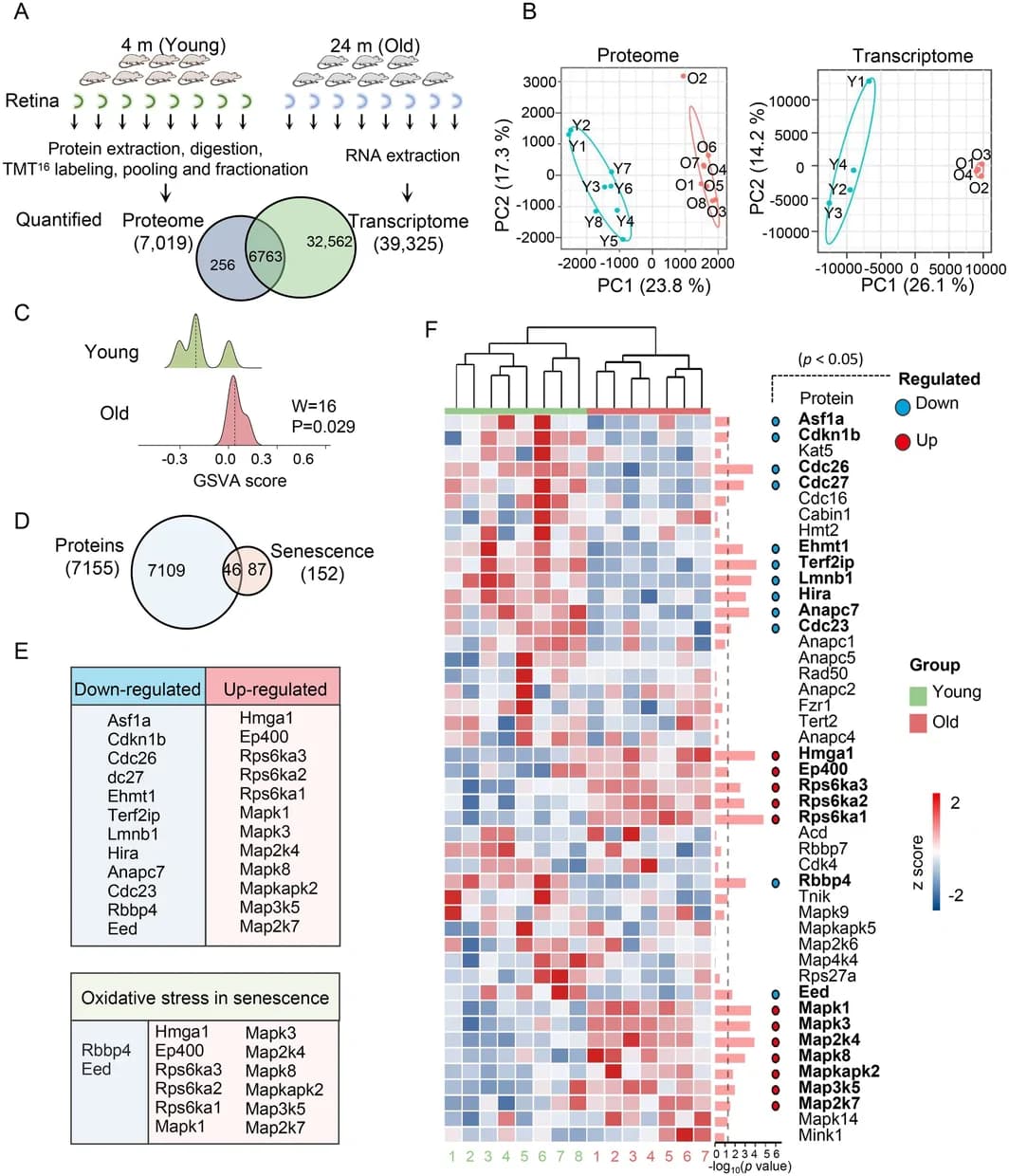
Experiments implicated a gene-regulating protein in senescence, a state in which cells stop dividing, in human retinal cells grown in the lab.Experiments implicated a gene-regulating protein in senescence, a state in which cells stop dividing, in human retinal cells grown in the lab.

Integrated proteomic and transcriptomic profiling of retinal aging.
Human cell studyCellular senescence
Free Radical Biology & Medicine

Sorcin protein helped scar-forming liver cells keep dividing

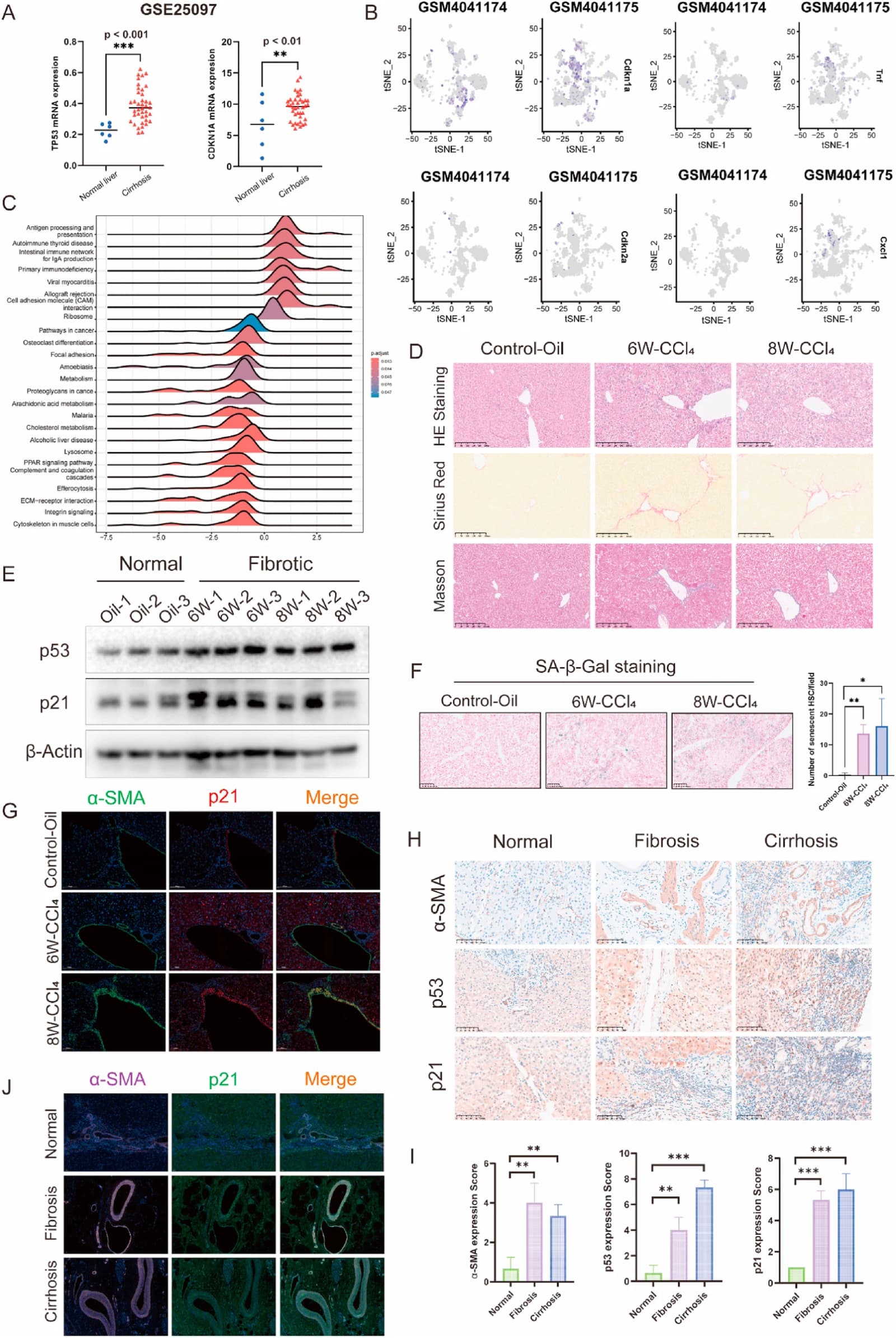
Experiments in liver stellate cells traced the effect to RNA-containing clusters that reduced production of p53, a protein that helps regulate cell division.Experiments in liver stellate cells traced the effect to RNA-containing clusters that reduced production of p53, a protein that helps regulate cell division.

Figure from Free Radical Biology & Medicine
Cell studyMechanisms