Solid and blood cancers differ in how one gene is altered
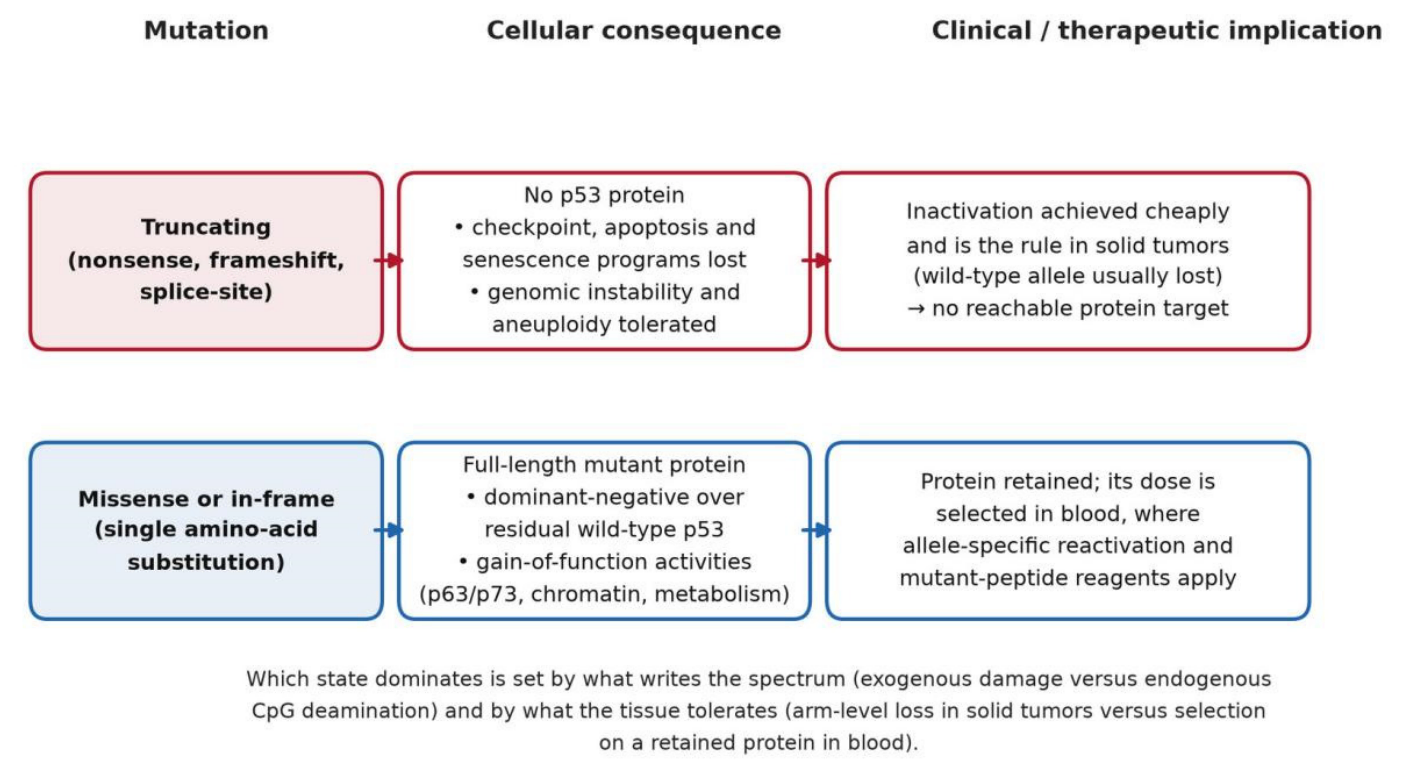
Protein-shortening mutations accounted for 34.2% of samples with the altered gene in solid cancers, versus 24.4% in blood cancers.
Our read
Mechanisms- Studied:
- Computational study (64,000 participants, genetic association study, independent replication)
Editor of record: Boris Djordjevic · AgingResearch.News
Human cancer datasets covering 10,639 solid tumor samples and 10,042 blood cancer samples formed the basis of a computational observational analysis. Researchers compared mutations in TP53, the gene for p53, a protein that helps suppress tumors. They distinguished mutations expected to eliminate the protein from those expected to leave a full-length altered protein.
Protein-shortening mutations accounted for 34.2% of altered solid tumor samples and 24.4% of altered blood cancer samples. The pattern also appeared in two other databases. The authors proposed that drugs aimed at restoring the altered protein’s activity would make sense where the full-length protein remains.
Why it matters
Cancer is an age-related disease. The authors’ distinction raises a treatment-design question: whether an altered protein remains available for a drug to reactivate.
Caveats
Protein retention in blood cancers was inferred from mutation type, not measured. The proposed strategy of reactivating the altered protein was not tested.
From the paper
- Follow-up
… with a median follow-up of 24.0 months among censored patients (this is slightly smaller than the 3684 samples entered into the per-type models because samples without a positive survival time were excluded).
Results, 2.3. What the State Does: Retained-Allele Dose and Loss of the Wild-Type Allele
- Result
Counting a sample as truncating whenever any truncating variant was present gave 34.3% in solid and 24.6% in hematologic samples (odds ratio 1.60, 95% CI 1.34–1.89), essentially identical to the severity-ranked rule (34.2% and 24.4%; odds ratio 1.61, 1.35–1.91) …
Results, 2.1. Two States of One Gene, and How They Are Measured
Quoted word for word from the full text on mdpi.com.
- Solid tumor
- Hematologic malignancy
- Myelodysplastic syndrome
- Clonal hematopoiesis of indeterminate potential
- Endogenous CpG baseline
- Humans
The paper
Guangxi Medical University Cancer Hospital
International Journal of Molecular Sciences, Nov 9, 2026, Open access, CC BY
Comments
Be the first to comment.