Particles from exercised muscle reduced heart injury in mice
Mouse experiments tracked tiny packages released by skeletal muscle after four weeks of exercise and tested their role in limiting heart damage.

Our read
Interventions- Studied:
- Experiments in mice with myocardial ischemia/reperfusion injury, 4 weeks
- What changed:
- Vesicles from exercised muscle reduced heart injury and heart muscle cell death in mice
- The catch:
- Vesicles were injected directly into heart muscle, bypassing their natural delivery from skeletal muscle
Editor of record: Boris Djordjevic · AgingResearch.News
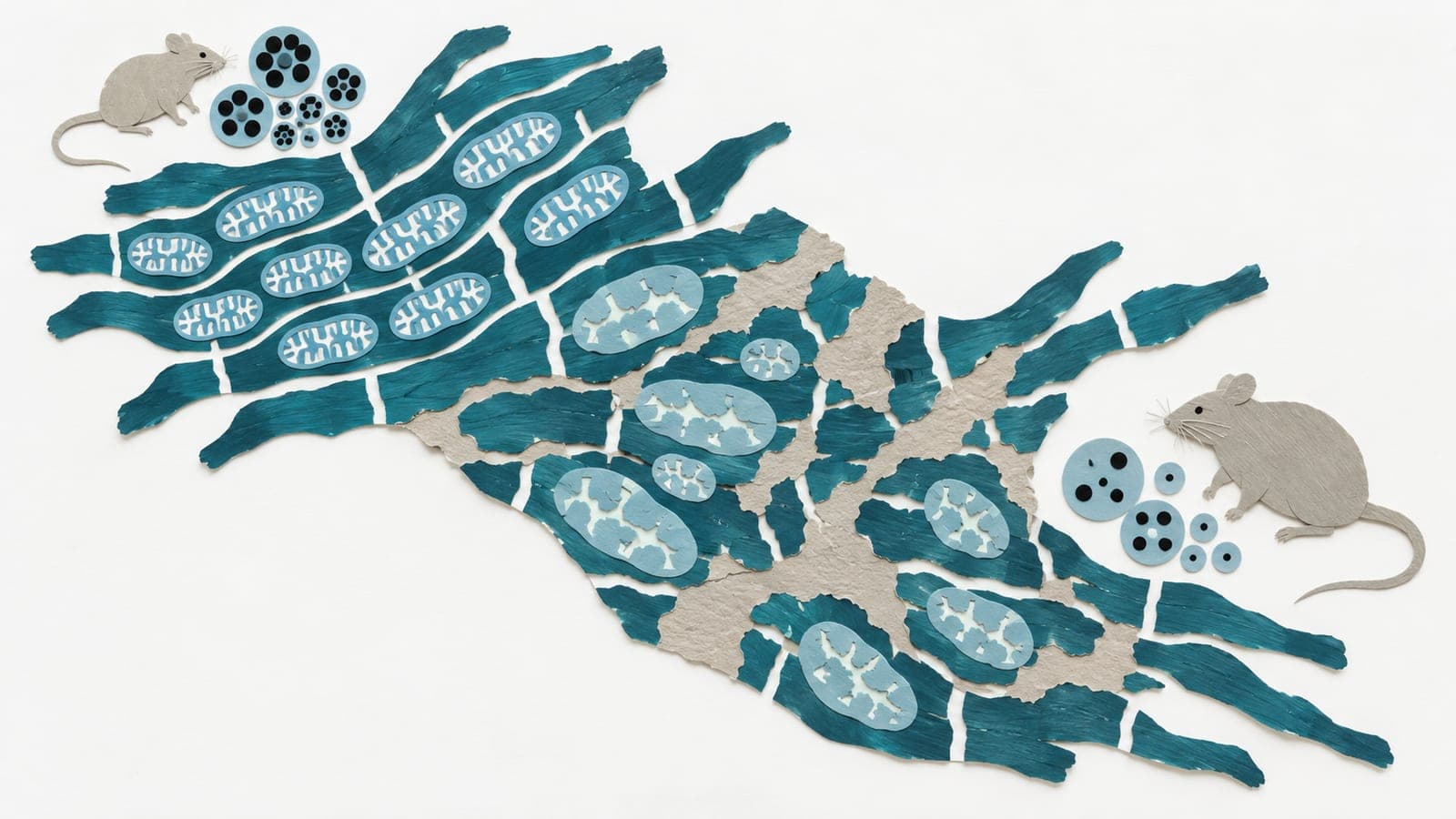
Mice that exercised for four weeks were used in experiments tracking small extracellular vesicles—tiny packages released by cells—from skeletal muscle to the heart. Exercise increased their entry into the heart. The researchers tested their protective role by injecting vesicles into the heart and by genetically reducing their release from skeletal muscle.
Vesicles from exercised muscle reduced heart injury caused by interrupted and then restored blood flow. They reduced heart muscle cell death and improved mitochondrial respiration, a process that helps cells generate energy. Reducing vesicle release weakened exercise's protection against the injury. The vesicles carried two small RNA molecules that altered stress-response pathways in heart muscle cells, reducing cell death. Increasing these molecules specifically in skeletal muscle reproduced exercise's heart-protective effects in mice.
Why it matters
Cardiovascular disease is a concern as people age. The authors propose muscle-to-heart signaling as a promising route toward treatments.
Caveats
The heart-protection results came from mouse injury experiments. Exercising humans also had higher levels of the two RNA molecules in muscle and circulating vesicles, but those findings did not establish heart protection in people.
Exercise is part of Bryan Johnson's Blueprint
The paper
Skeletal Muscle sEVs Mediate Exercise-Induced Cardioprotection in I/R Injury
Institute of Geriatrics (Shanghai University)
Circulation Research, Nov 9, 2026

Comments
Be the first to comment.