Sorcin protein helped scar-forming liver cells keep dividing
Experiments in liver stellate cells traced the effect to RNA-containing clusters that reduced production of p53, a protein that helps regulate cell division.
Our read
Mechanisms- Studied:
- Experiments in hepatic stellate cells
- What changed:
- Sorcin increased liver stellate cells' capacity to multiply and reduced signs of senescence
- The catch:
- The continued-division claim rests on senescence markers and proliferative capacity
- Why it’s aging research:
- It studies something that builds up in the body with age.
Editor of record: Boris Djordjevic · AgingResearch.News
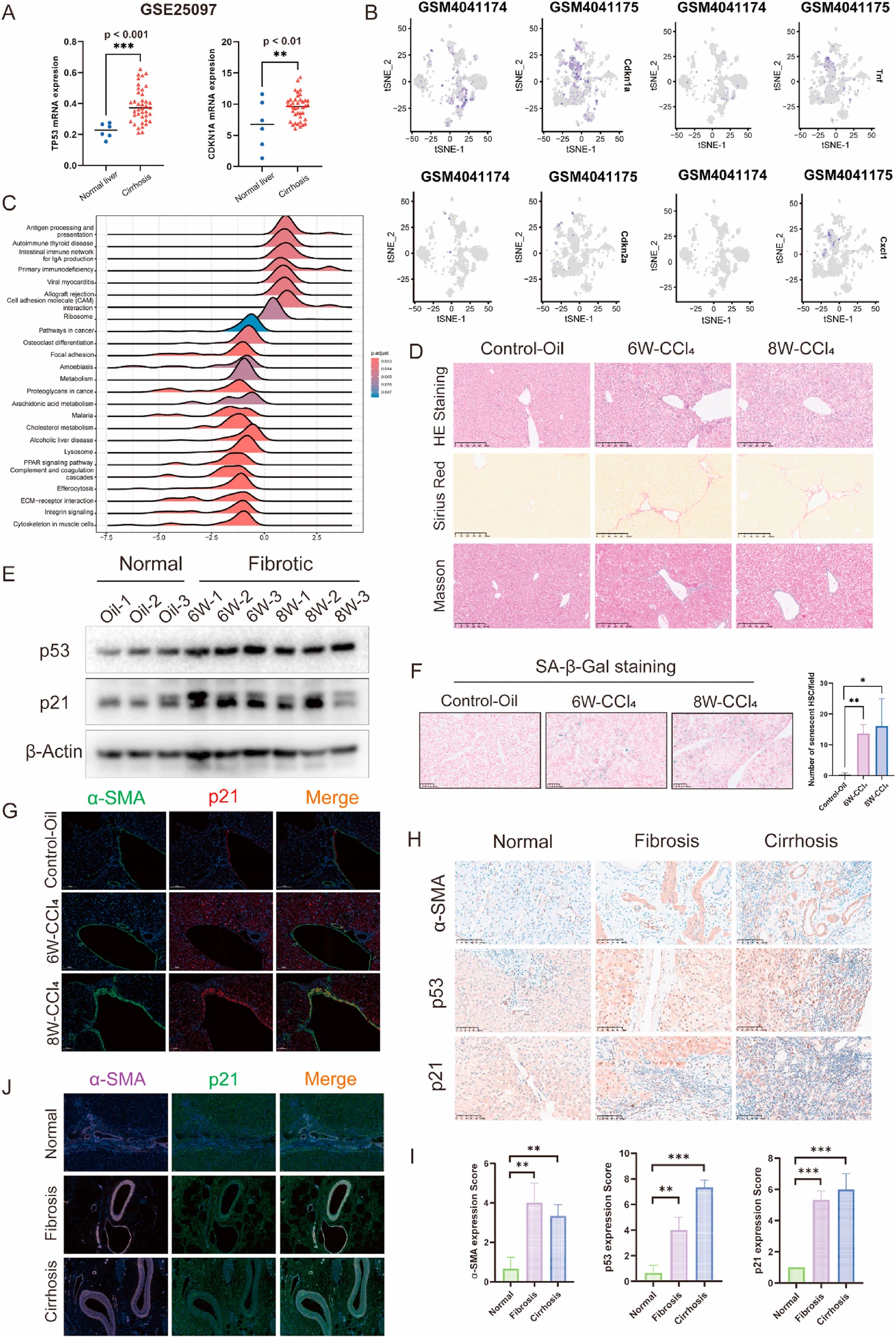
Hepatic stellate cells, liver cells involved in scarring, were the focus of experiments on senescence, a state in which cells stop dividing. Sorcin, a protein, suppressed this state: cells showed fewer signs of senescence and a greater capacity to multiply. Analyses of human and mouse datasets also found higher Sorcin levels as liver fibrosis, or scarring, progressed.
The cell experiments showed that increased calcium inside cells drove Sorcin to form droplet-like clusters with TIAR, a protein that binds RNA. These clusters trapped the RNA instructions for making p53, reducing its production and delaying senescence. In mice with chemically induced liver fibrosis, reducing Sorcin through a virus-delivered intervention increased stellate cell senescence and eased fibrosis.
Why it matters
Senescence can limit liver scarring when it occurs in activated stellate cells. The authors highlighted Sorcin as a potential target for liver fibrosis.
Caveats
The fibrosis benefit was tested in mice with chemically induced disease. The human evidence came from dataset analyses, not an intervention in people.
Where the evidence stands
TP53
- 214 independent labs in 34 countries
- 21 findings against
- Funders: National Institutes of Health and others
- 30 of 446 findings with company ties
The paper
Free Radical Biology & Medicine, Nov 6, 2026

Comments
Be the first to comment.