Mutation patterns linked to blood cancer in inherited disorders
An analysis of 658 samples from 309 patients with inherited blood disorders linked distinct mutation sequences to progression toward blood cancers.
Our read
Mechanisms- Studied:
- Preprint: cohort study of 309 patients with severe congenital neutropenia or Shwachman-Diamond syndrome
- What changed:
- In Shwachman-Diamond syndrome, a TP53 mutation frequency above 0.074 distinguished patients who developed blood cancer from those who did not
- The catch:
- Only selected cases received single-cell sequencing, potentially biasing which mutation combinations were confirmed
- In the record:
- The 154th paper on TP53 with results in people; 2,482 on record in all.
Editor of record: Boris Djordjevic · AgingResearch.News
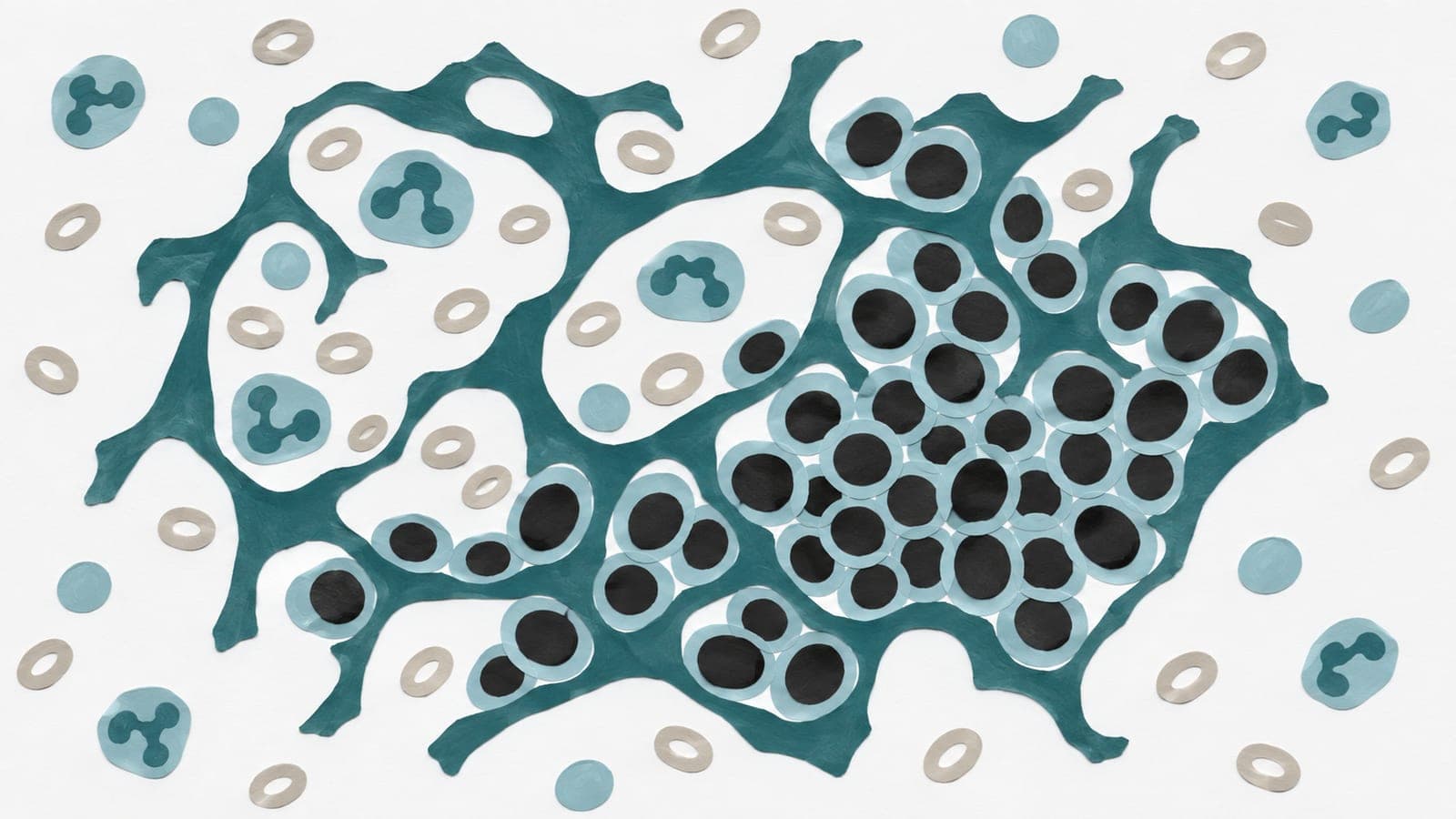
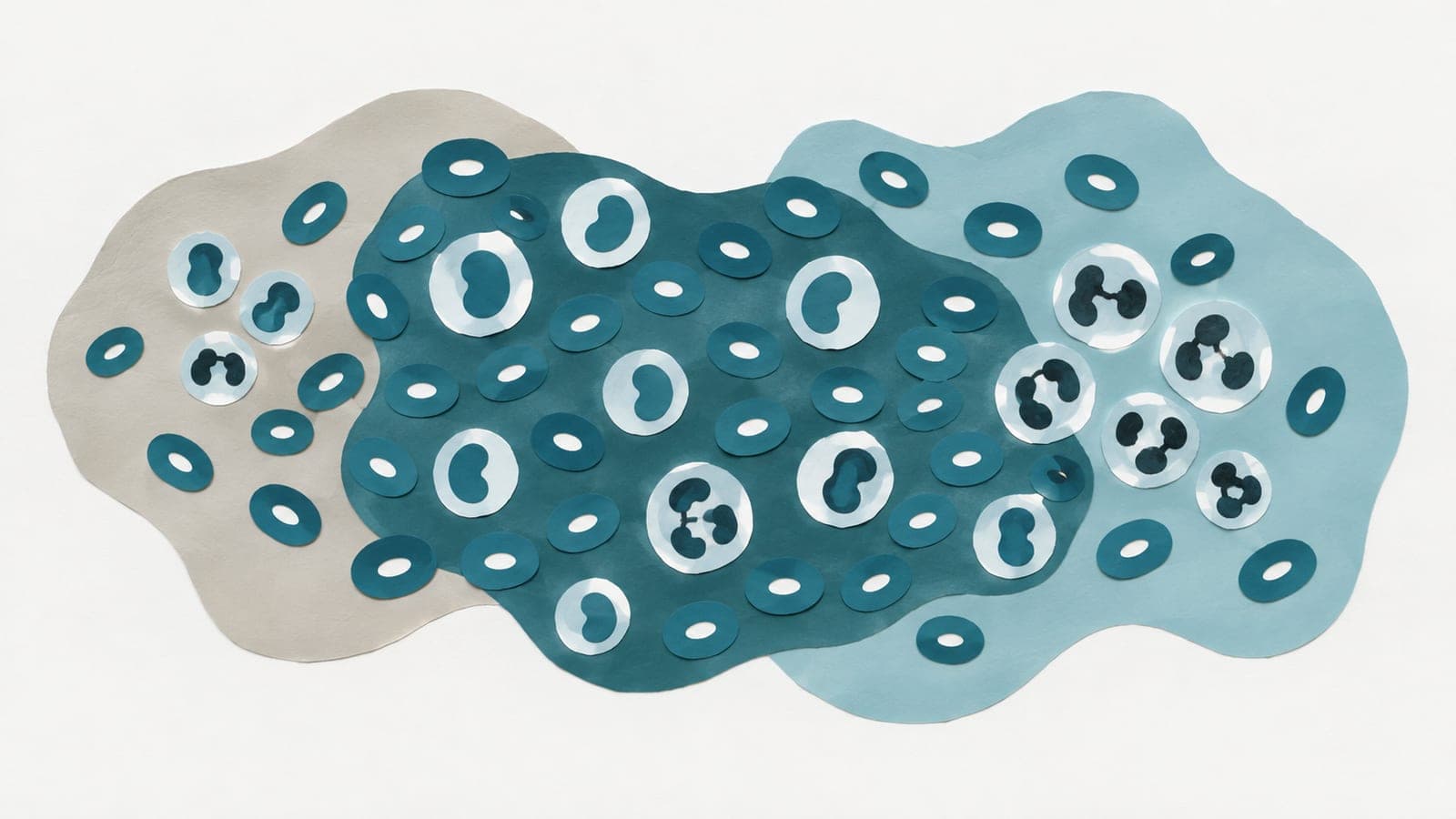
The 309 patients with severe congenital neutropenia or Shwachman-Diamond syndrome contributed 658 samples to a longitudinal observational study of acquired DNA mutations. Both inherited disorders involve low counts of neutrophils, infection-fighting white blood cells. The researchers detected clonal hematopoiesis—groups of blood cells sharing acquired mutations—in early childhood.
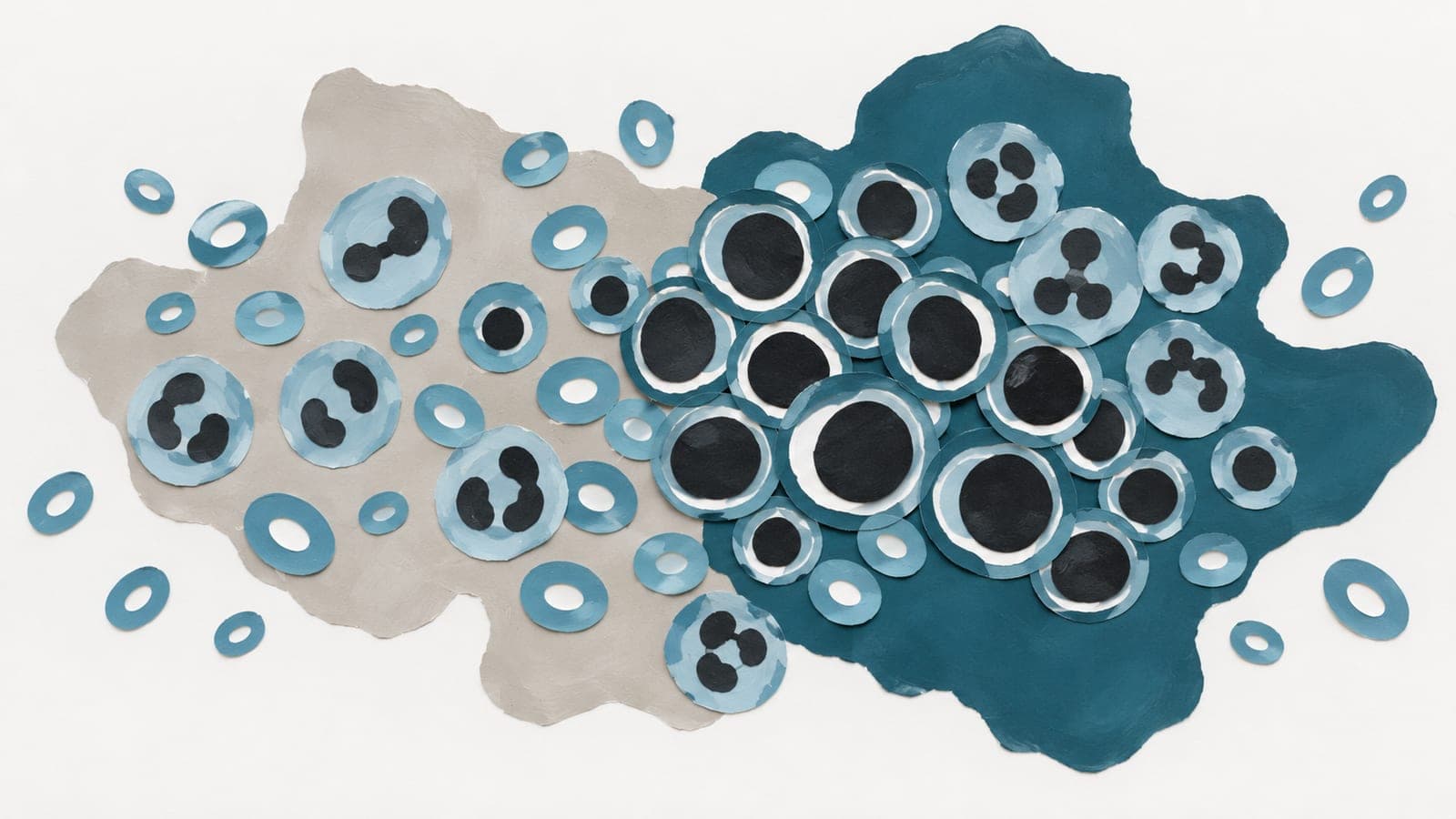
It affected 37.7% of patients with severe congenital neutropenia and 60% with Shwachman-Diamond syndrome. The mutation burden remained essentially unchanged over decades. In severe congenital neutropenia, certain mutations emerged shortly before progression to myelodysplastic syndromes or acute myeloid leukemia, both blood cancers. In Shwachman-Diamond syndrome, cell populations with mutations in both copies of TP53, a tumor-suppressing gene, expanded before cancer developed. The authors concluded that transformation followed a defined mutation sequence beginning in childhood.
Why it matters
For people living with inherited neutropenia, the findings may help distinguish long-term blood-cell changes that signal cancer risk from mutations that remain stable for decades.
Caveats
Tracking mutations in these inherited neutropenia syndromes does not show whether the same sequences apply to other people at risk of blood cancers. The work is a preprint and has not been peer-reviewed.
- Severe congenital neutropenia
- Shwachman-Diamond syndrome
- Acute myeloid leukemia
- Inherited neutropenia
- Myelodysplastic syndrome
- Humans
The paper
Department of Oncology, Hematology, Clinical Immunology, and Rheumatology, University Hospital Tuebingen, Tuebingen, Germany
bioRxiv, Nov 11, 2026, Open access, CC BY-NC-ND, Preprint, not yet peer-reviewed

Comments
Be the first to comment.