Protein helped drive senescence in lab-grown human eye cells
Experiments implicated a gene-regulating protein in senescence, a state in which cells stop dividing, in human retinal cells grown in the lab.
Our read
Mechanisms- Studied:
- Experiments in human retinal pigment epithelial cells, against control ARPE-19 cells (Dose-response, independent replication)
- What changed:
- Eye cells producing extra STAT1 had more signs of senescence than control cells
- The catch:
- Senescence was inferred from markers rather than measured as permanent growth arrest
- In the record:
- The 11th paper on STAT1 with results in people; 115 on record in all.
- Why it’s aging research:
- It studies organisms or tissues that aged naturally.
Editor of record: Boris Djordjevic · AgingResearch.News
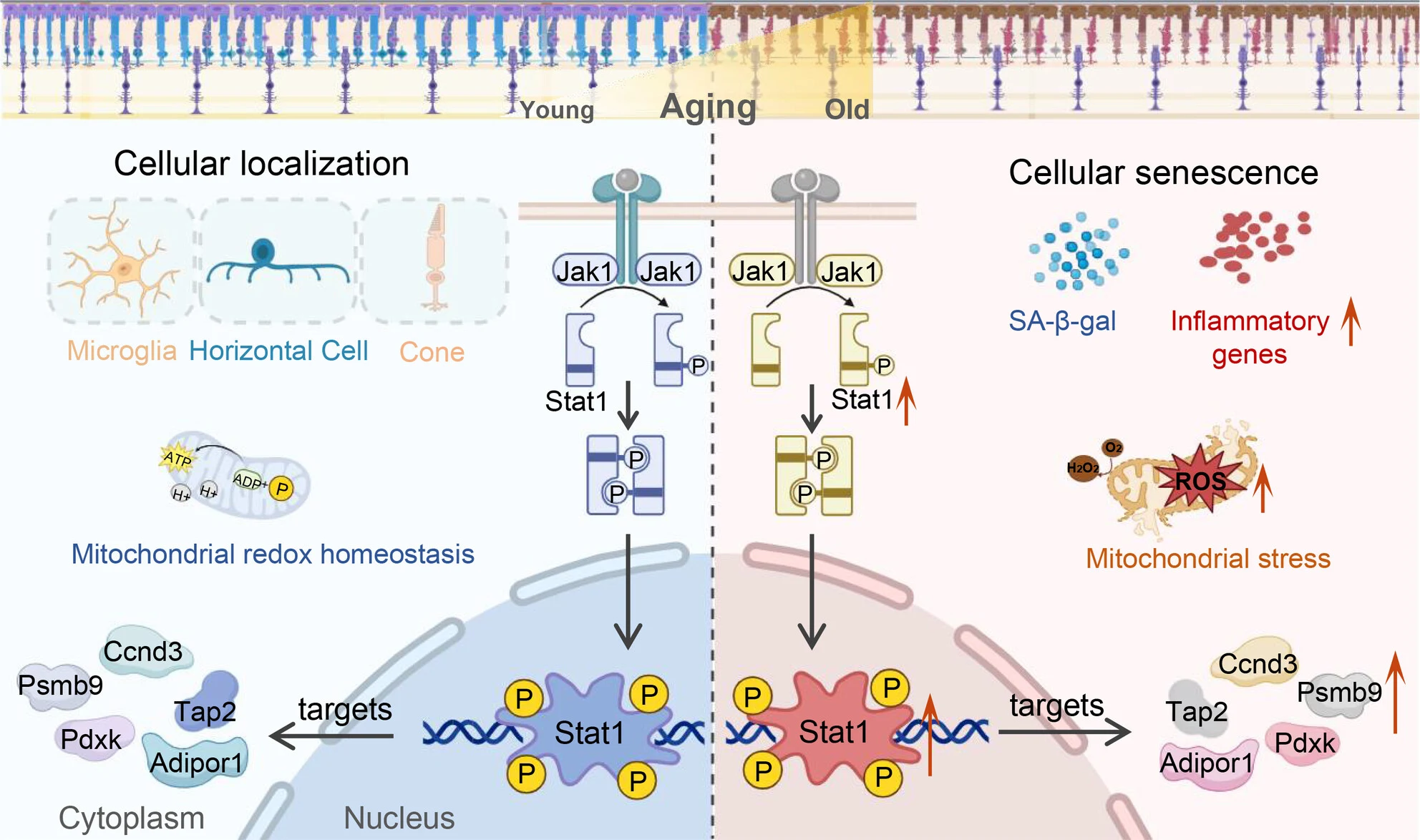
Human ARPE-19 cells, a lab-grown line representing the retina’s supporting pigment cells, underwent experiments that increased or reduced STAT1, a protein that regulates gene activity. Increasing STAT1 produced senescence-like changes in gene activity and increased reactive oxygen molecules. Cells exposed to 400 micromolar tert-butyl hydroperoxide for two hours, followed by 48 hours of recovery, developed stress-induced senescence. Reducing STAT1 partly eased this response and reduced inflammation-related signaling.
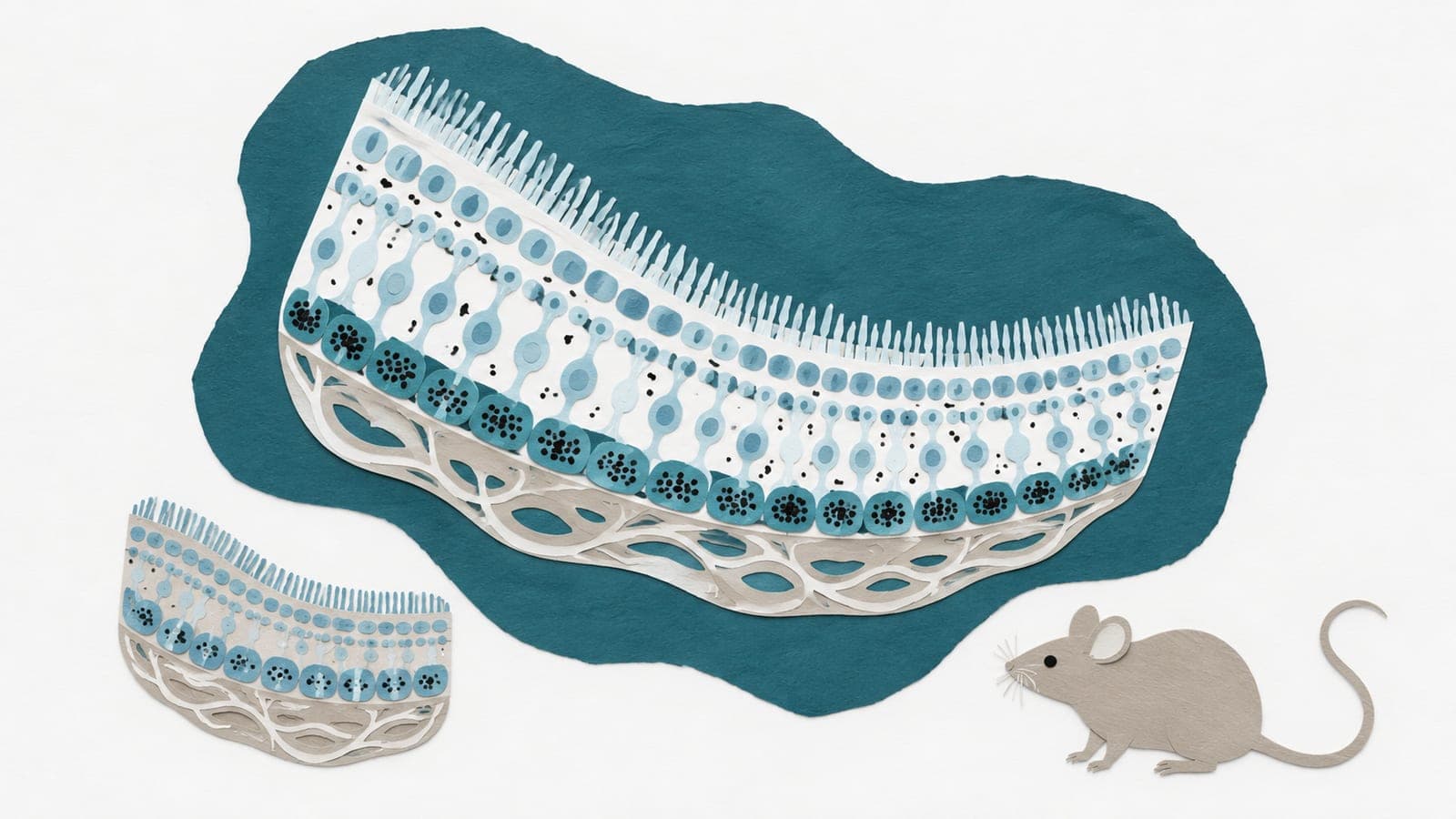
STAT1 emerged as a candidate regulator in a comparison of gene activity and proteins in retinas—the eye’s light-sensing tissue—from eight 4-month-old and eight 24-month-old C57BL/6J mice of both sexes. Older retinas showed increased immune and metabolic activity alongside reduced activity in vision-related pathways.
Why it matters
Aging is the dominant risk factor for retinal nerve-cell degeneration. The authors propose targeting pathways centered on STAT1 to delay or reduce age-related retinal degeneration.
Caveats
The experiments that changed STAT1 used one human cell line, not living eyes. The mouse comparisons did not test whether reducing STAT1 preserved vision or slowed retinal aging.
Where the evidence stands
STAT1
- 17 independent labs in 8 countries
- Funders: National Natural Science Foundation of China and others
- 3 of 25 findings with company ties
Inflammation
- 1,042 independent labs in 77 countries
- 202 findings against
- Funders: National Institutes of Health and others
- 380 of 4,569 findings with company ties
Comments
Be the first to comment.