Senescence-associated secretory phenotype (SASP)

Papers on senescence-associated secretory phenotype (SASP)

4,588 papers165 new in 30 days

Tuesday, November 17

Monday, November 16

bioRxiv

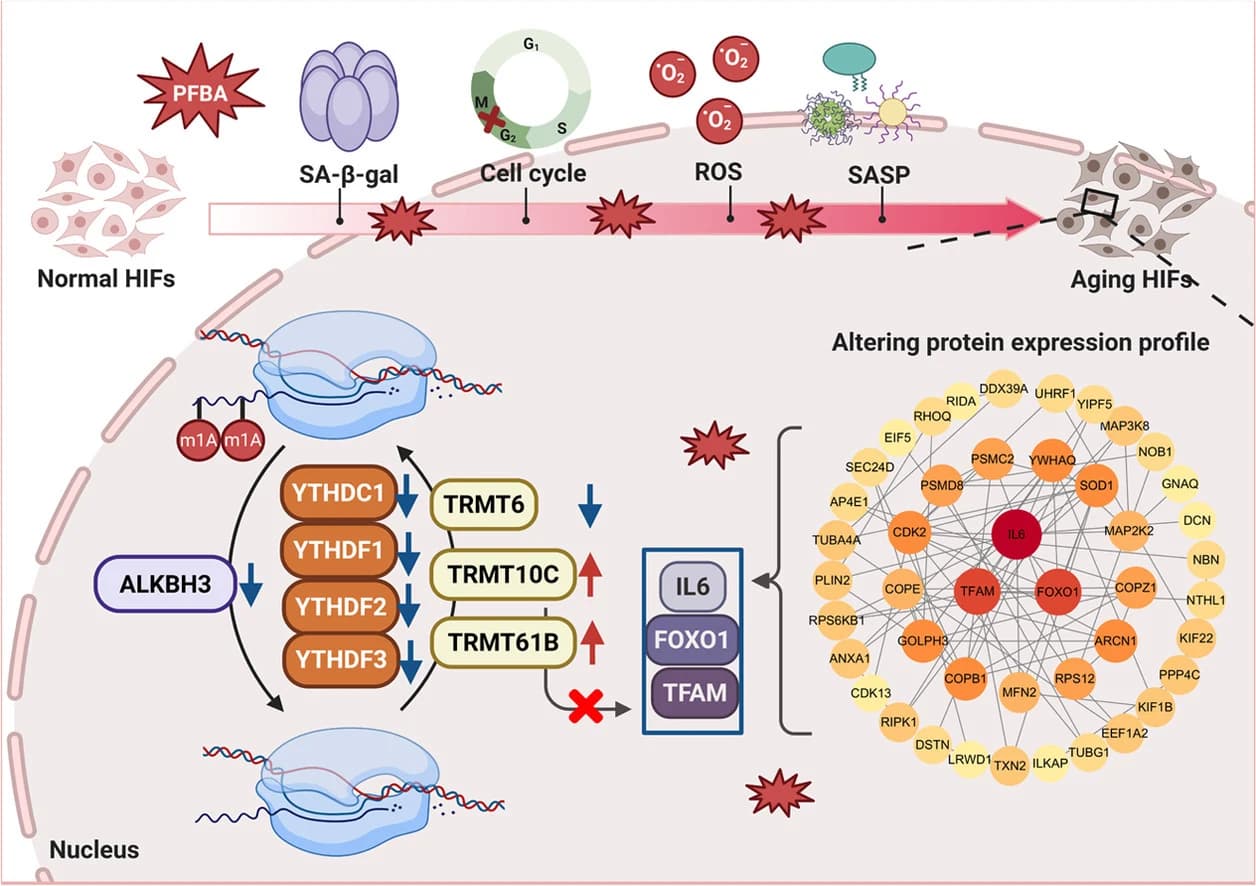
Protein levels alter drug sensitivity in lab-grown human cells

Cells still stopped dividing after radiation, but protein levels changed their secreted signals and sensitivity to a drug that kills senescent cells.Cells still stopped dividing after radiation, but protein levels changed their secreted signals and sensitivity to a drug that kills senescent cells.

A large intact fibroblast sits among secreted droplets beneath smaller cells, including a dying cell with a shrunken nucleus and scattered fragments.
Preprint: human cell studyMechanisms
Cells

Cell-released particles reduce aging-linked signs in human cells

Stressed human heart-vessel lining cells showed fewer markers of senescence, a state in which cells stop dividing, after 48 hours of particle exposure in laboratory…Stressed human heart-vessel lining cells showed fewer markers of senescence, a state in which cells stop dividing, after 48 hours of particle exposure in laboratory experiments.

Figure from Cells
Human cell studyInterventions
International Journal of Molecular Sciences

Tobacco smoke makes mouse lung cells stop dividing

Experiments in mice linked smoke exposure to disrupted cell clocks and immune activation, alongside early changes that may leave lungs prone to scarring.Experiments in mice linked smoke exposure to disrupted cell clocks and immune activation, alongside early changes that may leave lungs prone to scarring.

Lung tissue shifts from open air spaces to thickened walls with enlarged cells, fibers, and dark droplets beside a mouse and a wisp of smoke.
Mouse studyLung

Sunday, November 15

Saturday, November 14

Research Square

Aging gene effects partly match from yeast to human cells

Two yeast lifespan measures shared regulators 1.7-fold more often than expected, but the direction of their effects agreed only 50% of the time.Two yeast lifespan measures shared regulators 1.7-fold more often than expected, but the direction of their effects agreed only 50% of the time.

Human cells with sparse and crowded interiors sit beside budding yeast, a curved worm, and a mouse.
Preprint: computational studyMechanisms

Friday, November 13

NPJ Aging

Skin cells that stopped dividing promoted melanoma growth in mice

Animal experiments found that aging and chronic ultraviolet B exposure changed the skin environment in ways that favored tumor growth.Animal experiments found that aging and chronic ultraviolet B exposure changed the skin environment in ways that favored tumor growth.

Figure from NPJ Aging
Mouse studySkin
Amyotrophic Lateral Sclerosis & Frontotemporal Degeneration

Two drugs improved thinking and muscle function in mice

Quercetin and dasatinib improved thinking and muscle function in genetically modified mice used to model amyotrophic lateral sclerosis, a disease affecting movement.Quercetin and dasatinib improved thinking and muscle function in genetically modified mice used to model amyotrophic lateral sclerosis, a disease affecting movement.

Muscle fibers with dense branching nerves contrast with thin, frayed gray fibers beside flattened cells and droplets, with a mouse near each bundle.
Mouse studyMuscle
Inflammation

Signaling protein linked to cell aging in scarred human lungs

Analyses including 1,004 human lung samples linked SLIT2, a signaling protein, to aging-associated changes in connective-tissue cells in a lung-scarring disease.Analyses including 1,004 human lung samples linked SLIT2, a signaling protein, to aging-associated changes in connective-tissue cells in a lung-scarring disease.

Transcriptomic deconvolution reveals fibroblast enrichment across IPF and aging.
Cross-sectional studyNF-κB signaling

Thursday, November 12

bioRxiv

Muscle protein pattern linked to age and function in women

A 24-protein signature separated 10 younger from 10 older women; higher signature scores were linked to poorer combined grip strength and walking speed.A 24-protein signature separated 10 younger from 10 older women; higher signature scores were linked to poorer combined grip strength and walking speed.

Thigh muscle cross-sections show thicker surrounding material and clustered proteins beside a smaller sample with mitochondria, near upright women.
Preprint: cross-sectional · 20 peopleBiomarkers
Aging Cell

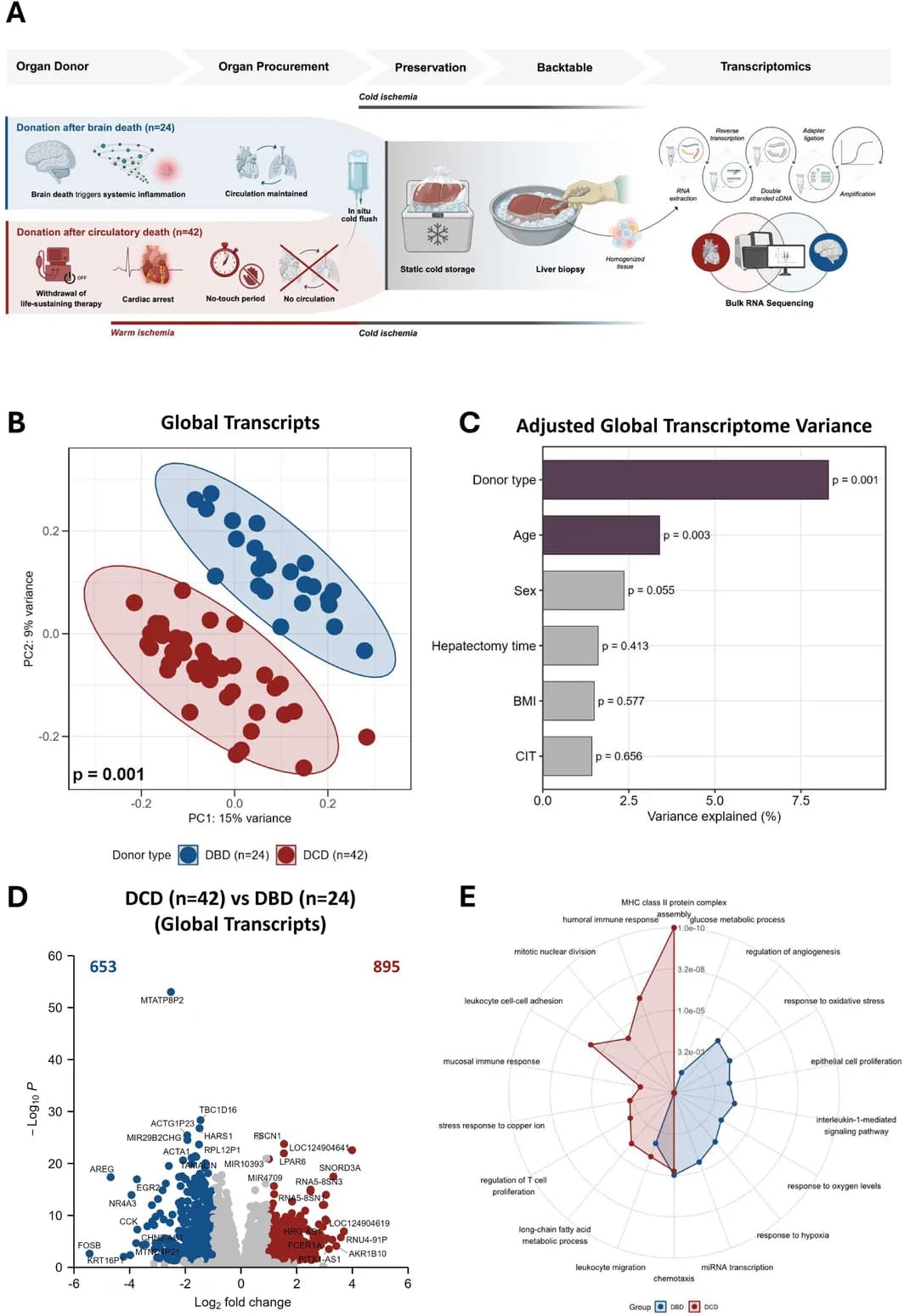
Donor type linked to distinct gene activity in human livers

Activity of 1,548 genes differed between livers donated after brain death and circulatory death, including patterns linked to senescence, when cells stop dividing.Activity of 1,548 genes differed between livers donated after brain death and circulatory death, including patterns linked to senescence, when cells stop dividing.

Characterization of the full transcriptome of DBD and DCD livers.
Cross-sectional · 66 peopleMechanisms

Wednesday, November 11

Cell Reports Methods

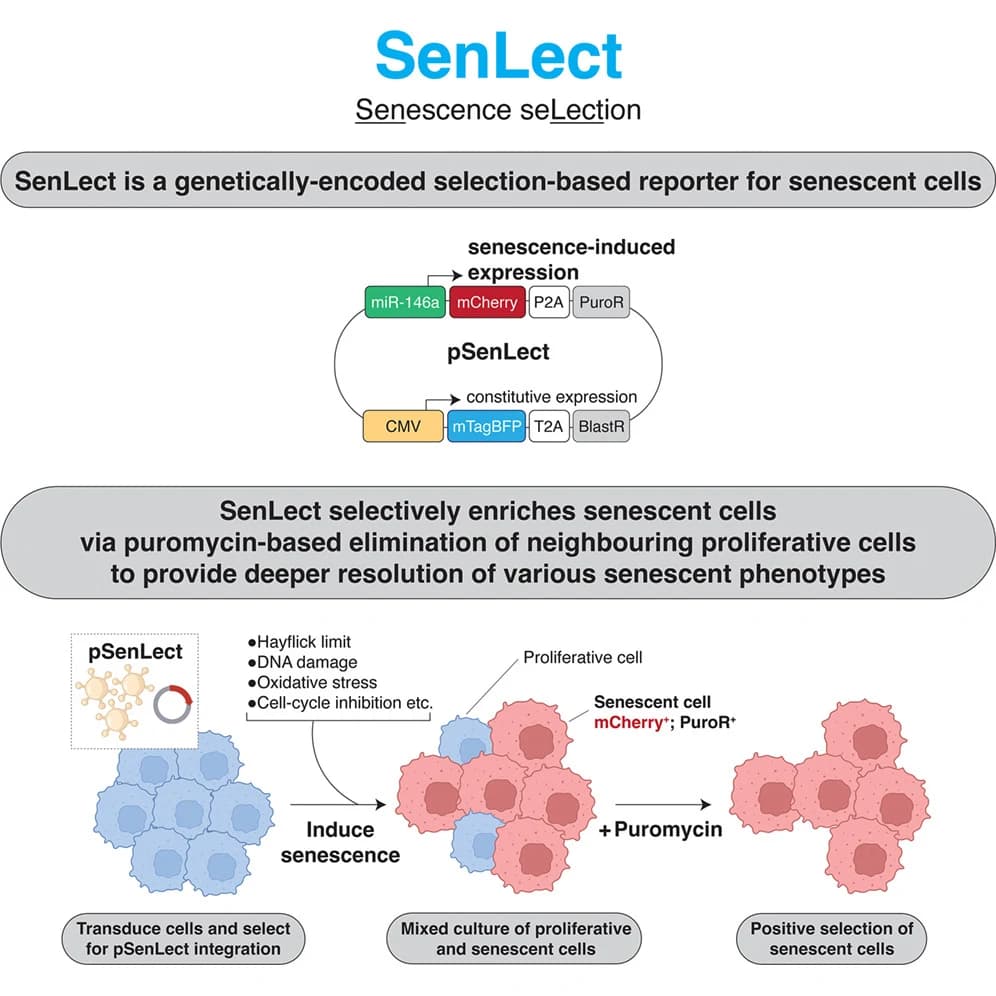
Tool enriches senescent cells in lab-grown cultures

In cell-culture experiments, SenLect labeled senescent cells and enriched them by selectively eliminating neighboring cells that were still dividing.In cell-culture experiments, SenLect labeled senescent cells and enriched them by selectively eliminating neighboring cells that were still dividing.

Figure from Cell Reports Methods
Animal cell studyCellular senescence