Two drugs improved thinking and muscle function in mice
Quercetin and dasatinib improved thinking and muscle function in genetically modified mice used to model amyotrophic lateral sclerosis, a disease affecting movement.
Our read
Interventions- Studied:
- Experiments in TDP-43 Q331K mice
- What changed:
- Quercetin and dasatinib improved thinking and muscle function in TDP-43 Q331K mice
- The catch:
- Cognitive and muscle benefits are described without numerical results or control-group comparisons
- In the record:
- One of 339 papers on Dasatinib + quercetin on record: 55 with results in people, 183 in animals. Its result on cognitive function agrees with 6 of 13 other findings on record; 1 points the other way and 6 found no change.
Editor of record: Boris Djordjevic · AgingResearch.News
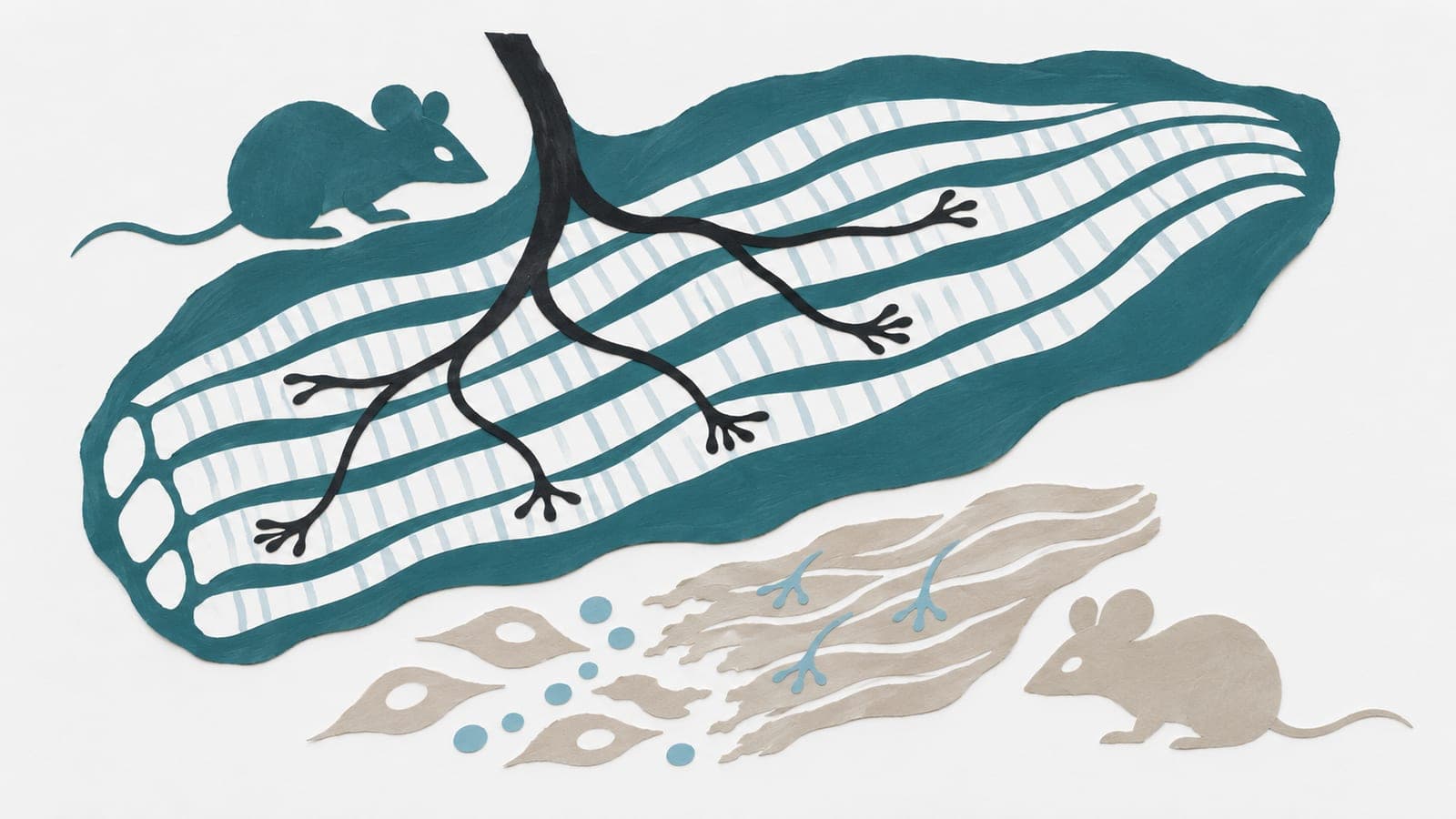
Genetically modified TDP-43 Q331K mice used to model amyotrophic lateral sclerosis (ALS), a disease that damages nerves controlling muscles, received quercetin and dasatinib in an animal experiment. These drugs target senescent cells—damaged cells that have permanently stopped dividing. Treatment relieved thinking problems, restored the function of motor units—the nerve cells and muscle fibers they control—and improved muscle strength and muscle fiber abnormalities.
The researchers also found increased inflammatory signals associated with senescence in four genetically modified ALS mouse models. Separately, they analyzed published data from ALS brain and spinal cord samples collected after death, alongside lab-grown motor neurons and astrocytes, which support nerve cells. These analyses found an overrepresentation of genes associated with senescence.
Why it matters
Cell senescence contributes to inflammation associated with aging, an important risk factor for ALS. The authors proposed exploring drugs targeting senescent cells as possible treatments for the disease.
Caveats
The quercetin–dasatinib findings came from an experiment in genetically modified mice used to model ALS. They do not show whether the combination would improve thinking or muscle function in people with ALS.
Where the evidence stands
Dasatinib + quercetin
- 126 independent labs in 26 countries
- 28 findings against
- 18 trials, 1 with no results posted
- Funders: National Institute on Aging and others
- 79 of 686 findings with company ties
- 1 of 18 trials sponsored by its developers
FUS
- 6 independent labs in 6 countries
- Funders: National Institute on Aging and others
- 3 of 12 findings with company ties
The paper
THEME 7 PRE-CLINICAL THERAPEUTIC STRATEGIES
Amyotrophic Lateral Sclerosis & Frontotemporal Degeneration, Nov 13, 2026
Comments
Be the first to comment.