Muscle protein pattern linked to age and function in women
A 24-protein signature separated 10 younger from 10 older women; higher signature scores were linked to poorer combined grip strength and walking speed.
Our read
Biomarkers- Studied:
- Preprint: cross-sectional study of 20 healthy younger and older women
- What changed:
- Higher muscle protein signature scores were linked to poorer combined grip strength and walking speed
- The catch:
- Selecting and assessing the signature in the same 20 women risks overstating its performance
- In the record:
- The 13th paper on HMGB1 with results in people; 155 on record in all.
Editor of record: Boris Djordjevic · AgingResearch.News
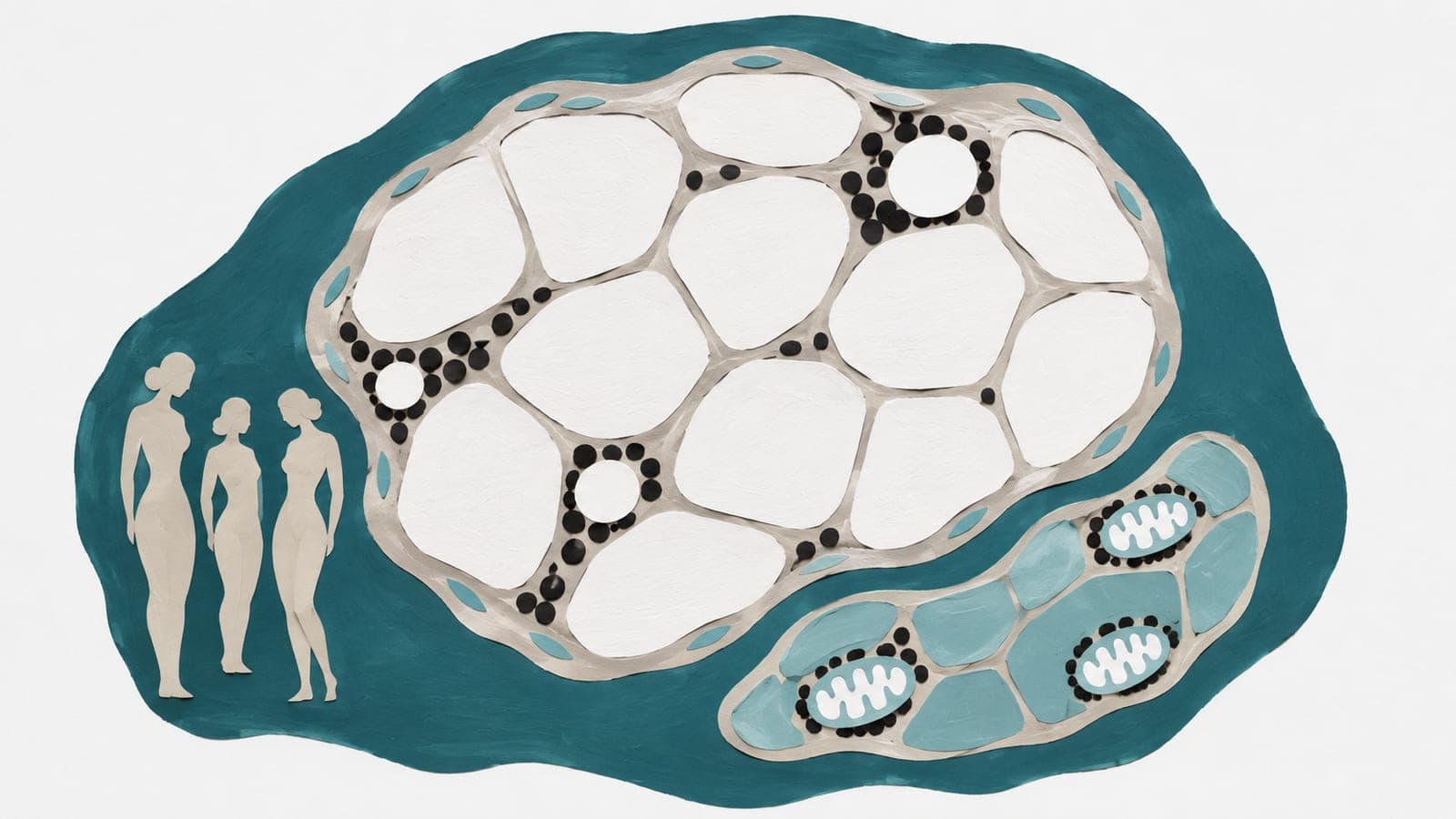
Ten healthy women aged 24–30 and 10 aged 70–84 provided biopsies of the vastus lateralis, a thigh muscle, for an observational study. The researchers measured proteins in the samples alongside grip strength and walking speed.
Older muscle had higher levels of proteins associated with the material surrounding cells, DNA packaging and lysosomes, the cell’s waste-disposal compartments. It had lower levels of proteins involved in energy production. Of 2,391 protein groups measured, 163 differed by age. A 24-protein signature separated all younger from all older women. Higher signature scores were strongly linked to lower scores on a combined measure of physical function. Twenty-three of the 24 proteins were also linked to physical function.
Why it matters
Declining muscle strength and mobility are consequential features of aging. The authors suggest that, after validation, this signature may help assess interventions aimed at preserving physical performance in older women.
Caveats
The signature was selected and assessed in the same 20 healthy women, which may overstate its performance elsewhere; the findings do not establish its usefulness in men or women with illness. This preprint has not been peer-reviewed.
- Machine learning
- Proteomics
- Cellular senescence
- Chromatin and 3D genome organization
- Grip strength
- Humans
The paper
Buck Institute for Research on Aging
bioRxiv, Nov 12, 2026, Open access, Preprint, not yet peer-reviewed


Comments
Be the first to comment.