Donor type linked to distinct gene activity in human livers
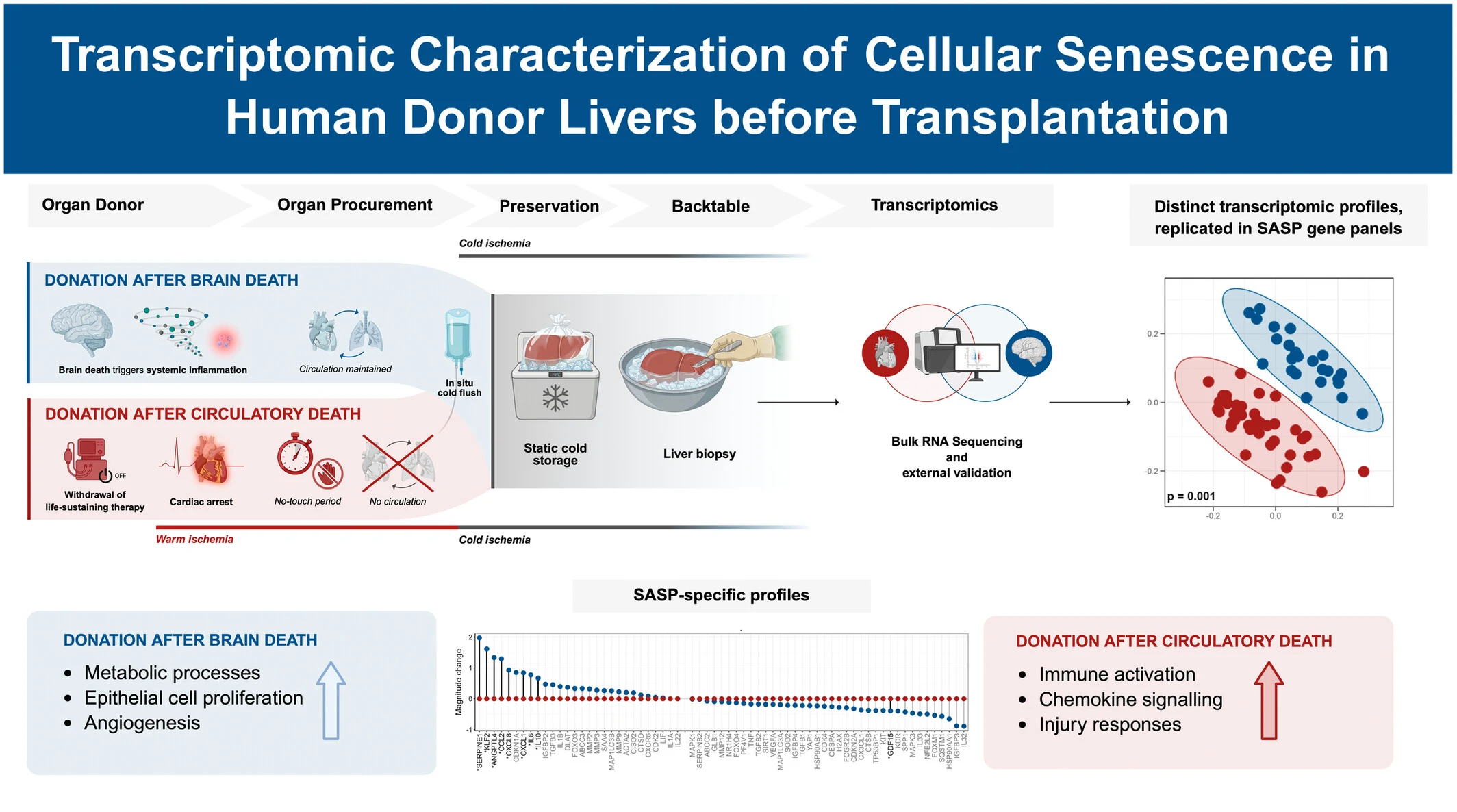
Activity of 1,548 genes differed between livers donated after brain death and circulatory death, including patterns linked to senescence, when cells stop dividing.
Our read
Mechanisms- Studied:
- Cross-sectional study of 66 people (Independent replication, registered NCT03272841)
- In the record:
- One of 4 papers on donation after circulatory death on record: 2 with results in people.
Editor of record: Boris Djordjevic · AgingResearch.News
Sixty-six human donor livers were compared before transplantation in an observational analysis: 24 donated after brain death and 42 after circulatory death. Median donor ages were 55 and 67 years, respectively. Tissue samples were collected after transport in cold storage.
The researchers measured gene activity, including patterns associated with senescence. These patterns differed by donor type and overlapped with injury responses. Livers donated after circulatory death showed stronger gene activity patterns related to immune activation and injury. Those donated after brain death showed stronger patterns related to metabolism, among other processes. Data from an independent cohort of 18 livers donated after circulatory death and 29 after brain death also showed differences by donor type, including in the available senescence-associated genes.
Why it matters
Senescence-associated signals may influence transplanted liver function, the authors suggest. They propose these signals as possible targets for drugs that kill senescent cells or modify their activity.
Caveats
The gene panels also captured inflammation and injury responses, so differences in these measures do not isolate senescence from those processes.
Where the evidence stands
Donation after circulatory death
- 1 lab
Angiogenesis
- 213 independent labs in 33 countries
- 17 findings against
- Funders: National Natural Science Foundation of China and others
- 26 of 418 findings with company ties
- Donation after brain death
- Donation after circulatory death
- Angiogenesis
- Cellular senescence
- Liver-specific senescence-associated secretory phenotype panel
- Humans
The paper
Transcriptomic Characterization of Cellular Senescence in Human Donor Livers Before Transplantation
University Medical Center Groningen Groningen the Netherlands
Aging Cell, Nov 11, 2026, Open access, CC BY
Comments
Be the first to comment.