p53–p21 pathway

Papers on p53–p21 pathway

2,747 papers38 new in 30 days

Thursday, November 19

Antioxidants & Redox Signaling

Hydrogen sulfide may ease signs of heart aging in mice

In mice exposed to D-galactose, a hydrogen sulfide-releasing compound reduced signs of heart aging and activation of a protein involved in inflammation.In mice exposed to D-galactose, a hydrogen sulfide-releasing compound reduced signs of heart aging and activation of a protein involved in inflammation.

Mouse heart sections beside mice show intact dark blue-green muscle with sparse protein clusters and fragmented gray muscle with dense clusters.
Mouse studyInterventions

Wednesday, November 18

Phytomedicine

Compound reduced kidney injury in mice with diabetes

Experiments in mice with diabetes-induced kidney disease found less kidney tubule cell senescence, a state in which cells stop dividing, after receiving procyanidin C1.Experiments in mice with diabetes-induced kidney disease found less kidney tubule cell senescence, a state in which cells stop dividing, after receiving procyanidin C1.

Figure from Phytomedicine
Mouse studyKidney injury

Tuesday, November 17

bioRxiv

Stress-response protein supports healthy aging in mouse liver

In experiments in aged mice, removing the stress-response protein p53 from liver cells increased inflammation, while activating it with a drug delayed the onset of…In experiments in aged mice, removing the stress-response protein p53 from liver cells increased inflammation, while activating it with a drug delayed the onset of frailty.

Liver tissue beside a laboratory mouse contrasts orderly, intact cells with disrupted cells crowded by dark immune cells.
Preprint: mouse studyDNA damage response

Monday, November 16

Cells

Cell-released particles reduce aging-linked signs in human cells

Stressed human heart-vessel lining cells showed fewer markers of senescence, a state in which cells stop dividing, after 48 hours of particle exposure in laboratory…Stressed human heart-vessel lining cells showed fewer markers of senescence, a state in which cells stop dividing, after 48 hours of particle exposure in laboratory experiments.

Figure from Cells
Human cell studyInterventions

Friday, November 13

bioRxiv

Gut cell loss and repair wait for oxygen to return in flies

Low oxygen prepared gut cells to die and activated signals in stem cells in adult flies, but cell death and stem-cell division waited until oxygen returned.Low oxygen prepared gut cells to die and activated signals in stem cells in adult flies, but cell death and stem-cell division waited until oxygen returned.

Fruit fly gut lining with intact gray cells beside shedding cells and dividing stem cells, surrounded by oxygen molecules and a magnified fly.
Preprint: fly studyGut and microbiome

Thursday, November 12

Tuesday, November 10

Monday, November 9

Immunity & Ageing

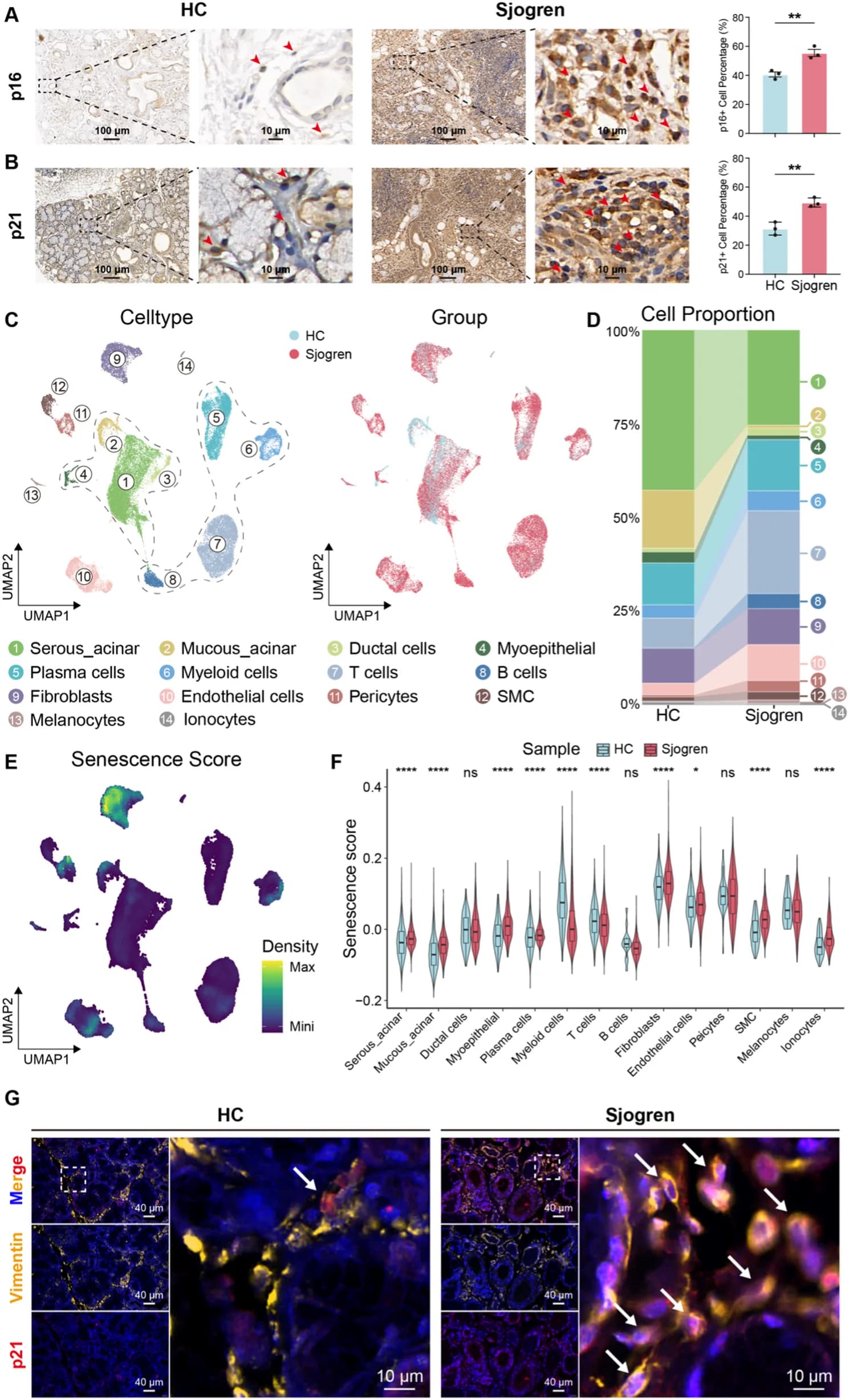
Drug pair restores saliva flow in mice modeling Sjögren’s disease

An experiment with six female mice per group tested dasatinib and quercetin, which reduced immune-cell buildup in salivary glands.An experiment with six female mice per group tested dasatinib and quercetin, which reduced immune-cell buildup in salivary glands.

ScRNA-seq analysis revealed fibroblast senescence in pSjD salivary glands.
Mouse studyInterventions
Renal Failure

Gut microbe-derived compound promotes kidney aging in mice

Reducing a circular RNA weakened the compound’s effects in male mice given it in drinking water for 16 weeks.Reducing a circular RNA weakened the compound’s effects in male mice given it in drinking water for 16 weeks.

Figure from Renal Failure
Mouse studyKidney

Saturday, November 7

Free Radical Biology & Medicine

Sorcin protein helped scar-forming liver cells keep dividing

Experiments in liver stellate cells traced the effect to RNA-containing clusters that reduced production of p53, a protein that helps regulate cell division.Experiments in liver stellate cells traced the effect to RNA-containing clusters that reduced production of p53, a protein that helps regulate cell division.

Figure from Free Radical Biology & Medicine
Cell studyMechanisms

Friday, November 6

iScience

Fat metabolism linked to muscle problems in aging obese mice

Female mice fed a high-fat diet for seven months developed obesity, but signs of metabolic exhaustion tracked differences in muscle dysfunction rather than obesity…Female mice fed a high-fat diet for seven months developed obesity, but signs of metabolic exhaustion tracked differences in muscle dysfunction rather than obesity severity.

Figure from iScience
Mouse study · 70 miceLipid and ceramide metabolism

Thursday, November 5

Wednesday, November 4

Aging Cell

Protein loss reduced signs of senescence in mouse fat tissue

Experiments comparing male mice with and without a regulatory protein found altered fat composition and reduced senescence, a state in which cells stop dividing.Experiments comparing male mice with and without a regulatory protein found altered fat composition and reduced senescence, a state in which cells stop dividing.

MKP‐2 Deletion Reduced Cellular Senescence in MEFs.

Sunday, November 1

Saturday, October 31

Oncogene

Protein loss curbs colorectal cancer in experiments

Experiments found that losing a mitochondrial regulator induced a state in which cells stop dividing and suppressed colorectal cancer progression.Experiments found that losing a mitochondrial regulator induced a state in which cells stop dividing and suppressed colorectal cancer progression.

Knockdown of SIRT3 induces MIDAS in colorectal cancer cells.
Experiments in cellsMechanisms

Friday, October 30

Immunity

Disrupted immune signaling promotes obesity as mice age

Experiments in mice tied disrupted growth-factor signaling in immune cells to reduced gut antibodies and bacterial overgrowth that depleted the body’s taurine.Experiments in mice tied disrupted growth-factor signaling in immune cells to reduced gut antibodies and bacterial overgrowth that depleted the body’s taurine.

Figure from Immunity

Thursday, October 29

Journal of Agricultural and Food Chemistry

Aflatoxin promotes signs of liver cell aging in mice

Mouse experiments implicated a chemical-sensing protein in the toxin’s effects, highlighting a potential target for toxin-related liver disease.Mouse experiments implicated a chemical-sensing protein in the toxin’s effects, highlighting a potential target for toxin-related liver disease.

Liver tissue with enlarged cells and dense droplets sits beside a laboratory mouse and a smaller patch of compact cells with sparse droplets.
Mouse studyMechanisms

Wednesday, October 28

Tuesday, October 27

Monday, October 26

GeroScience

Two mole-rat species resist skin cancer but differ in immune response

Damaraland mole-rats developed no tumors over more than three years, while their immune response to cancer-causing chemicals differed from that of naked mole-rats.Damaraland mole-rats developed no tumors over more than three years, while their immune response to cancer-causing chemicals differed from that of naked mole-rats.

Figure from GeroScience
Animal studyImmune response