Protein loss reduced signs of senescence in mouse fat tissue
Experiments comparing male mice with and without a regulatory protein found altered fat composition and reduced senescence, a state in which cells stop dividing.
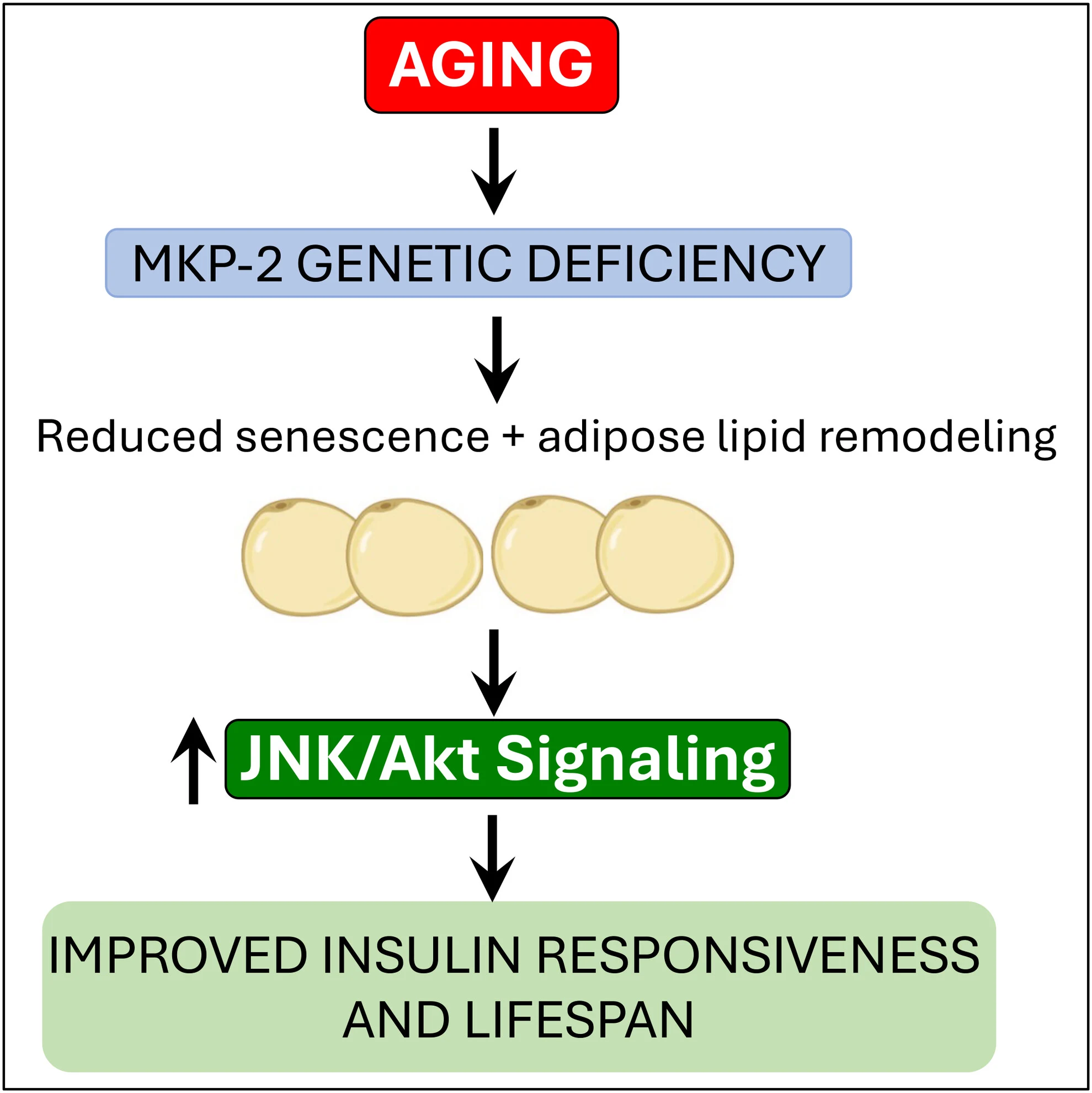
Our read
Mechanisms- Studied:
- Experiments in aged high-fat-fed male mice, ~4–6 months, against wild-type mice
- What changed:
- Signs of cellular senescence in fat tissue were lower in mice lacking MKP-2 than in wild-type mice
- The catch:
- Knockout mice ate less, so reduced caloric intake could explain their lower senescence markers
- Why it’s aging research:
- Lifespan, survival or healthspan.
Editor of record: Boris Djordjevic · AgingResearch.News
Male mice genetically engineered to lack MKP-2, a regulatory protein, were compared with unmodified mice in animal experiments. White fat near the testes in 19-month-old males fed a high-fat diet for about four to six months showed reduced senescence, a state in which cells stop dividing.
Separate fat analyses in males aged 6, 12 and 14–16 months found higher levels of two groups of fat molecules and lower levels of a third. Mouse embryonic connective-tissue cells grown in the lab also showed reduced premature senescence when they lacked MKP-2. Middle-aged and older males lacking the protein responded better to insulin. Male mice monitored for more than three and a half years had 25% higher median survival than unmodified controls.
Why it matters
Fat tissue changes with age, raising questions about how metabolism and senescence interact. The authors identify MKP-2 as a potential link between these processes and lifespan.
Caveats
Deleting the gene throughout the body did not isolate fat tissue’s contribution to longer survival. Lifespan was measured in males, and the excerpts do not give survival-group sizes.
The paper
MKP ‐2 Genetic Depletion Modulates Adipose Lipid Composition, Cellular Senescence, and Aging in Mice
Department of Biological Sciences University of Alabama in Huntsville Huntsville Alabama USA
Aging Cell, Nov 3, 2026, Open access, CC BY

Comments
Be the first to comment.