Protein loss curbs colorectal cancer in experiments
Experiments found that losing a mitochondrial regulator induced a state in which cells stop dividing and suppressed colorectal cancer progression.
Limit: Human prognosis data measure association, not treatment benefit
Edited by Boris Djordjevic · AgingResearch.News
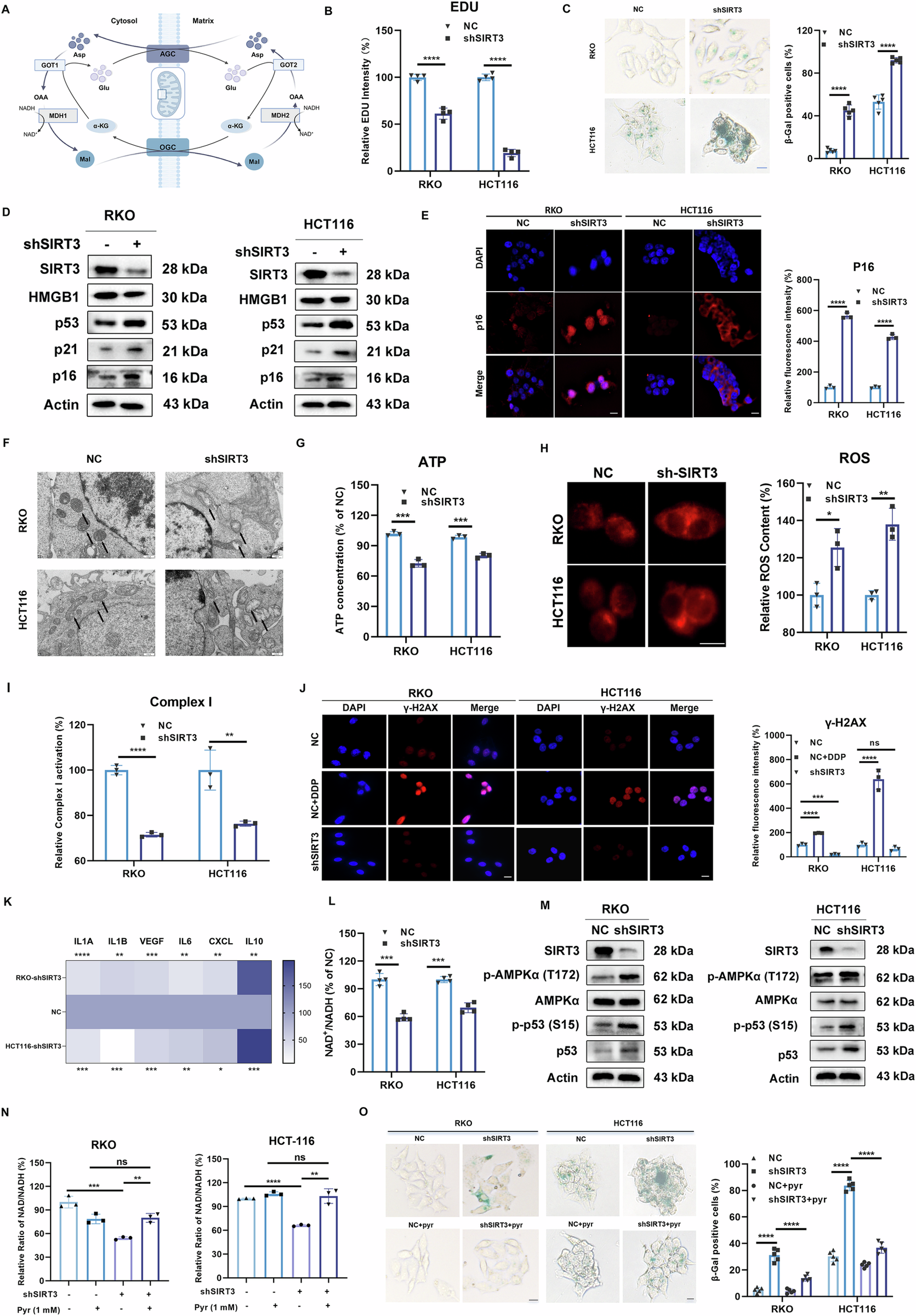
In colorectal cancer experiments, deficiency of SIRT3, a protein that regulates mitochondria, suppressed cancer progression. Mitochondria are the cell’s energy-producing structures. The researchers found that SIRT3 loss induced senescence, a state in which cells stop dividing, associated with mitochondrial dysfunction.
SIRT3 loss increased chemical tagging called acetylation on SLC25A13, a protein that transports molecules in mitochondria. This impaired the carrier’s function and disrupted a molecular shuttle, triggering changes that initiated senescence. A treatment targeting senescent cells selectively eliminated those cells and suppressed tumor growth. Separately, in human colorectal cancer, lower levels of this chemical tagging on the carrier were associated with a poorer prognosis.
Why it matters
Mitochondrial dysfunction and cell senescence are processes studied in aging. The authors identified this pathway as a potential treatment strategy for colorectal cancer.
Caveats
The abstract does not identify the experimental organisms or cell types, sample sizes, or treatment details, limiting assessment of relevance to people. The human prognosis finding was an association, not a test of treatment benefit.
Where the evidence stands
Senolytics
- 320 independent labs in 42 countries
- 111 findings against
- 22 trials
- Funders: National Institutes of Health and others
- 207 of 2,152 findings with company ties
- 3 of 22 trials sponsored by its developers
SIRT3
- 123 independent labs in 27 countries
- 5 findings against
- Funders: National Natural Science Foundation of China and others
- 13 of 344 findings with company ties
The paper
Shenyang Pharmaceutical University
Oncogene, Oct 31, 2026


Comments
Be the first to comment.