Disrupted immune signaling promotes obesity as mice age
Experiments in mice tied disrupted growth-factor signaling in immune cells to reduced gut antibodies and bacterial overgrowth that depleted the body’s taurine.
Limit: Age-related changes in VEGFR-1 signaling in mice without gene deletion are not reported
Edited by Boris Djordjevic · AgingResearch.News
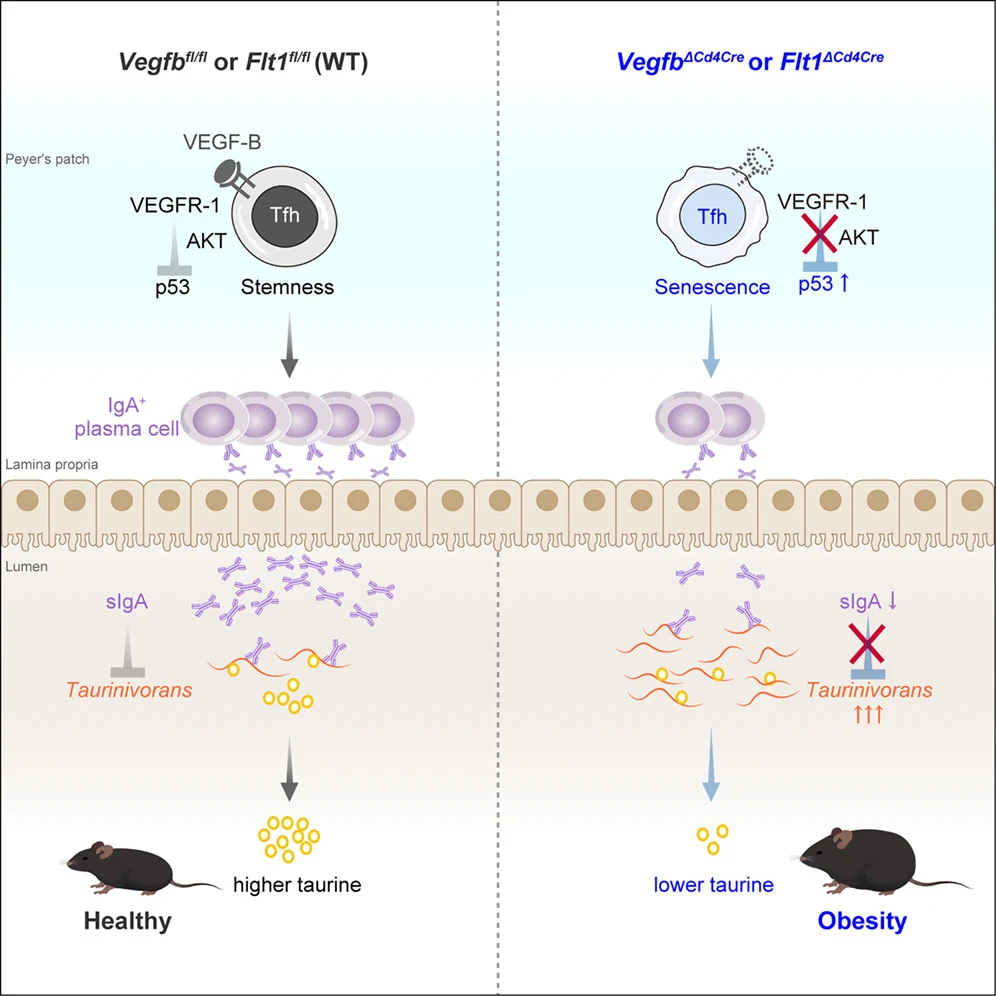
In experiments in mice, researchers deleted a gene for a growth-factor receptor, a protein that receives signals, in T cells, a type of immune cell. The mice developed obesity with advancing age.
The deletion impaired a group of helper T cells in gut-associated immune tissues and reduced IgA, an antibody released into the gut. This allowed the gut bacterium Taurinivorans to expand unchecked. Its overgrowth depleted taurine, a substance in the body, and drove obesity by reducing fat breakdown and heat production in fat cells. The signaling pathway helped the helper T cells retain their ability to renew themselves by limiting senescence, a state in which cells stop dividing. Giving IgA by mouth reduced the bacterium and eased fat accumulation.
Why it matters
The work addresses how changes in gut immune function may contribute to metabolic disease as animals age.
Caveats
Mouse experiments do not establish that oral IgA would reduce obesity in people. The abstract also reports the pathway in humans but does not describe the people studied or the design.
The paper
Shanghai Jiao Tong University School of Medicine
Immunity, Oct 29, 2026

