Skip to content
AgingResearch.News app

AgingResearch.NewsFree on Google Play

Open app
AgingResearch.News
  • HomeHome
  • SearchSearch
  • AskAsk
  • FollowingFollowing
  • SavedSaved
Join freeSign inSign inSign in
AgingResearch.NewsJoin free
  • Top
  • Latest
  • For you

Latest: Animals · Peer-reviewed

Filter

Clear filters

Evidence

  • All
  • Prevention & practice
  • Human trials
  • Human studies
  • Animals
  • Model organisms
  • Cells
  • In silico
  • Reviews

Status

  • All
  • Peer-reviewed
  • Preprints
  • All
  • Most significant
  • All
  • Open access
  • All
  • Prevention & practice
  • Human trials
  • Human studies
  • Animals
  • Model organisms
  • Cells
  • In silico
  • Reviews
  • All
  • Most significant
  • All
  • Open access
Status
  • All
  • Peer-reviewed
  • Preprints
FooterIn your assistantComparePrivacyTermsAboutStandardsContactRSSPricingFollow on X© 2026 AgingResearch.News
Sidebar

    Join AgingResearch.News

    Free: every story, saved papers, follows, the weekly email and 3 questions a day to Ask.

    Continue with email

    By continuing, you agree to our Terms and Privacy Policy.

    News

    See allSee all news
    IL-1β curbs brown fat thermogenesis in aged mice; suppressing glucocorticoid receptors restores itResearchFight Aging!H6PD protein expression is enriched in BA-L cells.Researchers report CD8+ T-cell granzyme K accelerates aging across multiple organsResearchLifespan.io +1Researchers report CD8+ T-cell granzyme K accelerates aging across multiple organsMeta-analysis ties five-year imaging age gap increases to 31% higher all-cause mortality hazardResearchnpj Digital MedicineMeta-analysis ties five-year imaging age gap increases to 31% higher all-cause mortality hazard

    Trials

    See allSee all trials
    Effect of Rapamycin in Ovarian AgingPhase 2Results posted Nov 18, 2026, Columbia UniversityEffectiveness of the On the Move Group Exercise Program to Improve Mobility in Community-dwelling Older AdultsResults posted Nov 20, 2026, University of PittsburghModulation Effects of Baduanjin Exercise on Subjective Cognitive DeclineResults posted Nov 6, 2026, Massachusetts General Hospital

    Trending

    See allSee all trending stories
    Congestive heart failureDisease17 papers in two weeks, usually 2BilobetinInterventionBilobetin eased infection-driven immune aging in miceMizagliflozinInterventionFirst trial results posted: Effect of Mizagliflozin Repeat Dosing on Adverse Events and Postprandial Glucose…LY3437943InterventionFirst trial results posted: A Study of Retatrutide (LY3437943) on Renal Function in Participants With Overweight or…Royal jellyInterventionRoyal jelly increased stem cell activity in aged miceEssential hypertensionDisease15 papers in two weeks, usually 4

    Topics

    See allSee all topics
    Mechanisms301Interventions693Biomarkers445Populations699AI & data123Industry & policy26SupplementsPeptidesProtocols
    Footer
    • In your assistant
    • Compare
    • Privacy
    • Terms
    • About
    • Standards
    • Contact
    • RSS
    • Follow on X
    • © 2026 AgingResearch.News

    YesterdayThu, Nov 19Thursday, November 1924 papers

    Toxicology and Applied Pharmacology·Yesterday

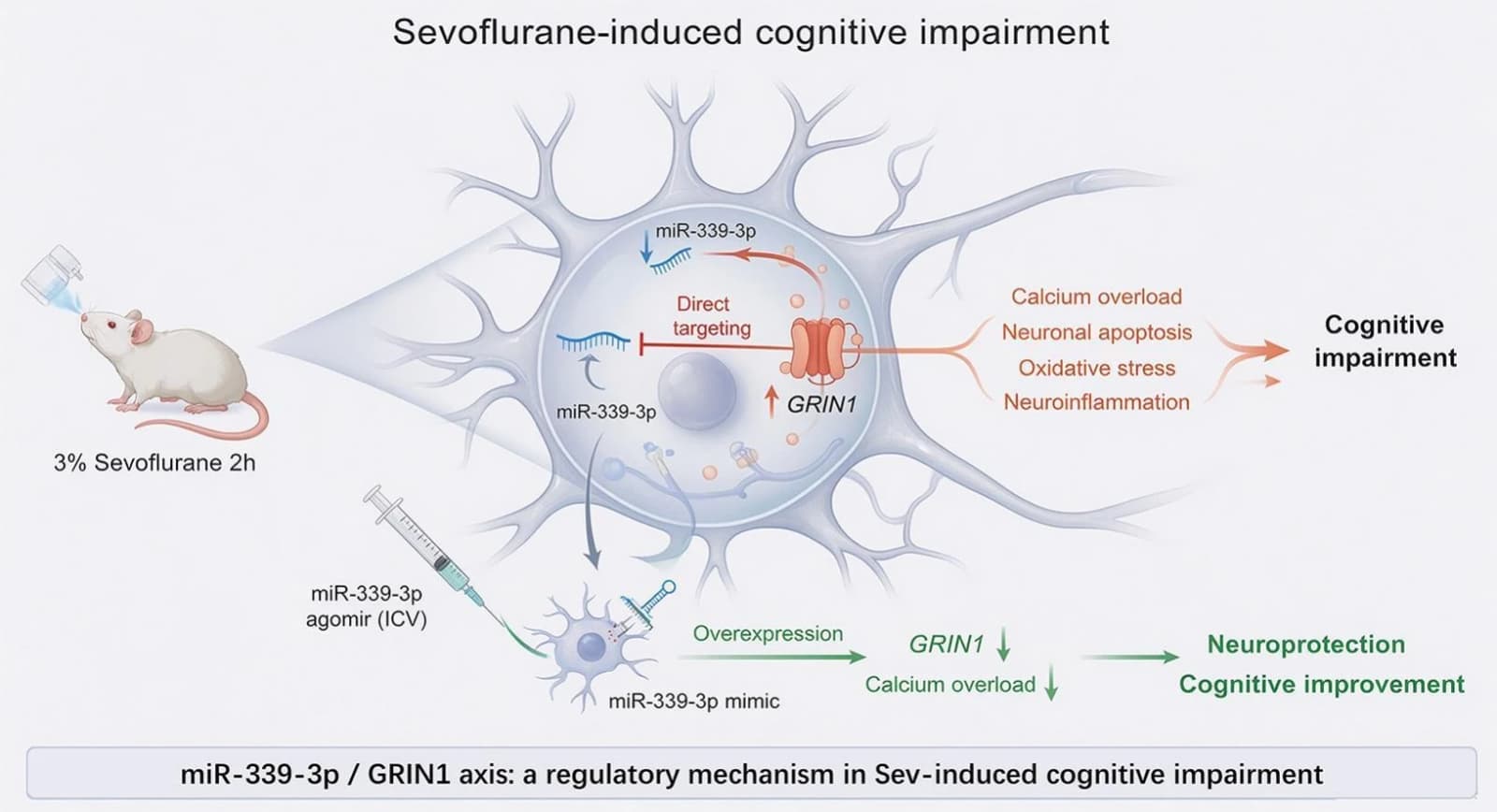
    miR-339-3p alleviates sevoflurane-induced cognitive impairment in aged rats and exerts neuroprotective effects in SH-SY5Y cells via targeting GRIN1

    Figure from Toxicology and Applied Pharmacology
    Experiments in ratsCognitive impairment
    Paper
    The Journal of Clinical Investigation·Yesterday

    Melatonin helps maintain mitochondria in mouse brains

    Experiments in melatonin-deficient mice found reduced mitochondrial production and quality, while supplementation restored production-related signals and the abundance of…Experiments in melatonin-deficient mice found reduced mitochondrial production and quality, while supplementation restored production-related signals and the abundance of proteins involved in energy production.

    A branching brain neuron contains sparse, damaged mitochondria on one side and abundant, intact mitochondria on the other, above a mouse and brain.
    Mouse studyMitochondrion
    Who was studiedMelatonin-deficient mice, against melatonin-deficient mice without supplementation
    What changedMelatonin supplementation increased mitochondrial DNA and restored energy-production proteins compared with melatonin deficiency alone
    The catchMolecular signals, mitochondrial DNA, and protein abundance served as stand-ins for mitochondrial production
    Paper
    JCI Insight·Yesterday

    Empagliflozin preserves cardiac function and modulates metabolism in a mouse model of Duchenne muscular dystrophy

    Experiments in miceEmpagliflozin
    Paper
    Sleep·Yesterday

    Oxygen drops changed DNA marks and vessel function in male mice

    An experiment with 25 male mice per group compared repeated oxygen drops with room air over 7 to 210 days.An experiment with 25 male mice per group compared repeated oxygen drops with room air over 7 to 210 days. Researchers measured DNA methylation, chemical marks that help regulate gene activity, in the heart’s left ventricle and…

    A coronary vessel with enlarged dark lining cells sits beside an evenly lined open vessel, with a laboratory mouse and blood immune cells above.
    Mouse studyMechanisms
    Who was studiedMale C57BL/6J mice, 7 to 210 days, against mice breathing room air
    What changedOxygen drops changed DNA marks at 5,747 heart sites and 1,307 blood immune cell sites compared with room air
    The catchThe senescent-cell removal experiment used only eight mice per group
    Paper
    Aging Cell·Yesterday

    Rat study points to a potential target for age-related nerve disorders

    A gene-activity study of adult and aged rats pointed to a signaling pathway as a potential target for age-related nerve disorders.A gene-activity study of adult and aged rats pointed to a signaling pathway as a potential target for age-related nerve disorders. Adult and aged rats differed in the makeup and gene activity of cells in their peripheral nerves…

    Figure from Aging Cell
    Rat studyMechanisms
    Who was studiedYoung and old SD rats, Four weeks, against control-vector-treated aged rats
    What changedIncreasing Mboat1 in aged rats lowered the proportion of nerve-supporting cells with an aging marker compared with control-vector treatment
    The catchP16 staining measures cellular senescence, not nerve function or relief of neuropathy symptoms
    Paper
    Anatomical Science International·Yesterday

    Rest-inserted whole-body vibration preserves trabecular architecture and is associated with alterations in bone marrow vascular structure during early estrogen deficiency in mice

    Examples of CT images of bone (gray) and blood vessels (red) at the proximal tibial metaphysis of sham-WBV, continuous WBV (c-WBV), and rest-inserted WBV (r-WBV) mice.
    Experiments in 24 miceWhole-body vibration
    Paper
    Materials Today Bio·Yesterday

    Developing structurally stable, anti-fibrotic, fibrous core-shell islet encapsulation devices with no limitation in length for treating type 1 diabetes

    Figure from Materials Today Bio
    Experiments in animalsType 1 diabetes
    Paper
    International Journal of Molecular Sciences·Yesterday

    Multi-Omics Profiles Reveal Molecular Regulation of Ovarian Aging in Chickens

    Figure from International Journal of Molecular Sciences
    Study of 12 chickensReproductive system
    Paper
    Journal of Nanobiotechnology·Yesterday

    Magnetic particles limited osteoporosis progression in animals

    In animal experiments, bone-targeted iron oxide particles under a changing magnetic field suppressed bone-cell senescence, a state in which cells stop dividing.In animal experiments, bone-targeted iron oxide particles under a changing magnetic field suppressed bone-cell senescence, a state in which cells stop dividing.

    Figure from Journal of Nanobiotechnology
    Mouse studySenile osteoporosis
    Who was studiedAged male mice, 7 months, against PBS-injected mice
    What changedBone loss was lower in aged mice given magnetic nanoparticles plus a variable magnetic field than in PBS-injected controls
    The catchOnly 6 mice per group supported the osteoporosis benefit
    Paper
    Cell Reports·Yesterday

    A memory-linked brain pathway strengthened with age in mice

    Experiments found changes that differed by sex, while reducing the pathway’s activity improved memory in aged mice.Experiments found changes that differed by sex, while reducing the pathway’s activity improved memory in aged mice. The pathway connected the hippocampus, which supports memory, to the nucleus accumbens, which helps guide…

    Figure from Cell Reports
    Mouse studyMechanisms
    Who was studiedMice
    What changedSignals from the hippocampus strengthened as mice aged
    The catchThe magnitude of the age-related increase in pathway strength is not reported
    Paper
    npj Aging·Yesterday

    FGF21-dependent and -independent liver transcriptomic adaptations to low-protein feeding during aging

    Study design for studying responses to low protein diet in wild type and Fgf21−/− mice.
    Experiments in miceInterventions
    Paper
    Biogerontology·Yesterday

    Multi-omics profiling reveals sex-dependent cardiac remodeling and SIRT4-associated metabolic patterns during late-life aging

    Figure from Biogerontology
    Experiments in miceOxidative phosphorylation
    Paper
    Journal of Ovarian Research·Yesterday

    Vitamin K2 attenuates oxidative and mitochondrial injury in ovarian granulosa cells under insulin-resistant conditions

    Figure from Journal of Ovarian Research
    Experiments in miceInsulin resistance
    Paper
    Pharmaceuticals·Yesterday

    Tirzepatide Attenuates Cortical Inflammatory and Neuronal Alterations in Diabetic Rats: Associations with PI3K/AKT Phosphorylation and Conditioned Fear Responses

    Experiments in 8 ratsTirzepatide
    Paper
    Mitochondrial Communications·Yesterday

    Muscle stem cell fusion triggers muscle shrinkage in mice

    In mouse experiments, inhibiting muscle stem cells’ merging with muscle fibers blocked age-related muscle shrinkage and increased maximum lifespan.In mouse experiments, inhibiting muscle stem cells’ merging with muscle fibers blocked age-related muscle shrinkage and increased maximum lifespan.

    Figure from Mitochondrial Communications
    Mouse studyMuscle
    Who was studiedMice
    What changedFusion of damaged muscle stem cells with muscle fibers triggered muscle shrinkage in mice
    The catchAtrophy outcomes after healthy muscle stem cell fusion are not reported
    Paper
    Scientific Reports·Yesterday

    A sclerostin-targeting polydopamine nanoplatform promotes osteogenesis and attenuates ovariectomy-induced bone loss by reducing ferroptosis-like injury

    Figure from Scientific Reports
    Experiments in miceBones and joints
    Paper
    FASEB Journal·Yesterday

    Enzyme loss worsened inflammation and scarring in aged mice

    An experiment in mice aged 23–26 months found organ damage in both sexes but liver and pancreatic scarring predominantly in females.An experiment in mice aged 23–26 months found organ damage in both sexes but liver and pancreatic scarring predominantly in females. C57BL/6 mice aged 23–26 months were compared in an experiment involving a gene deletion in…

    Figure from FASEB Journal
    Mouse studyInflammation
    Who was studiedAged male and female mice, against aged female control mice
    What changedBlood TNF-α, an inflammation marker, was 2340 pg/mL higher in aged female mice lacking myeloid PLA2G6 than in controls
    The catchEicosanoid levels were measured with an assay that overestimates them
    Paper
    Behavioural Brain Research·Yesterday

    Metformin Preserves Hippocampal and Prefrontal Synaptic Integrity in Rats with Spinal Cord Injury: SIRT1 Induction and microRNA Modulation

    Figure from Behavioural Brain Research
    Experiments in ratsMetformin
    Paper
    Life Sciences·Yesterday

    Aerobic exercise attenuates hippocampal mitochondrial fragmentation and preserves synaptic integrity in an AD-like rat model: Associations with FNDC5/Irisin and Drp1-related mitochondrial fission

    Figure from Life Sciences
    Experiments in ratsAerobic exercise
    Paper
    Advanced Science·Yesterday

    Drug-releasing gel reduced brain cancer recurrence in mice

    Mice with surgically removed brain tumors lived longer with a gel designed to preferentially kill cancer cells that had stopped dividing.Mice with surgically removed brain tumors lived longer with a gel designed to preferentially kill cancer cells that had stopped dividing. C57BL/6J mice aged 6–8 weeks were used in an animal experiment testing a drug-releasing gel…

    Figure from Advanced Science
    Mouse studyInterventions
    Who was studiedMice with surgically resected glioblastoma, against control mice
    What changedRecurrent brain tumors were smaller with temozolomide plus the drug-releasing gel than in control mice
    The catchLate tumor-volume comparisons included 3 control mice but 6 gel-treated mice, risking survivor bias
    Paper
    Cell Reports Medicine·Yesterday

    Restricting feeding times reduced acute liver injury in mice

    Animal experiments found less liver damage across several mouse models, especially injury caused by the pain medicine acetaminophen.Animal experiments found less liver damage across several mouse models, especially injury caused by the pain medicine acetaminophen. Restricted feeding reduced Prevotella intermedia, a gut bacterium that produced uric acid.

    Figure from Cell Reports Medicine
    Mouse studyDietary restriction
    Who was studiedMice with acute liver injury
    What changedMice fed within restricted hours had less acute liver injury
    The catchThe report provides no liver-injury effect size, leaving the size of protection unspecified
    Paper
    Antioxidants & Redox Signaling·Yesterday

    Hydrogen sulfide may ease signs of heart aging in mice

    In mice exposed to D-galactose, a hydrogen sulfide-releasing compound reduced signs of heart aging and activation of a protein involved in inflammation.In mice exposed to D-galactose, a hydrogen sulfide-releasing compound reduced signs of heart aging and activation of a protein involved in inflammation.

    Mouse heart sections beside mice show intact dark blue-green muscle with sparse protein clusters and fragmented gray muscle with dense clusters.
    Mouse studyInterventions
    Who was studiedMice exposed to D-galactose, against mice receiving D-galactose alone
    What changedSodium hydrosulfide reduced signs of cell aging in mouse hearts compared with D-galactose alone
    The catchMechanism experiments relied on chemically induced aging signs, a proxy for natural heart aging
    Paper
    Naunyn-Schmiedeberg's Archives of Pharmacology·Yesterday

    Protective effects of intermittent fasting and vitamin E against hyperthyroidism-associated ocular complications in Wistar rats

    Figure from Naunyn-Schmiedeberg's Archives of Pharmacology
    Experiments in ratsVitamin E
    Paper
    International Dental Journal·Yesterday

    Macrophage S100A9 Drives Aging-related Peri-implantitis

    Experiments in miceS100A9
    Paper

    Wed, Nov 18

    Biochemical Pharmacology·Nov 18

    Bergenin preserved bone structure after ovary removal in mice

    Experiments in mice with ovaries removed suggested that a protein involved in suppressing inflammation helped mediate bergenin’s effects on bone.Experiments in mice with ovaries removed suggested that a protein involved in suppressing inflammation helped mediate bergenin’s effects on bone.

    Figure from Biochemical Pharmacology
    Mouse studyBones and joints
    Who was studiedMice with ovaries removed
    What changedBergenin preserved bone structure in mice after ovary removal
    The catchFractures were not reported; the reported outcomes were bone microarchitecture and osteoclast differentiation
    Paper
    American Journal of Nephrology·Nov 18

    High-intensity interval training reduces obesity-induced renal inflammation, oxidative stress, dysfunction, and histopathology despite no effect on telomere related genes in male rats

    Experiments in 20 ratsHigh-intensity interval training
    Paper
    Science Advances·Nov 18

    Spheroid-laden hydrogels with dual biomimetic intra- and perispheroidal niches for enhanced bone healing

    Schematic illustration of the dual-NICHE platform and its cascade-responsive mechanism for vascularized bone regeneration.
    Experiments in miceBones and joints
    Paper
    Molecular Neurobiology·Nov 18

    Esketamine Mitigates Perioperative Neurocognitive Impairment Through Attenuation of Blood–Brain Barrier Injury By Downregulating C3 Expression in Aged Mice

    Esketamine improves early postoperative cognitive function and reduces inflammation in aged PND mice.
    Experiments in miceInterventions
    Paper
    Phytomedicine·Nov 18

    Compound reduced kidney injury in mice with diabetes

    Experiments in mice with diabetes-induced kidney disease found less kidney tubule cell senescence, a state in which cells stop dividing, after receiving procyanidin C1.Experiments in mice with diabetes-induced kidney disease found less kidney tubule cell senescence, a state in which cells stop dividing, after receiving procyanidin C1.

    Figure from Phytomedicine
    Mouse studyKidney injury
    Who was studiedMice with streptozotocin-induced diabetic kidney disease
    What changedKidney injury decreased after procyanidin C1 treatment in mice with diabetes-induced kidney disease
    The catchKidney injury reductions are described without numerical results or effect sizes
    Paper
    GeroScience·Nov 18

    Longitudinal AI-based home-cage monitoring of locomotor aging in C57BL/6J mice: An exploratory pilot study

    Figure from GeroScience
    Experiments in 20 miceBiomarkers
    Paper
    Aging Biology·Nov 18

    Protein production largely tracked gene activity in aging mice

    A comparison of liver profiles in DNA-repair-deficient and normal mice found that changes in protein production largely mirrored changes in gene activity.A comparison of liver profiles in DNA-repair-deficient and normal mice found that changes in protein production largely mirrored changes in gene activity.

    Ribosome profiling of Ercc1Δ/− liver results in clear separation between groups.
    Mouse studyInterventions
    Who was studiedMale DNA-repair-deficient and wild-type mice, ∼8 weeks, against wild-type mice
    What changedProtein production changes largely tracked gene activity in repair-deficient mice versus wild-type mice, with 45.0% overlap among altered genes
    The catchRelative sequencing can produce apparent increases when total transcription and translation decrease
    Paper
    Journal of Orthopaedic Translation·Nov 18

    Establishment and comparative analysis of etiologically distinct mouse models reveal heterogeneity in early osteoarthritis pathogenesis

    Figure from Journal of Orthopaedic Translation
    Experiments in miceBones and joints
    Paper
    Metabolites·Nov 18

    Tissue-Specific Myonectin and Endocan Responses to Exercise Intensity and Coenzyme Q10 Supplementation in Rats

    Experiments in 48 ratsCoenzyme Q10
    Paper
    Frontiers in Neuroscience·Nov 18

    Central auditory adaption to cochlear synaptopathy interacts with PDE9/cGMP-dependent hippocampal LTP and its reversal

    Accepted, not yet published: experiments in animalsNitric oxide–cGMP signaling
    Paper
    Frontiers in Nutrition·Nov 18

    The effect of extravirgin olive oil on the plasma metabolome of aged htau mice, a model of human tauopathy

    Metabolomic profiling differentiates EVOO and control groups.
    Experiments in miceInterventions
    Paper
    Biology·Nov 18

    Aerobic Exercise Ameliorates Type 2 Diabetic Nephropathy and Correlates with EPHX1 and Attenuated Renal Ferroptosis in Mice

    Figure from Biology
    Experiments in miceAerobic exercise
    Paper
    Communications Biology·Nov 18

    Drugs and diet reduced ligament mineral deposits in zebrafish

    In zebrafish deficient in a collagen gene, drugs and calorie restriction reduced abnormal mineral buildup in ligaments between spinal bones.In zebrafish deficient in a collagen gene, drugs and calorie restriction reduced abnormal mineral buildup in ligaments between spinal bones. These changes resembled human degeneration of the cushioning discs between spinal bones.

    Vertebral fusions in zebrafish col9a1b−/−.
    Fish studyInterventions
    Who was studiedCol9a1b-deficient zebrafish larvae, against untreated or normally fed mutant zebrafish
    What changedEtidronate and calorie restriction reduced vertebral fusions in mutant zebrafish compared with untreated or normally fed fish
    The catchDrug and diet experiments used only 10 and 20 fish per condition, respectively
    Paper
    Zoological Research·Nov 18

    Alzheimer’s-linked protein damages aged monkey brains more

    An experiment using brain injections found more severe brain abnormalities in monkeys over 20 than in 7-year-old controls.An experiment using brain injections found more severe brain abnormalities in monkeys over 20 than in 7-year-old controls. Cynomolgus monkeys aged 7 years or over 20 years received injections into the hippocampus, a brain region…

    Hippocampal tissue shows broken neurons and fewer immune cells beside intact, branching neurons, with dark deposits and a small macaque nearby.
    Animal studyMechanisms
    Who was studiedYoung and aged cynomolgus monkeys, against young control monkeys
    What changedAged monkeys developed more severe brain abnormalities than young controls
    The catchDirect brain injections drove amyloid-beta production, an artificial exposure
    Paper
    ACS Chemical Neuroscience·Nov 18

    Areas around plaques became more acidic as mice aged

    Experiments using a plaque-targeted fluorescent probe linked local acidity to malfunctioning cellular waste-processing compartments in transgenic mice used to model…Experiments using a plaque-targeted fluorescent probe linked local acidity to malfunctioning cellular waste-processing compartments in transgenic mice used to model Alzheimer's disease.

    Amyloid plaques sit among nerve fibers: a large dark plaque has swollen fibers with debris-filled compartments; a smaller pale plaque and mouse sit above.
    Mouse studyMechanisms
    Who was studiedTransgenic mice modeling Alzheimer's disease
    What changedAcidity around plaques increased as mice aged
    The catchThe probe misses acidity away from aggregates, limiting comparison with broader age-related acidification
    Paper
    Advanced Science·Nov 18

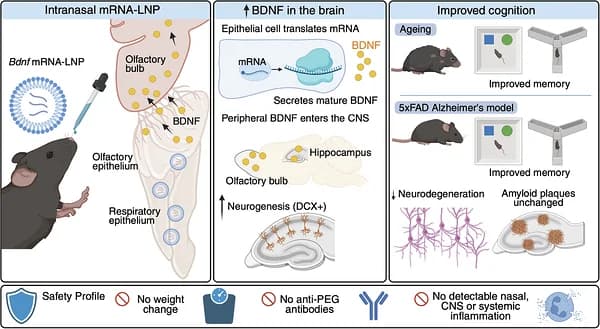
    Nasal RNA delivery improves memory in mouse experiments

    Nasal drops carrying instructions for a nerve-supporting protein improved memory in 18-month-old mice and a genetically engineered Alzheimer's disease mouse model.Nasal drops carrying instructions for a nerve-supporting protein improved memory in 18-month-old mice and a genetically engineered Alzheimer's disease mouse model.

    Figure from Advanced Science
    Mouse studyInterventions
    Who was studiedAged mice, 4 weeks, against age-matched control mice
    What changedNasal BDNF RNA treatment improved recognition memory in aged mice compared with age-matched mice receiving control RNA
    The catchAged mice received treatment for only 4 weeks, limiting evidence on lasting memory benefits
    Paper