SIRT1

Papers on SIRT1

2,490 papers53 new in 30 days

Thursday, November 19

Wednesday, November 18

Biochemical Pharmacology

Bergenin preserved bone structure after ovary removal in mice

Experiments in mice with ovaries removed suggested that a protein involved in suppressing inflammation helped mediate bergenin’s effects on bone.Experiments in mice with ovaries removed suggested that a protein involved in suppressing inflammation helped mediate bergenin’s effects on bone.

Figure from Biochemical Pharmacology
Mouse studyBones and joints

Tuesday, November 17

Saturday, November 14

Friday, November 13

Metabolism

Bacterial vesicles improve blood vessel function in aged mice

Experiments in aged mice and isolated mouse aortas found that tiny particles released by Lactobacillus plantarum improved blood vessel relaxation and reduced oxidative…Experiments in aged mice and isolated mouse aortas found that tiny particles released by Lactobacillus plantarum improved blood vessel relaxation and reduced oxidative stress.

Figure from Metabolism
Mouse studyInterventions

Thursday, November 12

Wednesday, November 11

Journal of Cellular Physiology

Blueberry extract eased signs of testicular aging in mice

An experiment in middle-aged mice found that a blueberry extract restored sperm movement and reversed degeneration of the tubes where sperm develop.An experiment in middle-aged mice found that a blueberry extract restored sperm movement and reversed degeneration of the tubes where sperm develop.

Figure from Journal of Cellular Physiology
Mouse studyInterventions

Monday, November 9

Aging Cell

Protein loss weakened barriers in human brain vessel cells

In lab experiments, reducing alpha-synuclein, a protein, made layers of human brain blood-vessel cells leakier; suppressing an enzyme returned leakage to normal.In lab experiments, reducing alpha-synuclein, a protein, made layers of human brain blood-vessel cells leakier; suppressing an enzyme returned leakage to normal.

Replicative senescence downregulates SNCA in human brain microvascular endothelial cells.
Human cell studyMechanisms

Saturday, November 7

Friday, November 6

Thursday, November 5

Biochemical Pharmacology

Protein inhibitor reduced lung inflammation in mice

An experiment in mice exposed to cigarette smoke and a bacterial molecule found less lung damage and inflammation after a protein-blocking drug.An experiment in mice exposed to cigarette smoke and a bacterial molecule found less lung damage and inflammation after a protein-blocking drug.

Figure from Biochemical Pharmacology
Mouse studyInflammation

Wednesday, November 4

International Journal of Molecular Sciences

Cream did not protect mouse skin from repeated ultraviolet damage

Female mice given 5% nicotinamide mononucleotide cream after ultraviolet B exposure three times weekly through week 25 showed no protection against skin damage.Female mice given 5% nicotinamide mononucleotide cream after ultraviolet B exposure three times weekly through week 25 showed no protection against skin damage.

Experimental design and comparable body weight changes among groups: (A) Schematic overview of the 25-week UVB exposure and topical treatment protocol.
Mouse studySkin

Tuesday, November 3

Monday, November 2

Sunday, November 1

Explore

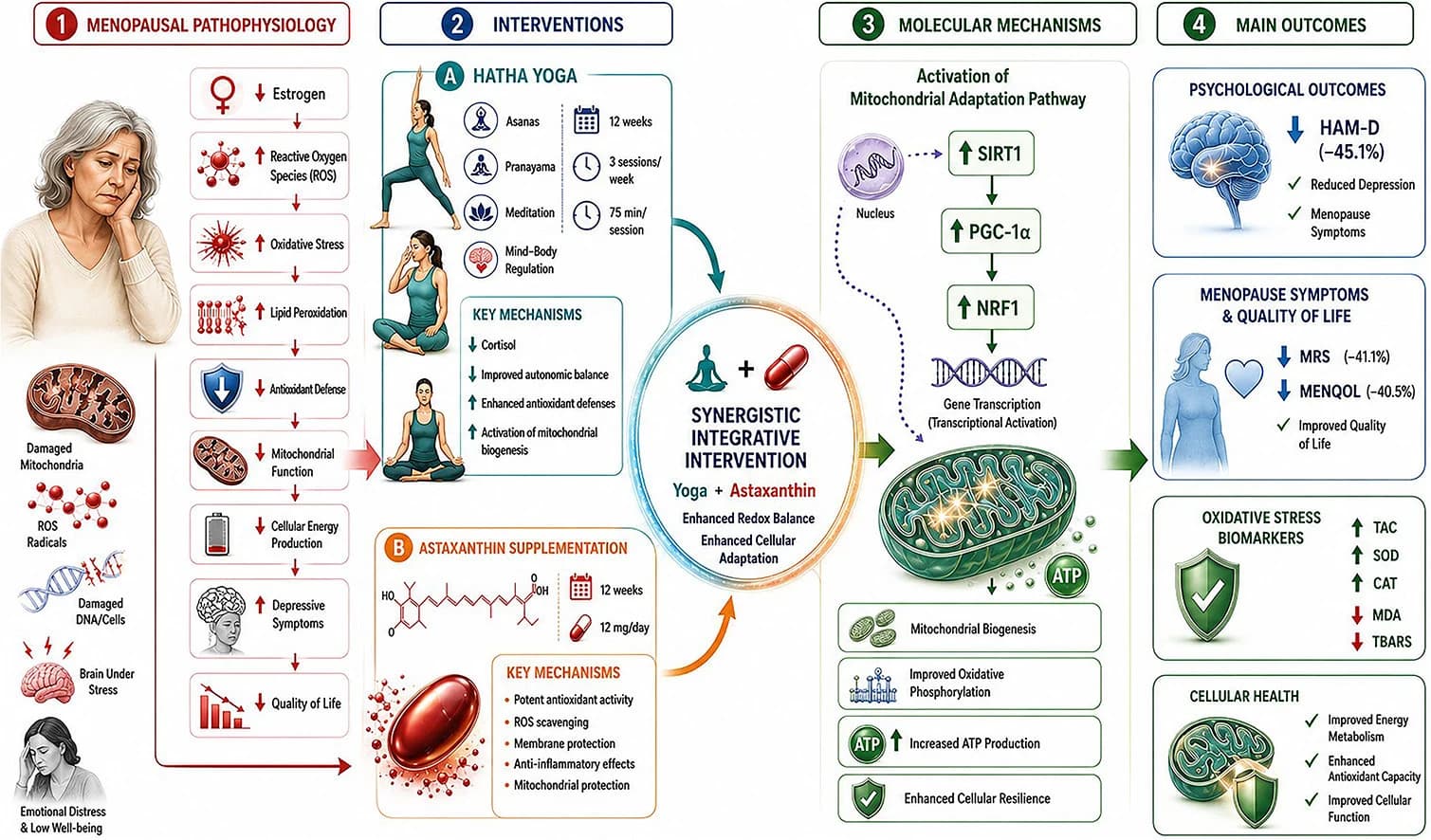
Yoga plus a supplement linked to fewer depression symptoms

Depression scores fell 45.1% with yoga plus astaxanthin, versus 28.5% with yoga and 10.9% with the supplement alone, in postmenopausal women.Depression scores fell 45.1% with yoga plus astaxanthin, versus 28.5% with yoga and 10.9% with the supplement alone, in postmenopausal women.

Figure from Explore
Randomized trial · 100 peopleDepressive symptoms
iScience

An enzyme inhibitor extended lifespan in aged mice

In an experiment in naturally aged C57BL/6 mice, long-term treatment also reduced frailty and improved physical and cognitive performance.In an experiment in naturally aged C57BL/6 mice, long-term treatment also reduced frailty and improved physical and cognitive performance.

Figure from iScience
Mouse studyInterventions

Saturday, October 31

Aging Cell

Peptide reduced aging-linked changes in lab-grown cells

Experiments in lab-grown cells tested a peptide that disrupted a protein interaction and reduced senescence, a state in which cells stop dividing.Experiments in lab-grown cells tested a peptide that disrupted a protein interaction and reduced senescence, a state in which cells stop dividing.

USP25 is preferentially accumulated during aging.
Human cell studyMechanisms