Bacterial vesicles improve blood vessel function in aged mice
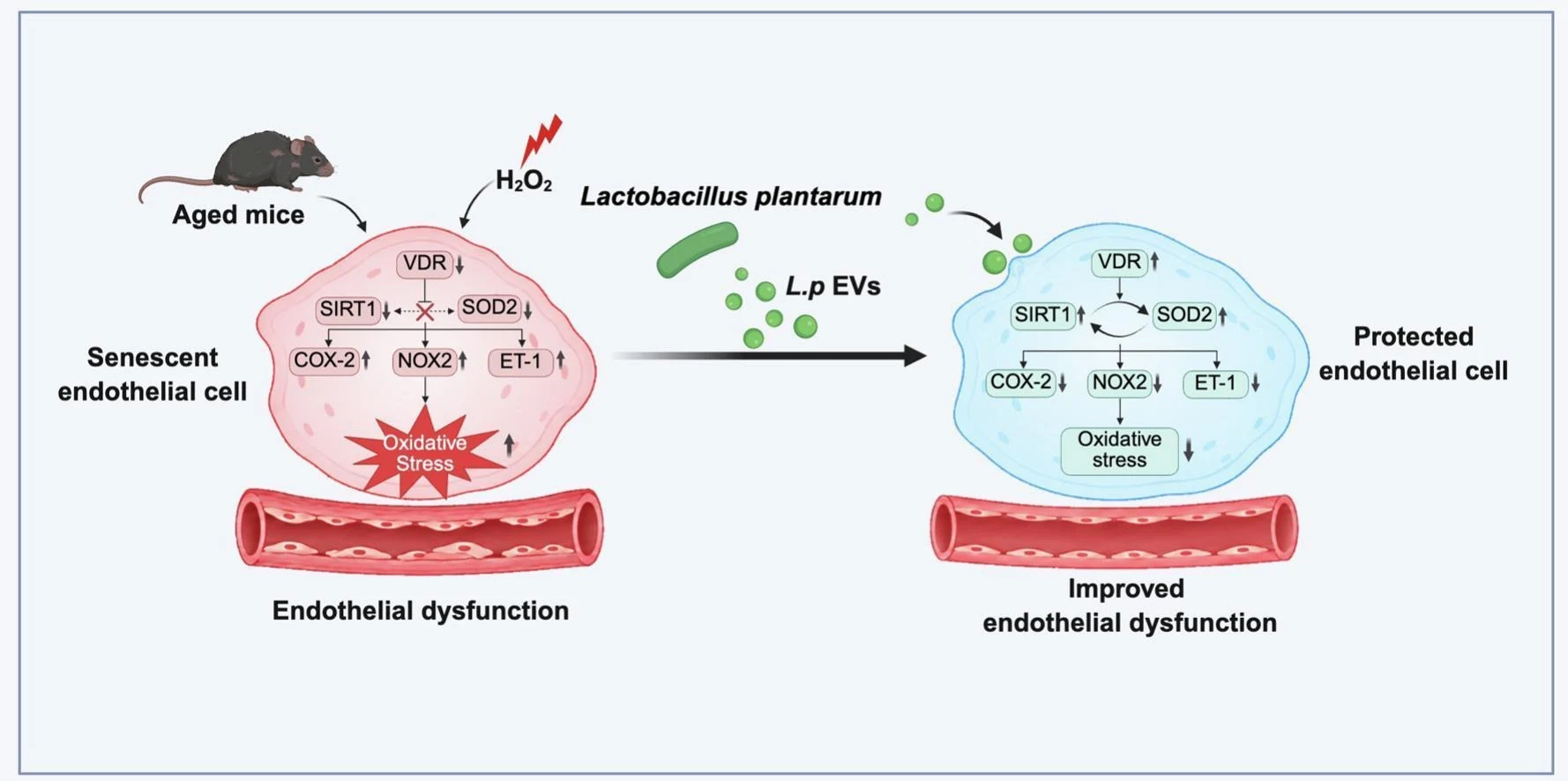
Experiments in aged mice and isolated mouse aortas found that tiny particles released by Lactobacillus plantarum improved blood vessel relaxation and reduced oxidative stress.
Our read
Interventions- Studied:
- Experiments in aged C57BL/6 mice
- What changed:
- Bacterial vesicles improved blood vessel relaxation in aged mice’s aortas
- The catch:
- Isolated aortic ring relaxation served as a stand-in for overall blood vessel function
Editor of record: Boris Djordjevic · AgingResearch.News
Aged C57BL/6 mice and isolated mouse aortas were used in experiments testing extracellular vesicles, tiny particles released by the bacterium Lactobacillus plantarum. The researchers assessed vessel function by measuring how well rings of aorta relaxed in response to signals from their inner lining, called the endothelium.
The vesicles restored impaired relaxation and reduced oxidative stress—an imbalance involving potentially damaging reactive molecules—in aged mice’s aortas. They also reversed hydrogen peroxide-induced endothelial senescence, a state in which cells stop dividing. Gene-silencing experiments supported a role for the vitamin D receptor, a protein that responds to vitamin D, and two interacting proteins in the vesicles’ antioxidant effects.
Why it matters
The blood vessel lining is one site of age-related dysfunction. The authors propose bacterial vesicles as a potential strategy for addressing it.
Caveats
The mouse and isolated-aorta experiments do not show whether these vesicles would improve blood vessel function in people.
Comments
Be the first to comment.