Protein inhibitor reduced lung inflammation in mice
An experiment in mice exposed to cigarette smoke and a bacterial molecule found less lung damage and inflammation after a protein-blocking drug.
Our read
Mechanisms- Studied:
- Experiments in mice exposed to smoke and lipopolysaccharide
- What changed:
- The protein inhibitor reduced lung inflammation and air-sac damage in smoke- and lipopolysaccharide-exposed mice
- The catch:
- Reported outcomes included lung damage and inflammation, but not lung function
- Why it’s aging research:
- It studies something that builds up in the body with age.
Editor of record: Boris Djordjevic · AgingResearch.News
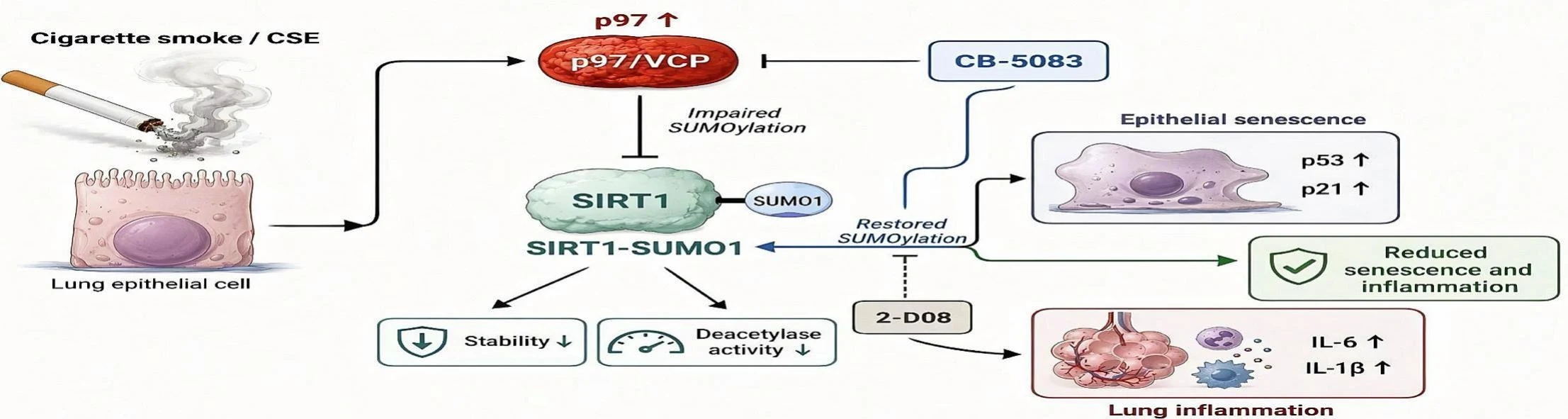
Mice exposed to cigarette smoke and given lipopolysaccharide, a bacterial molecule, through the nose served as a model of chronic obstructive pulmonary disease in an animal experiment. CB-5083, a drug that inhibits the enzyme p97, reduced damage to lung air sacs, inflammatory cell infiltration and production of inflammation-promoting molecules.
In separate experiments, mouse lung lining cells called TC-1 received 5% cigarette smoke extract. CB-5083 reduced signs of senescence, a state in which cells stop dividing. It also restored the stability and activity of SIRT1, an enzyme that removes chemical tags from proteins. The drug increased attachment of SUMO1, a small protein tag, to SIRT1. Blocking this tagging process abolished CB-5083’s protective effects in cells and significantly reversed its benefits in mice.
Why it matters
Cell senescence links this work to how lung cells change with age. The authors identified the interaction between p97, SIRT1 and SUMO1 as a potential drug target for chronic obstructive pulmonary disease.
Caveats
The evidence came from mouse cells and a mouse disease model combining smoke with an added inflammatory challenge, not people with chronic obstructive pulmonary disease.
Where the evidence stands
CB-5083
- 2 independent labs in 1 country
- 1 trial, 1 with no results posted
Inflammation
- 1,029 independent labs in 75 countries
- 195 findings against
- Funders: National Institutes of Health and others
- 373 of 4,489 findings with company ties


Comments
Be the first to comment.