Age-related hearing loss

Papers on age-related hearing loss

1,034 papers16 new in 30 days

Wednesday, November 18

Friday, November 13

The Journal of Neuroscience

Pupil size linked to speech recognition lapses in older adults

A listening-task study of 183 adults aged 18–76 linked extreme pupil sizes before speech to slower, less accurate responses in older listeners.A listening-task study of 183 adults aged 18–76 linked extreme pupil sizes before speech to slower, less accurate responses in older listeners.

Performance is impaired at low and high levels of pupil-linked arousal in older adults.
Cross-sectional · 183 peopleMechanisms

Wednesday, November 11

Hearing Research

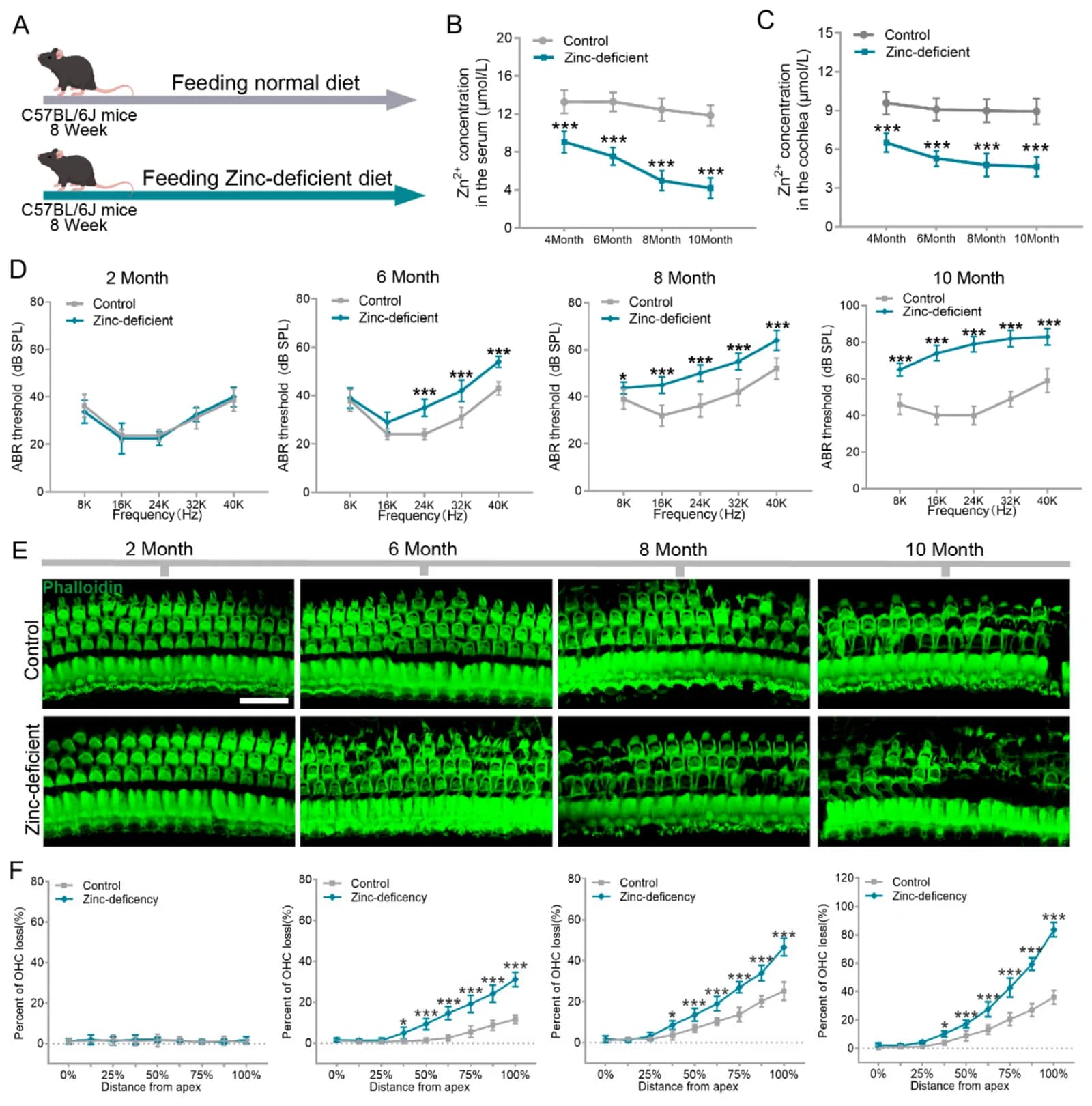
Platelet protein delayed age-related hearing decline in mice

Short-term injections were associated with sustained hearing preservation in C57BL/6J mice, most clearly at mid-to-high sound frequencies.Short-term injections were associated with sustained hearing preservation in C57BL/6J mice, most clearly at mid-to-high sound frequencies.

Figure from Hearing Research
Mouse studyEar

Thursday, November 5

Cortex; a Journal Devoted to the Study of the Nervous System and Behavior

Age linked to changed brain patterns for ignoring distractions

A listening-task study compared 30 older adults with hearing loss, 32 older adults with normal hearing and 33 young adults with normal hearing.A listening-task study compared 30 older adults with hearing loss, 32 older adults with normal hearing and 33 young adults with normal hearing.

Figure from Cortex; a Journal Devoted to the Study of the Nervous System and Behavior
Cross-sectional studyMechanisms

Tuesday, November 3

Monday, November 2

Thursday, October 29

Wednesday, October 28

Saturday, October 24

Wednesday, October 21

Tuesday, October 20

Sunday, October 18

Friday, October 16

Thursday, October 15

Tuesday, October 13

GeroScience

Age-related hearing loss linked to weaker brain connections

An observational study of 2,402 people, with a median age of 66.1 years, linked hearing loss to weaker connections between brain regions.An observational study of 2,402 people, with a median age of 66.1 years, linked hearing loss to weaker connections between brain regions.

Figure from GeroScience
Cross-sectional study of 2,402 peopleEar

Monday, October 12

Journal of Cellular and Molecular Medicine

Stress granules may limit death markers in lab-grown ear cells

Experiments in an aging model of inner-ear cells suggested that stress granules helped restrain markers of inflammatory cell death.Experiments in an aging model of inner-ear cells suggested that stress granules helped restrain markers of inflammatory cell death.

An intact inner-ear cell contains dense stress granules beside a fragmented gray cell with sparse granules and scattered debris.
Experiments in mouse cellsEar

Sunday, October 11

Tuesday, October 6

NeuroImage

Poorer very high-frequency hearing linked to weaker brain responses

An observational study linked impaired hearing above 8 kilohertz to smaller brain responses to speech on both sides of the brain.An observational study linked impaired hearing above 8 kilohertz to smaller brain responses to speech on both sides of the brain.

Figure from NeuroImage
Cross-sectional study in peopleEar

Friday, October 2

Thursday, October 1

Research Square

Gut microbes from hearing loss patients trigger inner ear damage in young mice

Fecal transplants from elderly hearing loss patients induced blood-labyrinth barrier breakdown, neuroinflammation, and hair cell loss in recipient mice.Fecal transplants from elderly hearing loss patients induced blood-labyrinth barrier breakdown, neuroinflammation, and hair cell loss in recipient mice.

Study design. A.B: Two-sample MR analysis were performed to quantify the causal relationship between gut microbiota and ARHL.
Preprint: experiments in miceEar

Wednesday, September 30

Sunday, September 27

bioRxiv

Auditory brainstem signals track age-related hearing deficits

In normal-hearing listeners, auditory brainstem responses and behavioral detection thresholds revealed that declining Wave V amplitudes correlated with poorer temporal…In normal-hearing listeners, auditory brainstem responses and behavioral detection thresholds revealed that declining Wave V amplitudes correlated with poorer temporal processing at higher sound levels.

Audiograms for listeners as a function of age.
Preprint: cross-sectional study in peopleEar