Age linked to changed brain patterns for ignoring distractions
A listening-task study compared 30 older adults with hearing loss, 32 older adults with normal hearing and 33 young adults with normal hearing.
Our read
Mechanisms- Studied:
- Cross-sectional study of older and young listeners with varying hearing
- What changed:
- Side-to-side brain-wave differences diminished with age when listeners ignored distractions
- The catch:
- Brain-wave changes within individuals as they aged were not measured
- In the record:
- One of 1,641 papers on hearing loss on record: 503 with results in people, 29 in animals.
- Why it’s aging research:
- It studies organisms or tissues that aged naturally.
Editor of record: Boris Djordjevic · AgingResearch.News
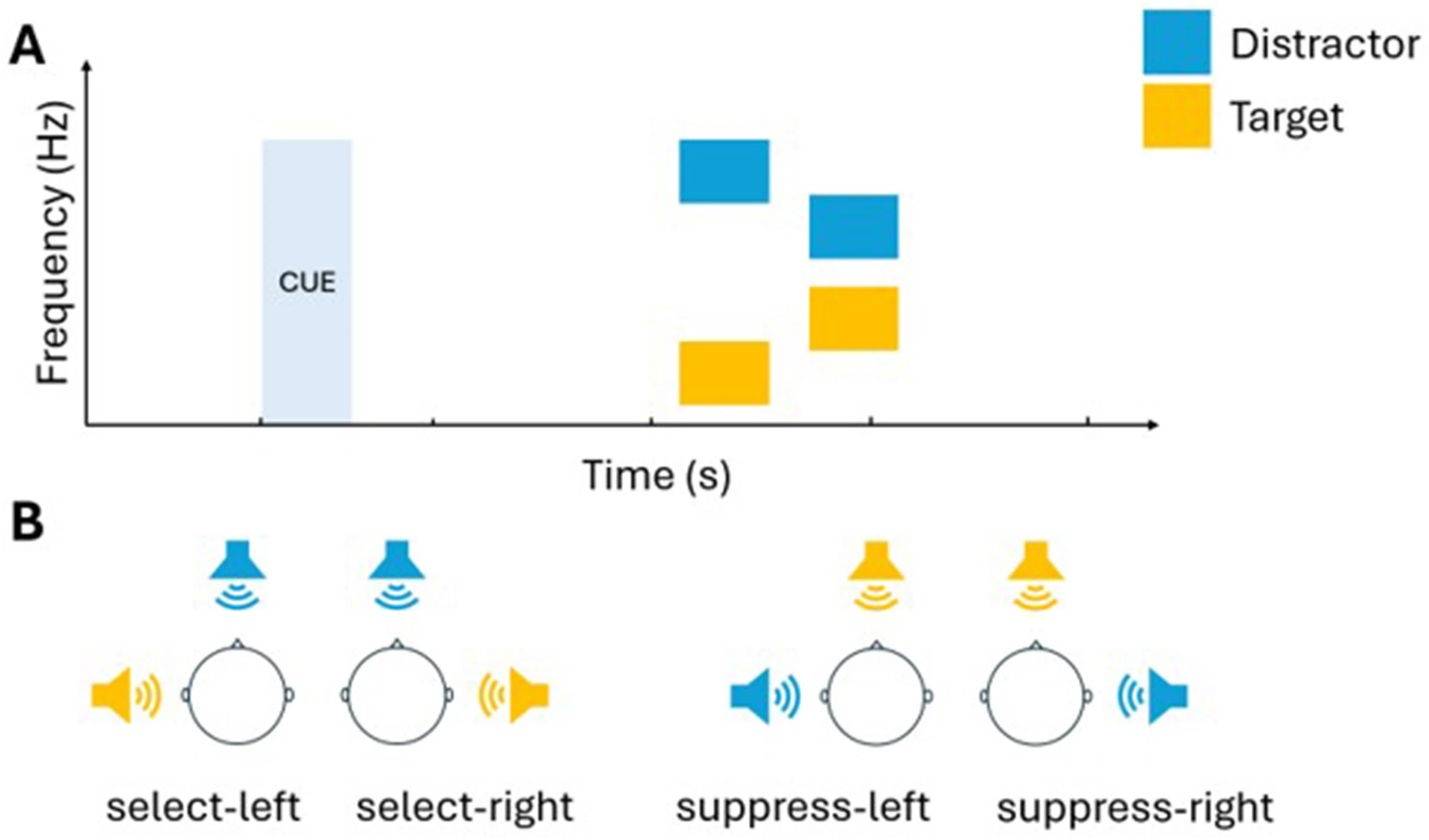
Thirty older listeners with hearing loss, 32 older listeners with normal hearing and 33 young listeners with normal hearing judged differences in sound pitch in a listening-task experiment. The task separated attention to a target sound from suppression of a distracting sound coming from another location.
The researchers measured alpha waves, rhythmic brain activity, and differences in their strength between the brain’s two sides. This side-to-side pattern diminished with age when listeners ignored distractions, but not when they selected target sounds. There was no conclusive evidence that hearing loss affected either pattern. The findings suggest that these brain signatures of attention may be relatively preserved in people with mild-to-moderate hearing loss, while aging may affect the signature of distraction suppression more than target selection.
Why it matters
People with age-related hearing loss often report difficulty separating relevant sounds from distractions. The findings bear on whether hearing loss and aging are associated with different changes in the brain’s handling of competing sounds.
Caveats
The age comparison involved different groups of listeners, whose other differences may have contributed to the brain-wave patterns. There was also no conclusive evidence that these patterns predicted listening accuracy or confidence on individual attempts.
- Age-related hearing loss
- Distractor-related alpha lateralization
- Listening accuracy
- Listening confidence
- Microsaccade direction
- Humans
The paper
Cortex; a Journal Devoted to the Study of the Nervous System and Behavior, Nov 2026, CC BY
Comments
Be the first to comment.