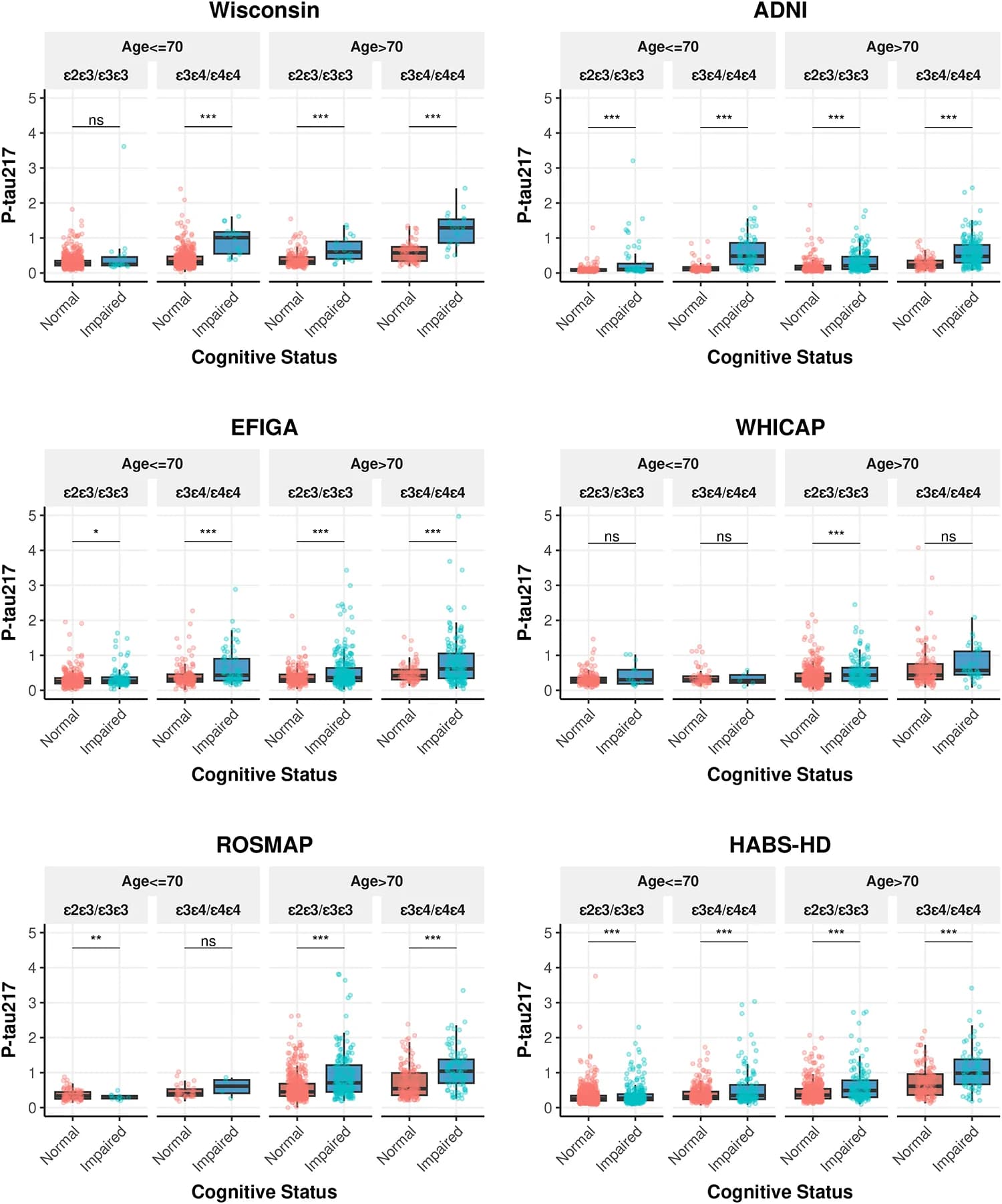
Age-based thresholds reduced inconclusive results requiring confirmatory brain scans by more than 50% compared with standard cutoffs applied regardless of age.Age-based thresholds reduced inconclusive results requiring confirmatory brain scans by more than 50% compared with standard cutoffs applied regardless of age.
In 111 test pairs, synthetic scans scored 23.4 decibels on an image-quality measure, versus at most 20.7 for four published models.In 111 test pairs, synthetic scans scored 23.4 decibels on an image-quality measure, versus at most 20.7 for four published models.
A cross-sectional study of 154 chimpanzees aged 12–57 found age-related blood and brain patterns resembling those seen in humans.A cross-sectional study of 154 chimpanzees aged 12–57 found age-related blood and brain patterns resembling those seen in humans.
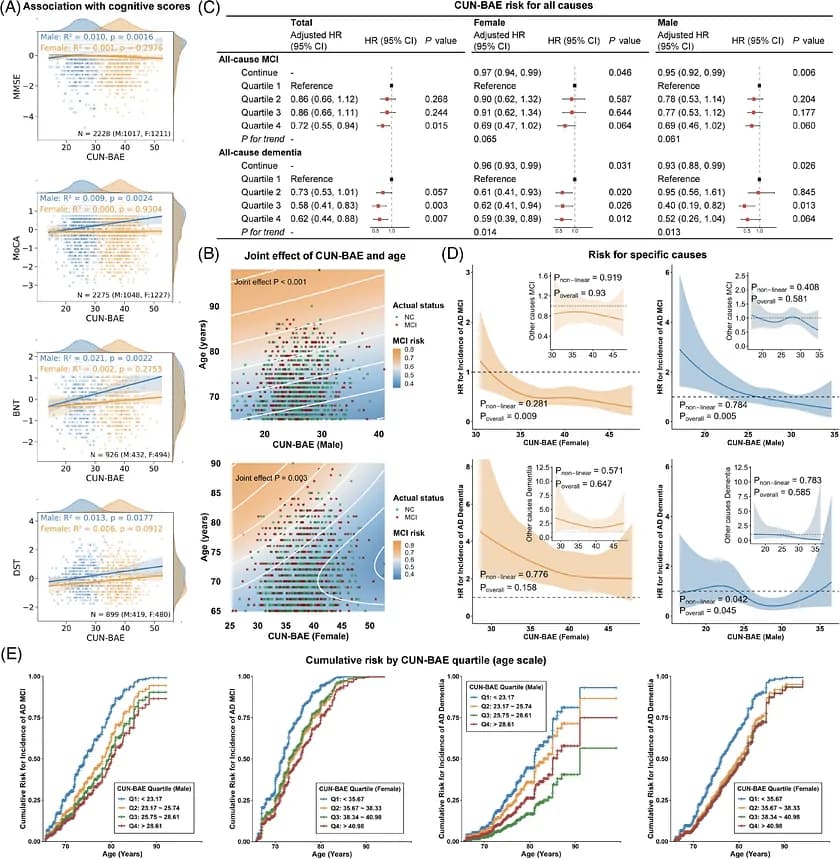
At age 75, estimated five-year risk of mild cognitive impairment was 17% with higher blood marker levels versus 7% with lower levels.At age 75, estimated five-year risk of mild cognitive impairment was 17% with higher blood marker levels versus 7% with lower levels.
Across three observational cohorts totaling 2,784 people, links with lower protein levels appeared mainly among participants with memory and thinking problems.Across three observational cohorts totaling 2,784 people, links with lower protein levels appeared mainly among participants with memory and thinking problems.
An observational study of 39 older adults without cognitive impairment linked a measure of less complex nerve-cell branching to shorter, more fragmented sleep.An observational study of 39 older adults without cognitive impairment linked a measure of less complex nerve-cell branching to shorter, more fragmented sleep.
In an observational study of 1,005 Swedish adults over 50, higher education and stable memory were not associated with slower marker increases over 10 years.In an observational study of 1,005 Swedish adults over 50, higher education and stable memory were not associated with slower marker increases over 10 years.
In an observational study of 491 hospitalized heart failure patients followed for a median 3.6 years, two markers of cognitive decline were associated with all-cause…In an observational study of 491 hospitalized heart failure patients followed for a median 3.6 years, two markers of cognitive decline were associated with all-cause mortality.
An observational study of 148 older adults without cognitive impairment linked higher blood flow to better thinking only in a subgroup carrying an Alzheimer’s-associated…An observational study of 148 older adults without cognitive impairment linked higher blood flow to better thinking only in a subgroup carrying an Alzheimer’s-associated gene variant.
Compared with noncarriers, carriers had steeper age-related changes in three Alzheimer’s blood markers after ages 50, 55 and 60, depending on the marker.Compared with noncarriers, carriers had steeper age-related changes in three Alzheimer’s blood markers after ages 50, 55 and 60, depending on the marker.
A trial analysis in people with mild cognitive impairment identified a blood-marker subgroup with less cognitive decline after lifestyle intervention than in controls…A trial analysis in people with mild cognitive impairment identified a blood-marker subgroup with less cognitive decline after lifestyle intervention than in controls over 18 months.
Who was studied51 people with mild cognitive impairment, 18-month
What changedThinking skills declined less with the lifestyle program than with control care among participants with elevated GFAP and other abnormal biomarkers
The catchThe subgroup was identified and evaluated for intervention benefit within the same cohort
An observational study compared spinal-fluid tests in 1,098 people and blood tests in 925, finding better detection with brain-derived tau tests, with one spinal-fluid…An observational study compared spinal-fluid tests in 1,098 people and blood tests in 925, finding better detection with brain-derived tau tests, with one spinal-fluid exception.
In an observational study of 1,297 people without dementia, combined brain and blood measures showed the strongest links to disease progression.In an observational study of 1,297 people without dementia, combined brain and blood measures showed the strongest links to disease progression.
A cross-sectional analysis of 15,612 adults aged 55–80 screened for Alzheimer’s trials found blood marker differences between racial and ethnic groups.A cross-sectional analysis of 15,612 adults aged 55–80 screened for Alzheimer’s trials found blood marker differences between racial and ethnic groups.
Each standard deviation decrease in locus coeruleus intensity was associated with 53% higher odds of testing positive for an Alzheimer's blood marker.Each standard deviation decrease in locus coeruleus intensity was associated with 53% higher odds of testing positive for an Alzheimer's blood marker.
In 602 discovery and 2,313 validation participants, associations between plasma pTau217 and brain pathology were stronger among people with lower periventricular…In 602 discovery and 2,313 validation participants, associations between plasma pTau217 and brain pathology were stronger among people with lower periventricular diffusivity.
An observational study of 1,126 Swedish 70-year-olds followed for about six years linked parental longevity to health, education and economic circumstances.An observational study of 1,126 Swedish 70-year-olds followed for about six years linked parental longevity to health, education and economic circumstances.
A one-standard-deviation rise in the marker was associated with 24% shorter time to impairment in variant carriers, versus 13% in non-carriers.A one-standard-deviation rise in the marker was associated with 24% shorter time to impairment in variant carriers, versus 13% in non-carriers.