Long-lived parents linked to health differences at age 70
An observational study of 1,126 Swedish 70-year-olds followed for about six years linked parental longevity to health, education and economic circumstances.
Stake: An author holds shares in CERimmune Therapeutics.
Edited by Boris Djordjevic · AgingResearch.News
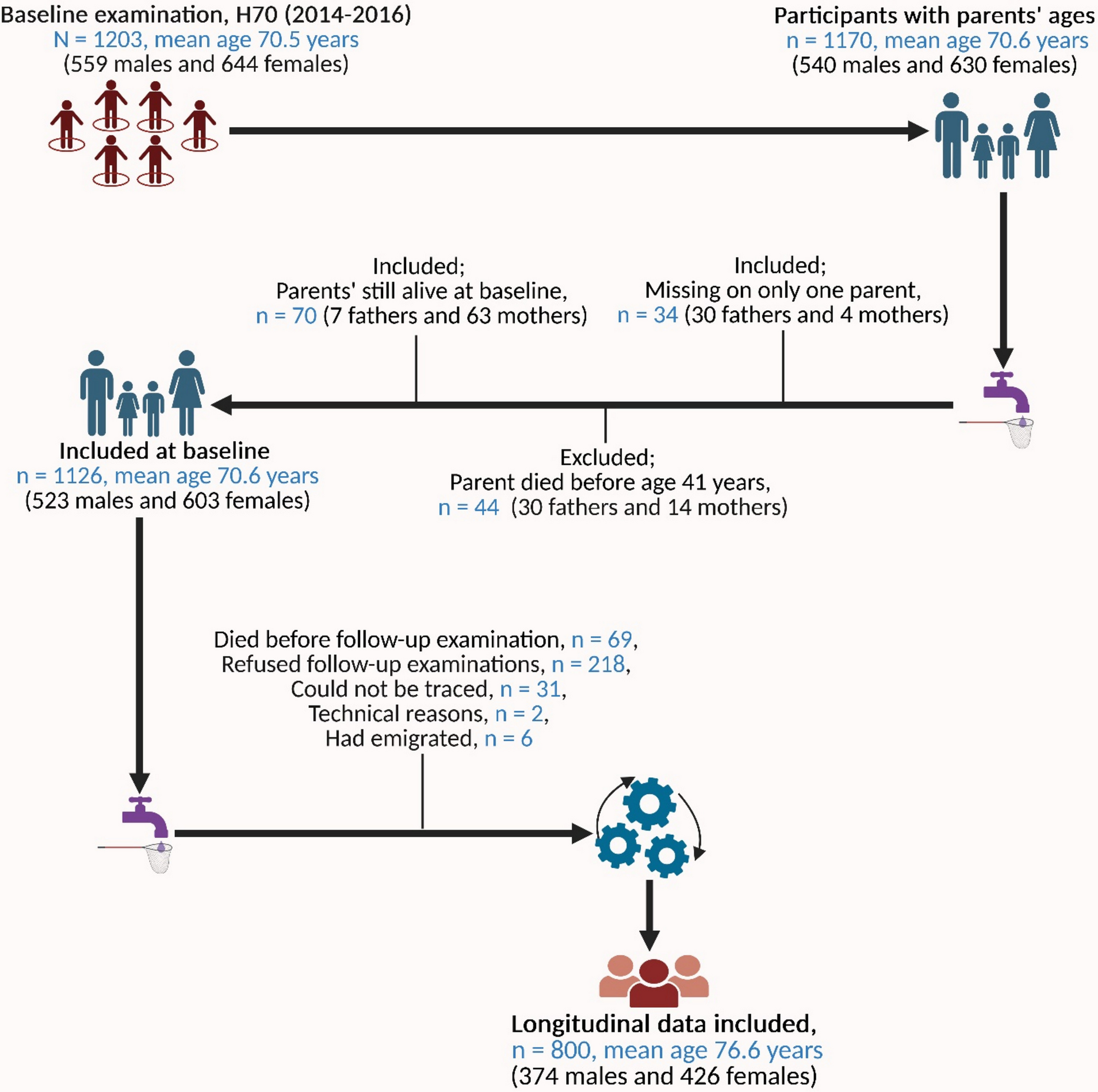
An observational cohort study examined 1,126 people in Gothenburg, Sweden, averaging 70.6 years old: 523 men and 603 women. Researchers compared health and social measures with parents’ lifespans and genetic scores combining DNA variants linked to longevity.
Having two parents who reached 85 was associated with less high blood pressure, higher thinking and memory test scores, longer education and better economic circumstances than having neither parent reach 85. It was also linked to lower levels of inflammation markers. Higher genetic longevity scores were mainly associated with social and cardiovascular factors, including longer education, higher income and a lower likelihood of having had a heart attack. Among 800 participants reexamined after an average of 6.02 years, those with two long-lived parents had a smaller rise in pTau217, a blood marker associated with dementia.
Why it matters
The authors suggest that parents’ lifespans may serve as an indirect measure of biological aging and help screen for age-related disorders as part of prevention.
Caveats
This observational study cannot establish cause and effect, and its population limits generalization beyond people around age 70 in Gothenburg. The links with inflammation markers and change in the dementia marker were no longer statistically significant after accounting for the many comparisons tested.
From the paper
- Participants
Among the 1126 examined at baseline, 69 had died before follow-up, 218 refused follow-up examination, 31 could not be traced, two were excluded due to technical reasons, and six had emigrated outside Sweden, leaving 800 participants (374 males, 426 females, mean age 76.6 years) (Fig. 1).
- Follow-up
A follow-up was conducted after 5–8 years (response rate among survivors 77.6%, mean follow-up time 6.02 years).
Quoted word for word from the full text on link.springer.com.
The paper
University of Calgary; Region Västra Götaland
GeroScience, Sep 11, 2026, Open access