Alzheimer’s risk variant linked to steeper blood-marker changes
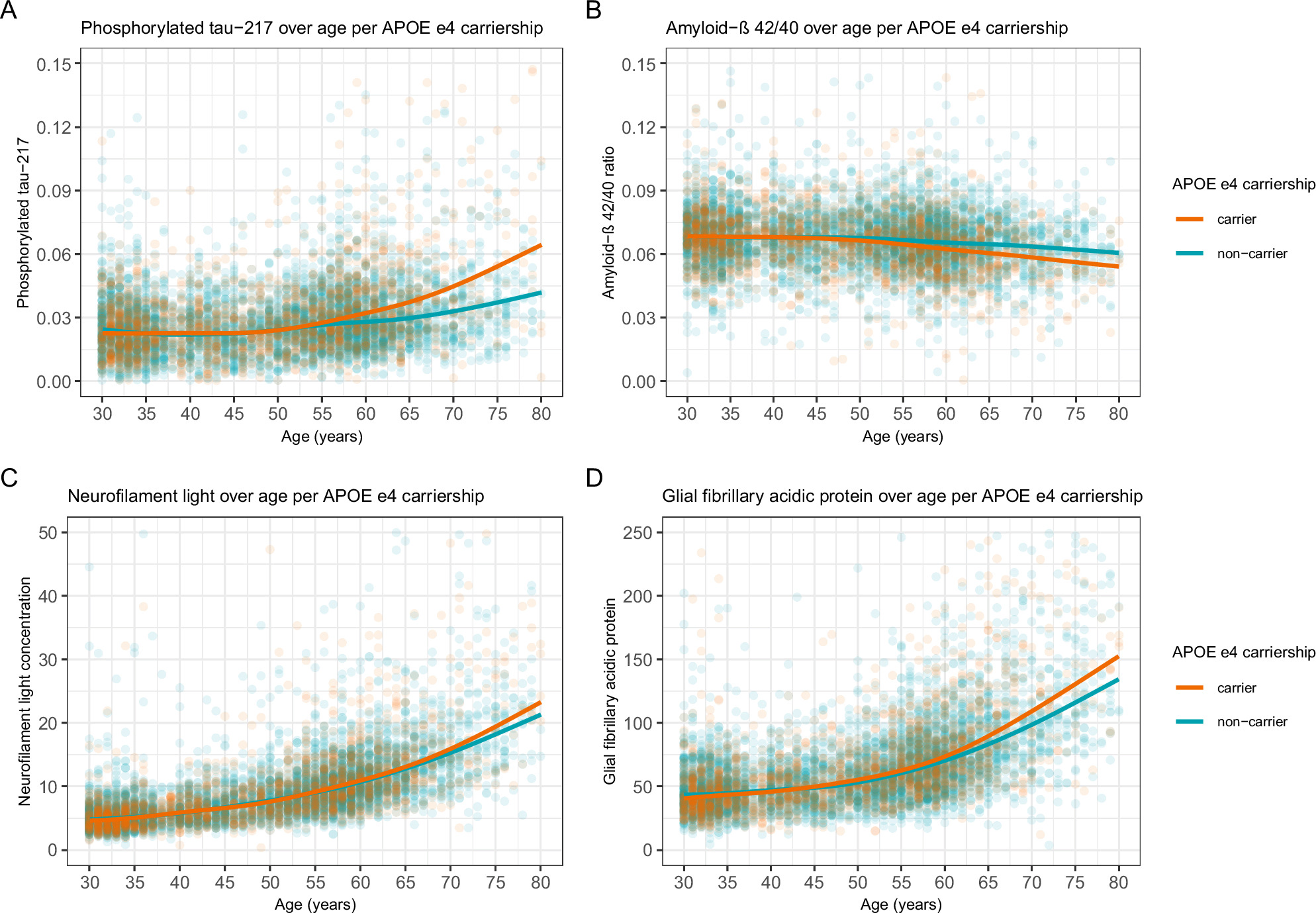
Compared with noncarriers, carriers had steeper age-related changes in three Alzheimer’s blood markers after ages 50, 55 and 60, depending on the marker.
Cross-sectional study
Limit: Blood-marker concentrations indicate Alzheimer’s pathology, rather than whether participants later develop dementia
An observational study examined blood markers in 5,913 cognitively normal Netherlands Twin Register participants aged 30–80. Women made up 64.1% of the cohort. Researchers compared carriers of APOE ε4, a genetic variant linked to Alzheimer’s risk, with noncarriers.
The ratio of two amyloid protein forms fell more steeply with age after 50 in carriers. Levels of phosphorylated tau-217, a modified tau protein, rose more steeply after 55. Levels of glial fibrillary acidic protein, found in brain-supporting cells, rose more steeply after 60. The association between the variant and modified tau was stronger in males than females. In a separate cohort followed over time, changes in this modified tau protein in carriers reflected Alzheimer’s disease-related changes.
Why it matters
The work bears on whether blood tests can help detect Alzheimer’s-related changes before cognitive symptoms, and whether genetic risk matters when interpreting them.
Caveats
The observational associations do not establish that the variant caused the biomarker changes. The main cohort findings concern cognitively normal adults aged 30–80.
The paper
Amsterdam Neuroscience
Nature Communications, Oct 17, 2026, Open access, CC BY-NC-ND