Blood marker’s link to thinking problems varies by gene variant
A one-standard-deviation rise in the marker was associated with 24% shorter time to impairment in variant carriers, versus 13% in non-carriers.
8,582 participants
Limit: The analysis did not measure whether marker-guided care improves outcomes
Edited by Boris Djordjevic · AgingResearch.News
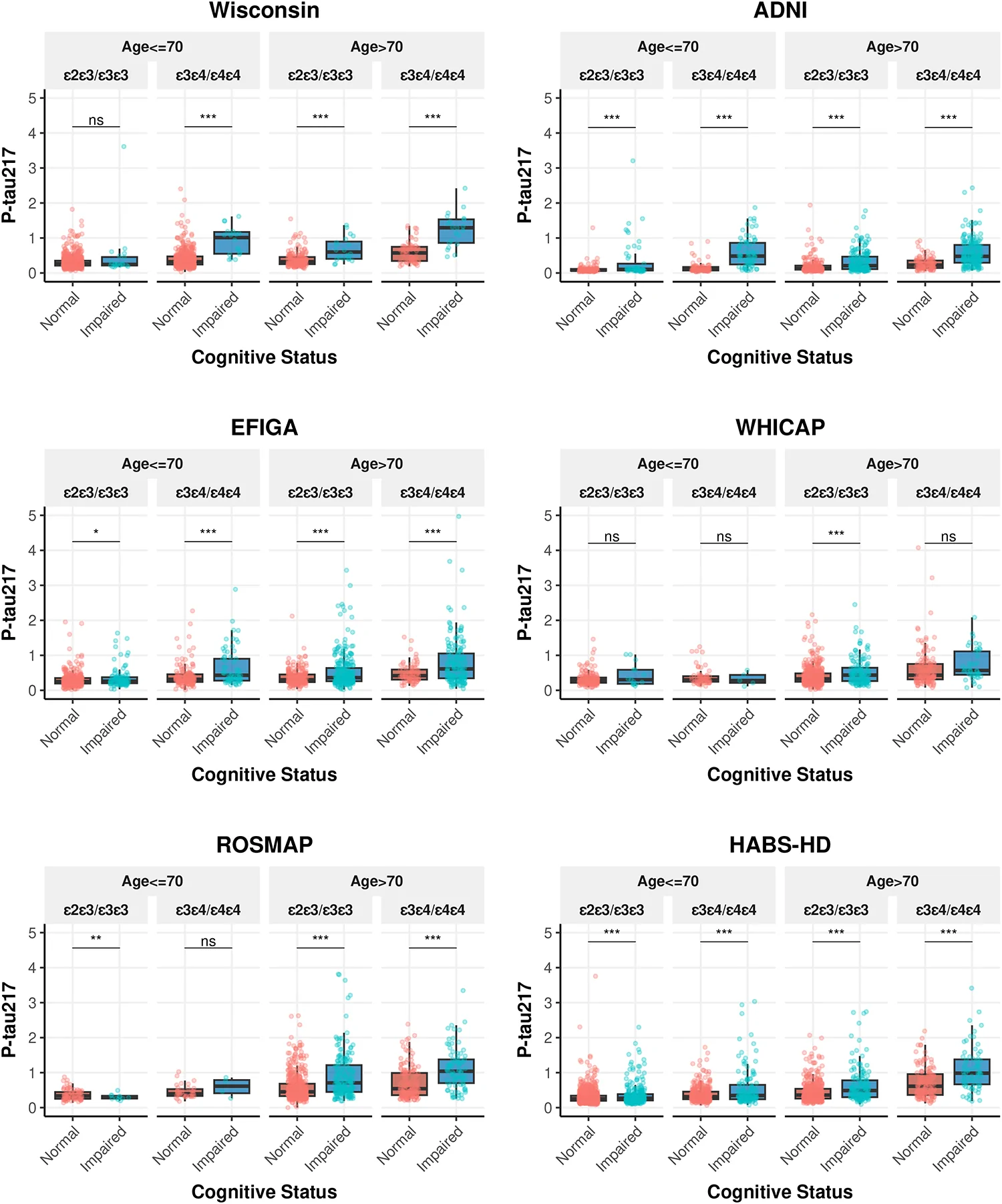
An observational analysis pooled seven cohorts of 8,582 older adults, with a mean age of 70; 5,652 were female and 2,930 male. Participants in Canada, the Dominican Republic and the US included people with no cognitive impairment, mild impairment or dementia.
Researchers analyzed blood phosphorylated tau 217, a protein marker of Alzheimer’s-related brain changes, alongside variants of the apolipoprotein E (APOE) gene. They followed 4,569 participants initially free of cognitive impairment. Higher marker levels were associated with later mild cognitive impairment or dementia. This link was stronger in carriers of the gene’s ε4 variant, but also occurred in non-carriers. The timing estimates used increases of one standard deviation, a measure of how widely marker levels varied within each cohort.
Why it matters
This Alzheimer’s-related blood marker can rise before symptoms. The authors suggested that combining it with genetic information might help guide monitoring in selected people at increased risk.
Caveats
The observational design cannot establish cause and effect or show that marker-guided care improves outcomes. People with two copies of the APOE ε2 variant, or one ε2 and one ε4 copy, were excluded.
The paper
Columbia University
The Lancet Neurology, Sep 9, 2026, Open access



Comments
Be the first to comment.