Brain-derived tau tests better flag Alzheimer’s-linked protein
An observational study compared spinal-fluid tests in 1,098 people and blood tests in 925, finding better detection with brain-derived tau tests, with one spinal-fluid exception.
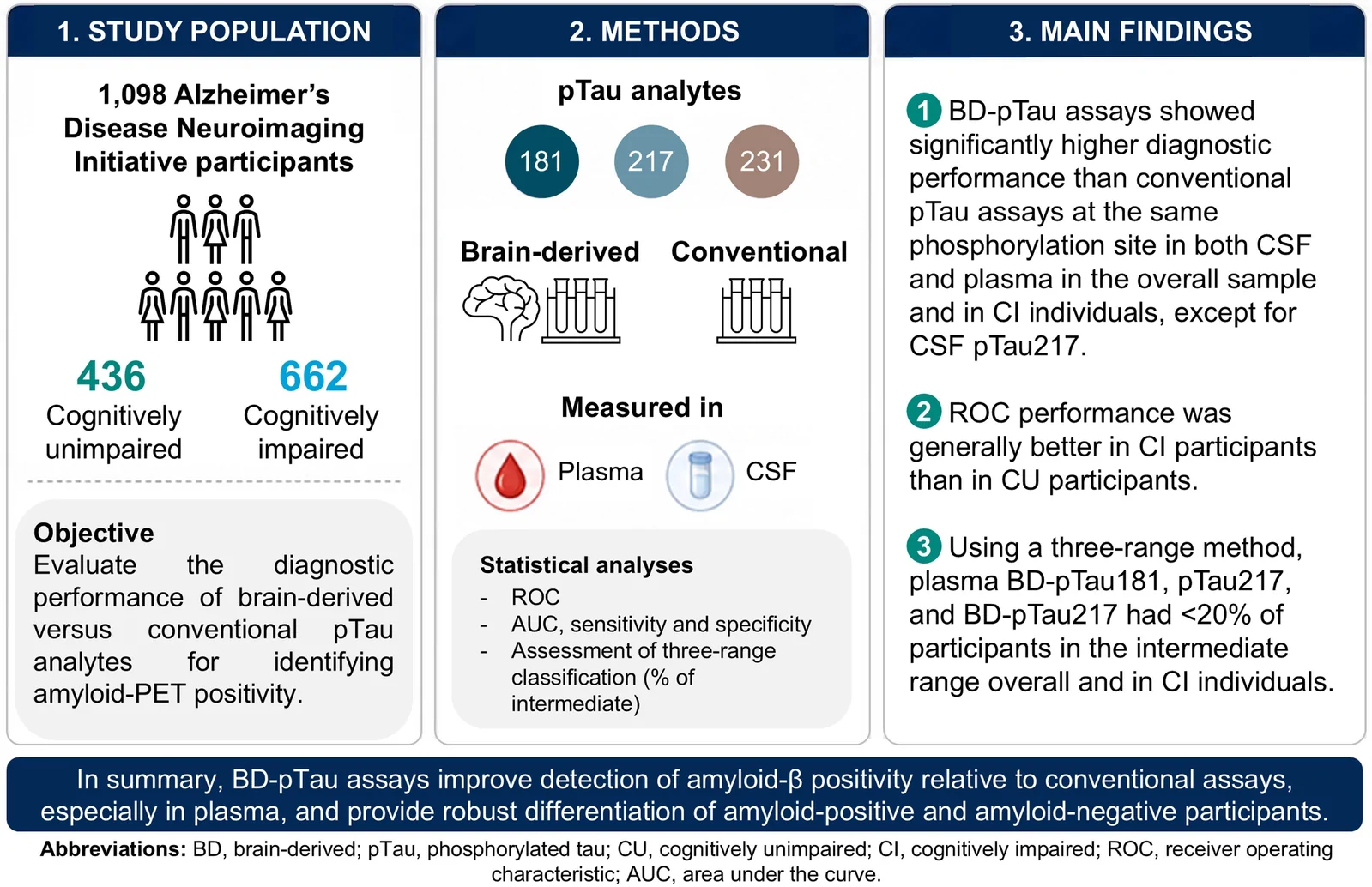
The observational study included 1,098 participants from the Alzheimer’s Disease Neuroimaging Initiative. All had spinal-fluid samples and brain scans for amyloid-beta, a protein that forms deposits associated with Alzheimer’s disease. Researchers also tested plasma, the liquid part of blood, from 925 participants. The tests measured phosphorylated tau, a protein carrying phosphate tags.
Tests for brain-derived tau more accurately identified people with amyloid-positive scans than conventional tests measuring tau tagged at the same site. This held for both fluids in the overall sample and in people with cognitive impairment, except for the spinal-fluid test measuring tau tagged at position 217. Test performance was generally better in people with cognitive impairment than in those without it.
Why it matters
Alzheimer’s disease is an age-related brain disease. The work addresses whether blood markers could help identify who needs further diagnostic testing.
Caveats
The study assessed accuracy against amyloid brain scans, not whether testing improved patient outcomes. The findings need confirmation on fully automated testing platforms intended for clinical use.
From the paper
- Participants
This cross-sectional study included 1098 participants from the Alzheimer’s Disease Neuroimaging Initiative (ADNI) database.14 ADNI is a multicentre, longitudinal study launched in 2004 with the primary goal of developing clinical, imaging, genetic …
- Limitation
First, our study included highly motivated participants who were willing to undergo both CSF collection and detailed clinical assessments, which may limit generalizability to broader clinical populations.
Quoted word for word from the full text on academic.oup.com.
- Alzheimer's disease
- MAPT
- Cognitive impairment
- Amyloid beta burden
- Brain-derived phosphorylated tau 181
- Humans
The paper
Translational Neuroimaging Laboratory
Brain Communications, Oct 7, 2026