Normative Modeling

Papers on Normative Modeling

95 papers7 new in 30 days

Friday, November 13

Communications Medicine

Brain scan model performs best in dementia detection tests

Trained on scans from 29,883 people and validated in 7,013 others, the model performed best among compared approaches to detecting dementia and mild cognitive impairment.Trained on scans from 29,883 people and validated in 7,013 others, the model performed best among compared approaches to detecting dementia and mild cognitive impairment.
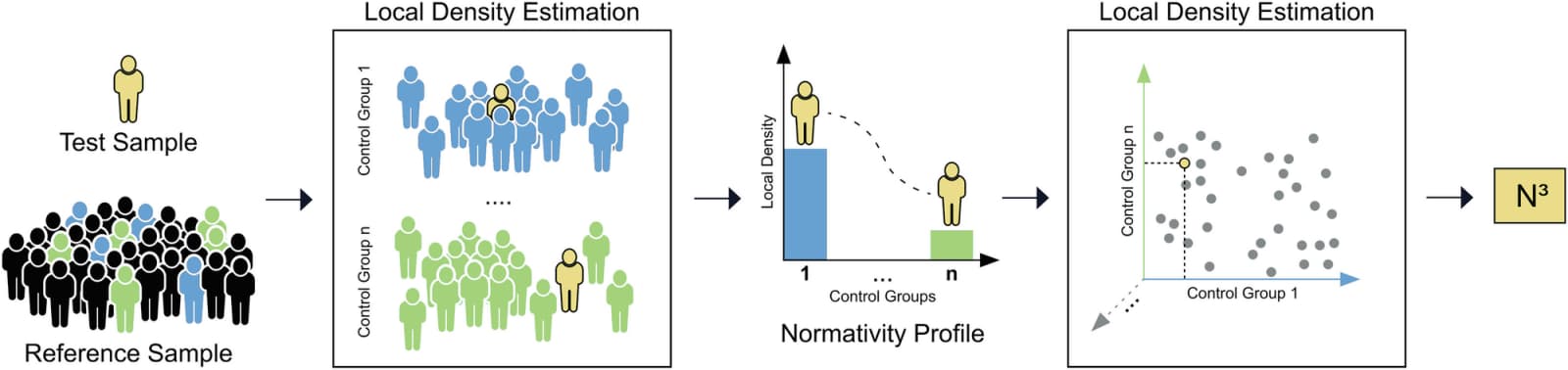
Schematic summary of the nearest neighbor normativity N3 framework.
Cross-sectional · 7,013 peopleFrontotemporal dementia

Wednesday, November 4

Translational Psychiatry

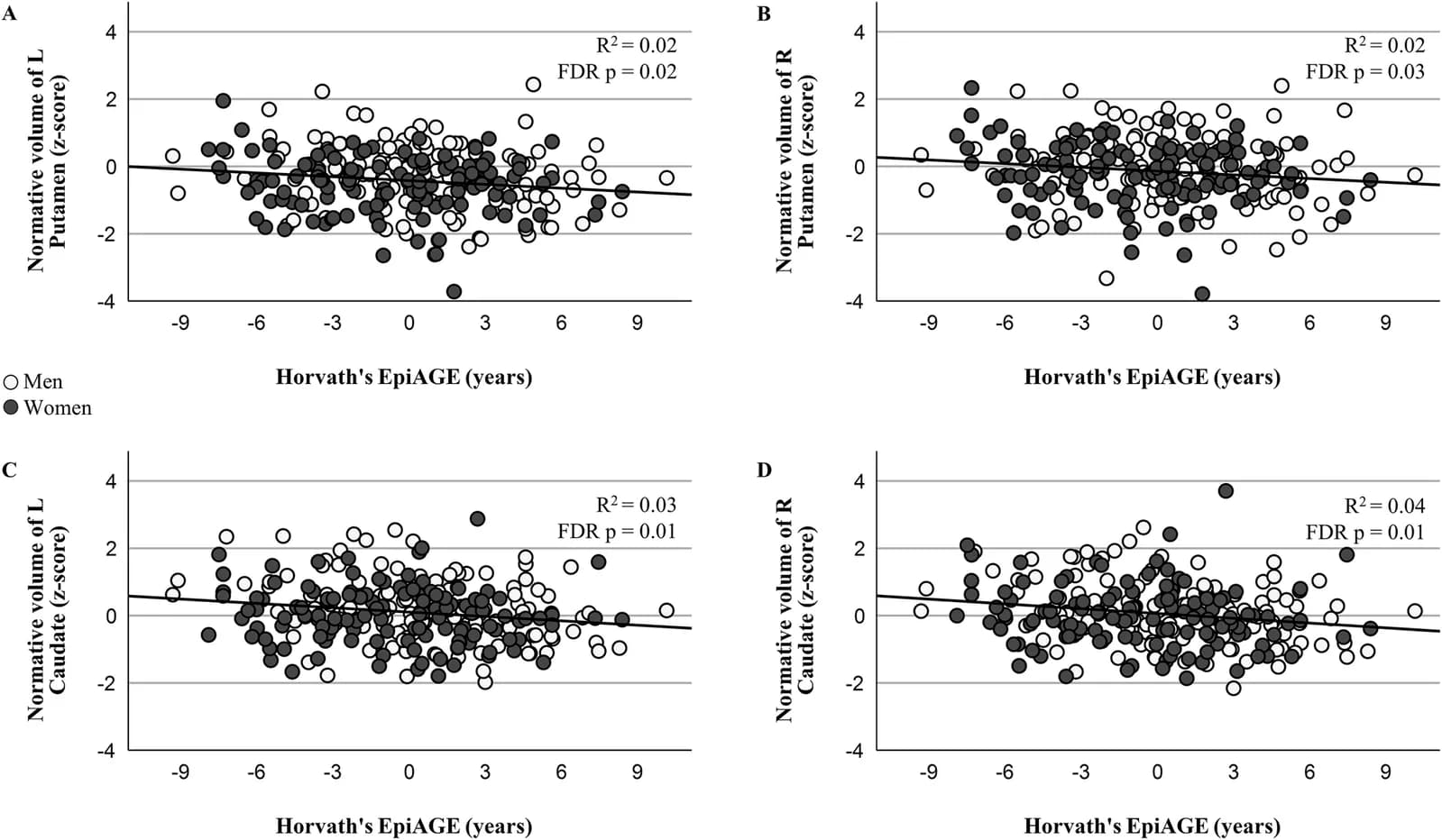
Aging measure linked to smaller brain regions in young adults

An observational analysis of 254 adults aged 28–30 also linked the DNA-based measure to lower intelligence-test scores in women.An observational analysis of 254 adults aged 28–30 also linked the DNA-based measure to lower intelligence-test scores in women.

Premature epigenetic aging and deviations from normative brain development.
Cross-sectional · 254 peopleBiomarkers

Tuesday, November 3

Nature Communications

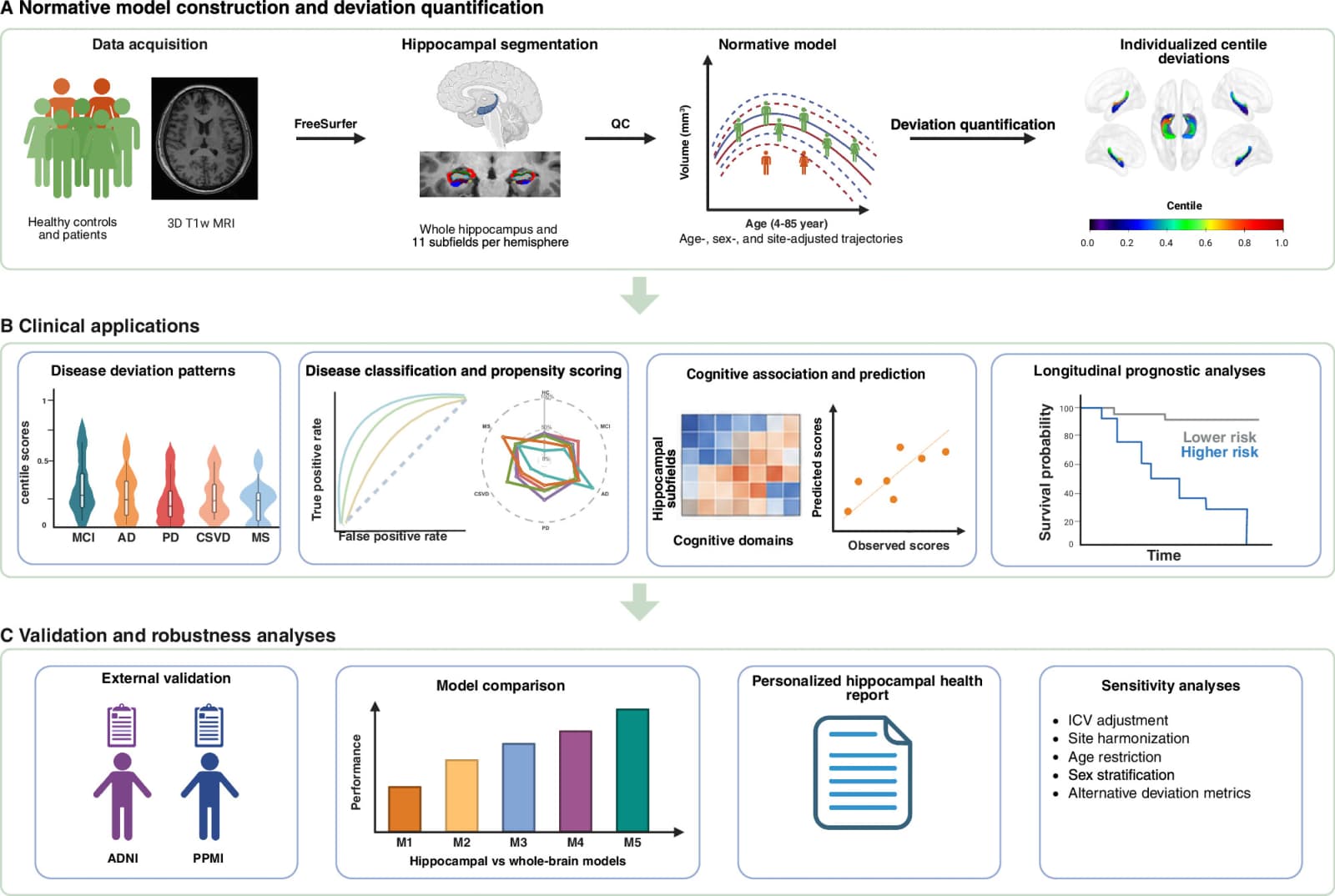
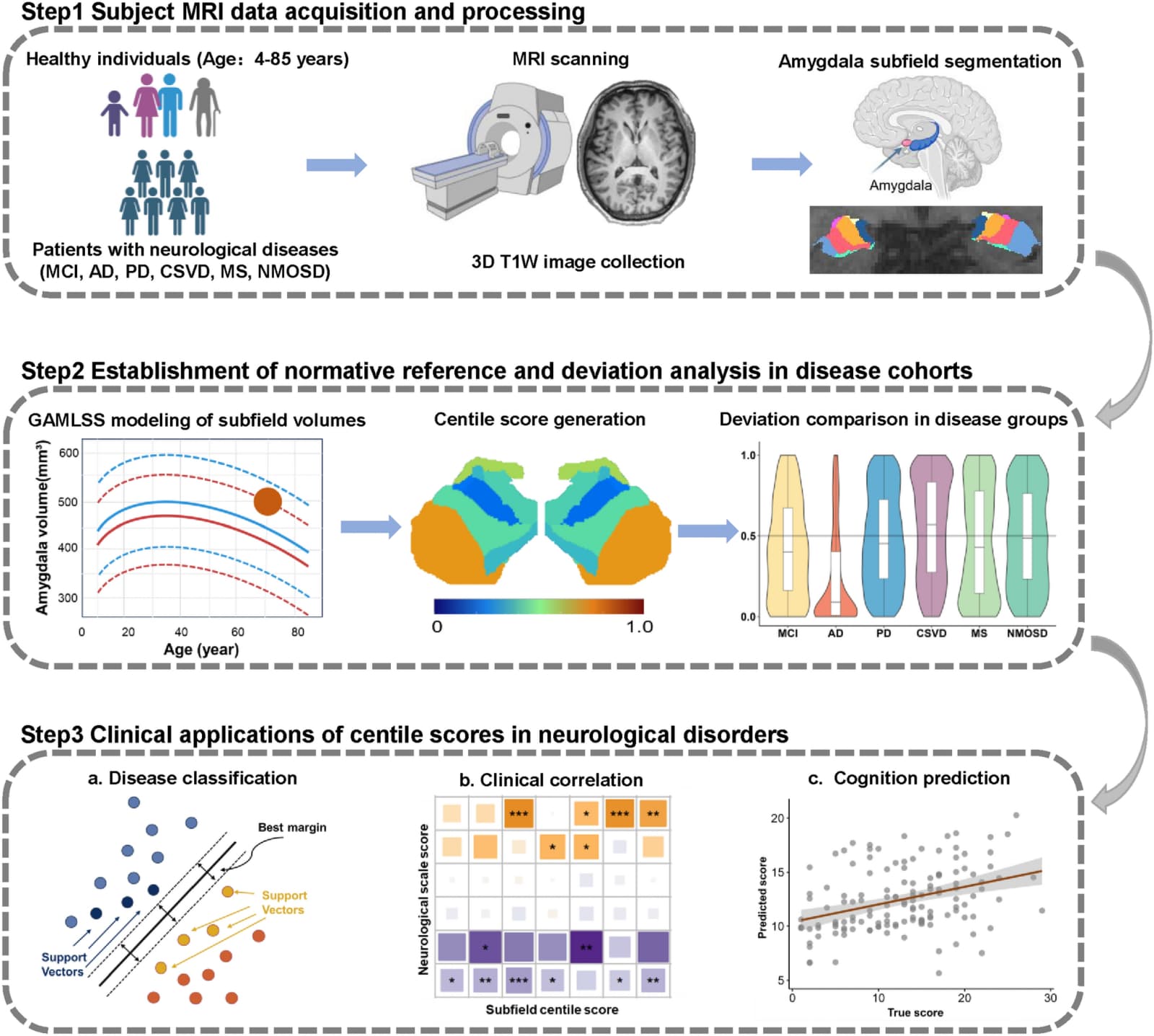
Brain maps capture memory-region differences across disorders

An observational analysis used brain scans from 34,789 healthy people to assess memory-region volumes in 3,521 patients with neurological disorders.An observational analysis used brain scans from 34,789 healthy people to assess memory-region volumes in 3,521 patients with neurological disorders.

Figure from Nature Communications
Cross-sectional · 3,521 peopleNeurological disease

Monday, October 26

bioRxiv

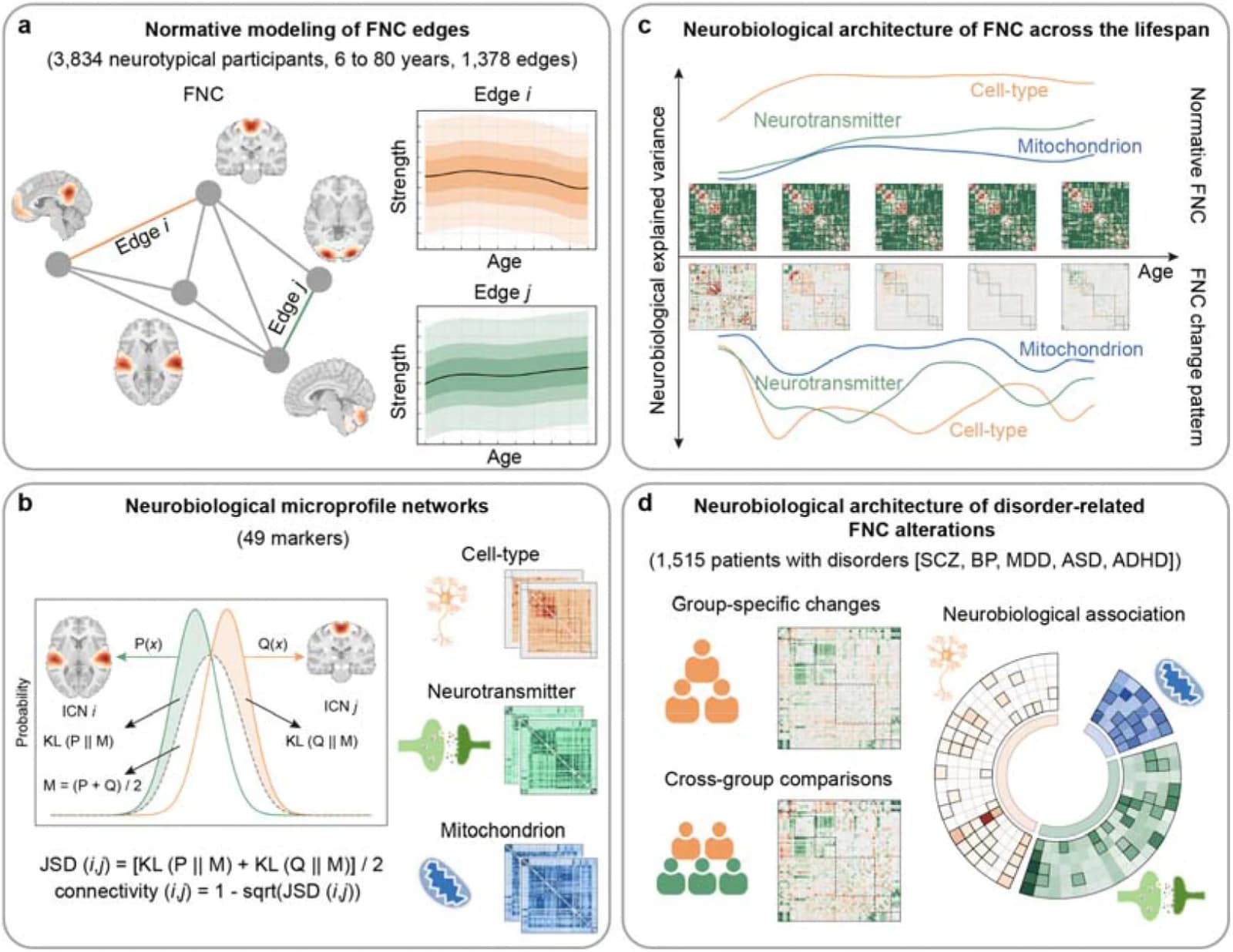
Brain network patterns linked to biology across the lifespan

An observational analysis of resting brain scans from 5,349 people aged 6–80 linked age-related network patterns to cellular and molecular maps.An observational analysis of resting brain scans from 5,349 people aged 6–80 linked age-related network patterns to cellular and molecular maps.

| Overview of the analytical framework.
Preprint: cross-sectional · 3,834 peopleMechanisms

Friday, October 16

medRxiv

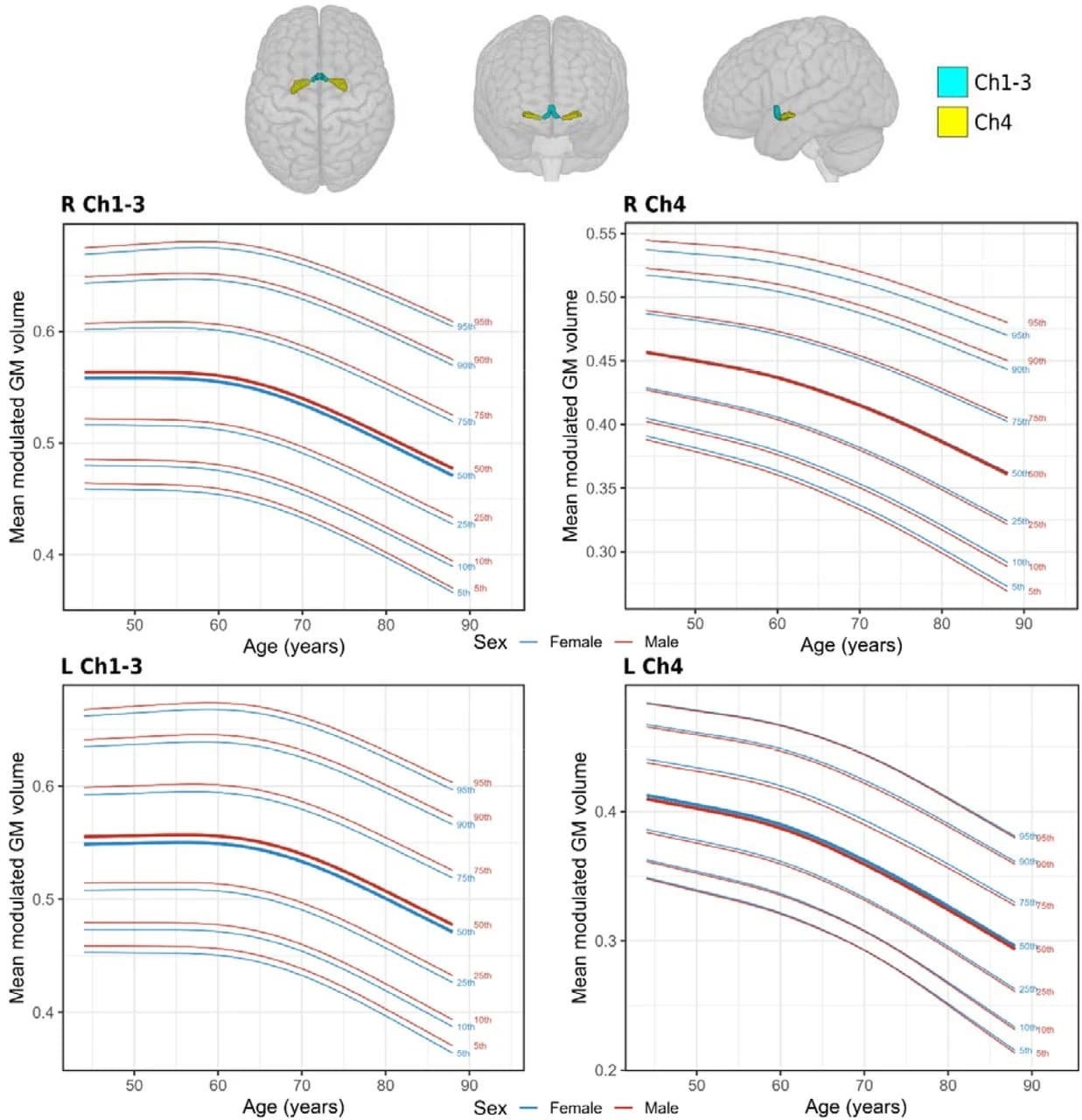
One brain region was smaller than expected in neurological disease

An observational study of 81,870 UK Biobank participants aged 45–87 linked lower-than-expected volume in this region to later dementia and Parkinson’s disease.An observational study of 81,870 UK Biobank participants aged 45–87 linked lower-than-expected volume in this region to later dementia and Parkinson’s disease.

Basal forebrain compartments GM volume normative trajectories from mid to late life.
Preprint: case-control · 43 peopleMechanisms
arXiv

Brain charts linked to progression to dementia in people

An observational analysis found that brain-structure measures added information about progression to mild cognitive impairment and dementia beyond a clinical rating of…An observational analysis found that brain-structure measures added information about progression to mild cognitive impairment and dementia beyond a clinical rating of impairment.

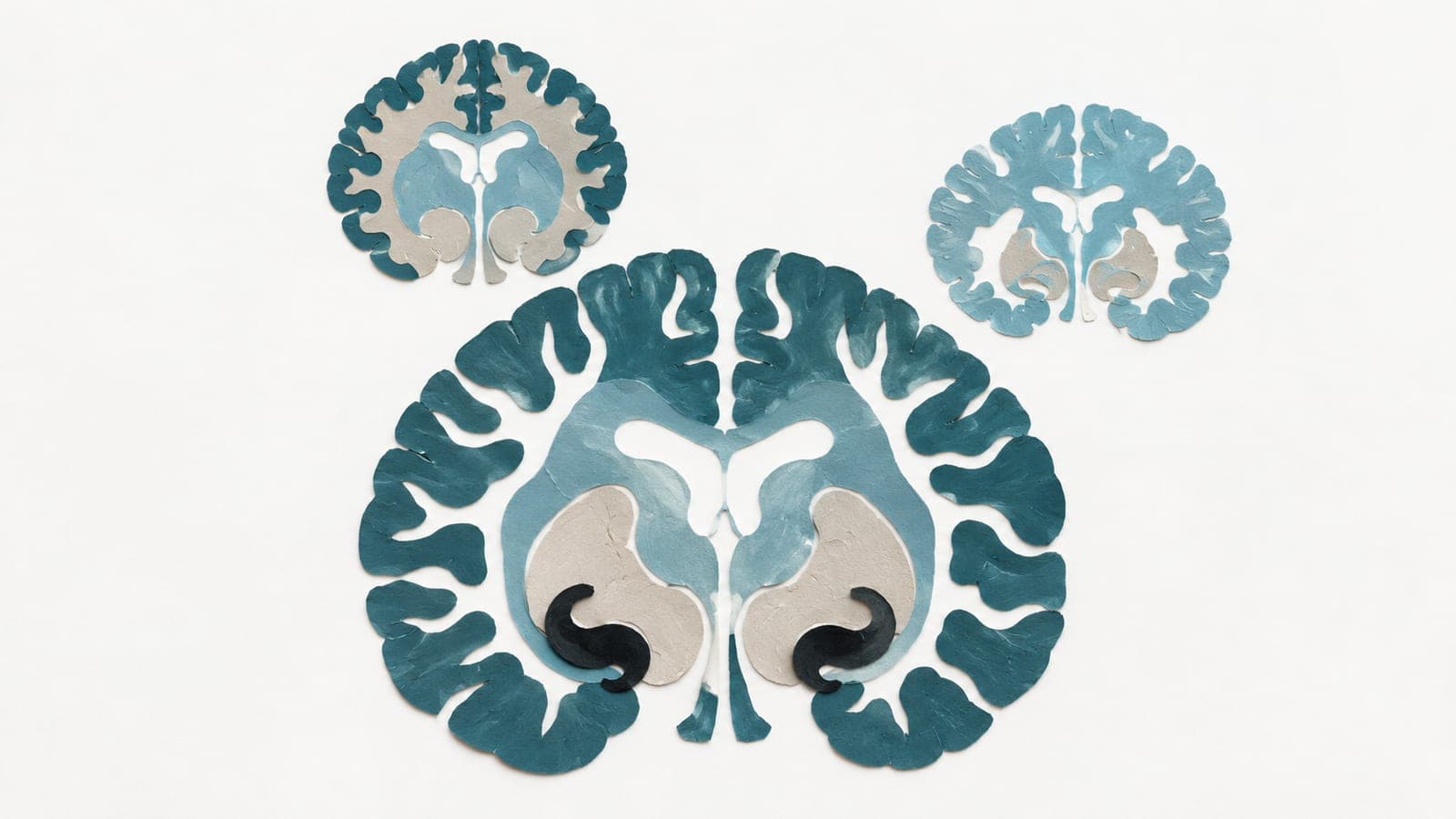
A brain cross-section with dark curled inner structures sits beneath smaller sections showing tighter folds and wider gaps between brain tissue.
Preprint: cohort studyDementia

Tuesday, October 13

Neuroscience Bulletin

Brain scans may help distinguish neurological disorders

An observational study used brain scans from 22,258 healthy participants as references for 4,132 patients, finding distinct patterns across neurological conditions.An observational study used brain scans from 22,258 healthy participants as references for 4,132 patients, finding distinct patterns across neurological conditions.

Figure from Neuroscience Bulletin
Cross-sectional study of 22,258 peopleNeurological disease

Wednesday, September 30

bioRxiv

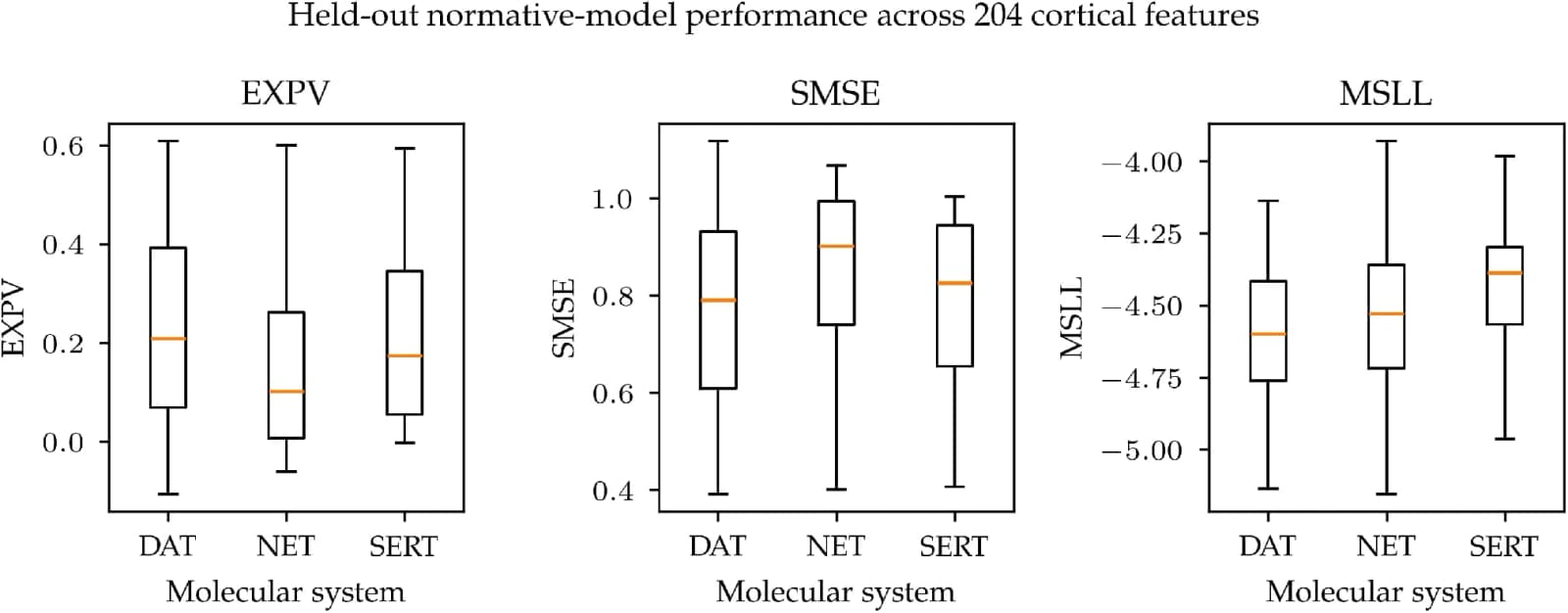
Normative brain models reveal dopamine shifts in early amyloid

In cognitively unimpaired older adults, intermediate amyloid burden showed lower dopamine-transporter deviation scores than amyloid-positive status, with an adjusted…In cognitively unimpaired older adults, intermediate amyloid burden showed lower dopamine-transporter deviation scores than amyloid-positive status, with an adjusted difference of −0.582.

Held-out normative-model performance across the 204 cortical molecular-enriched functional-connectivity features.
Preprint: cohort study of 4,152 peopleBiomarkers

Friday, September 18

Saturday, August 22

Wednesday, August 19

Thursday, August 13

Diagnostics

Brain scan reference curves may aid cognitive assessment

Reference curves built from brain scans of cognitively normal adults aged 40–95 were validated in 458 people with normal cognition, mild cognitive impairment or dementia.Reference curves built from brain scans of cognitively normal adults aged 40–95 were validated in 458 people with normal cognition, mild cognitive impairment or dementia.

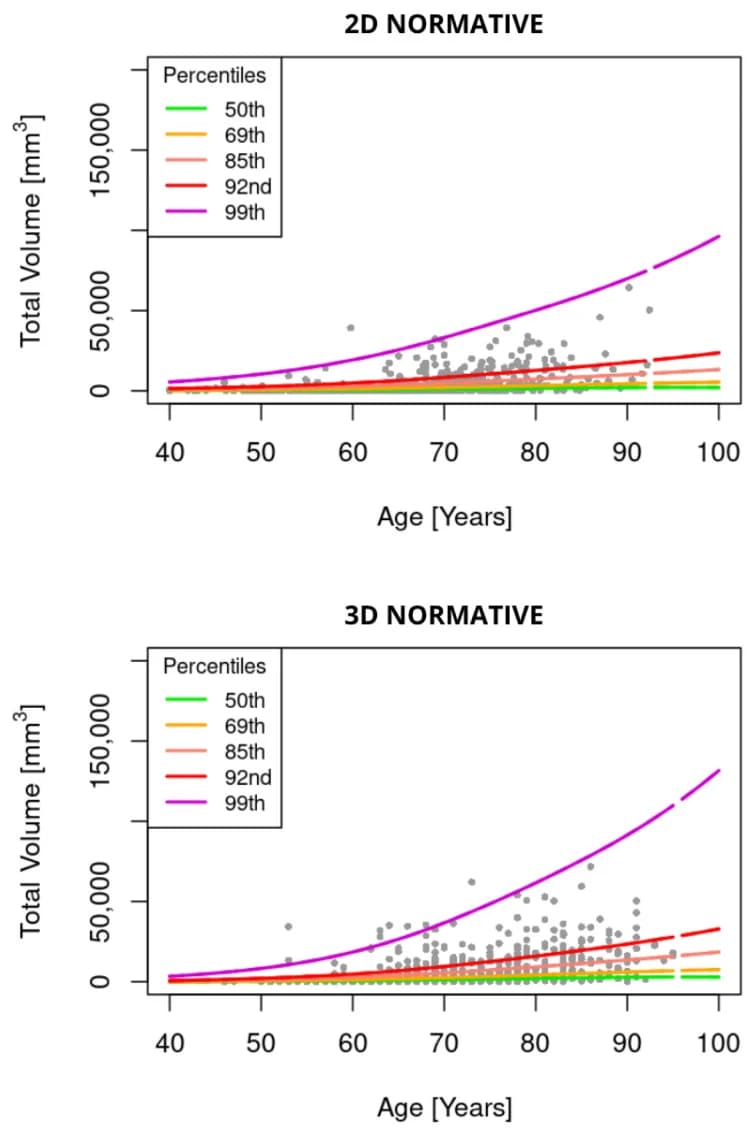
Age-specific percentile distribution of WMH adjusted for age and sex and normalized for total intracranial volume (TIV) in the 2D (top) and 3D (bottom) datasets.
Cross-sectional · 458 peopleBiomarkers

Friday, August 7

Friday, July 31

Brain Topography

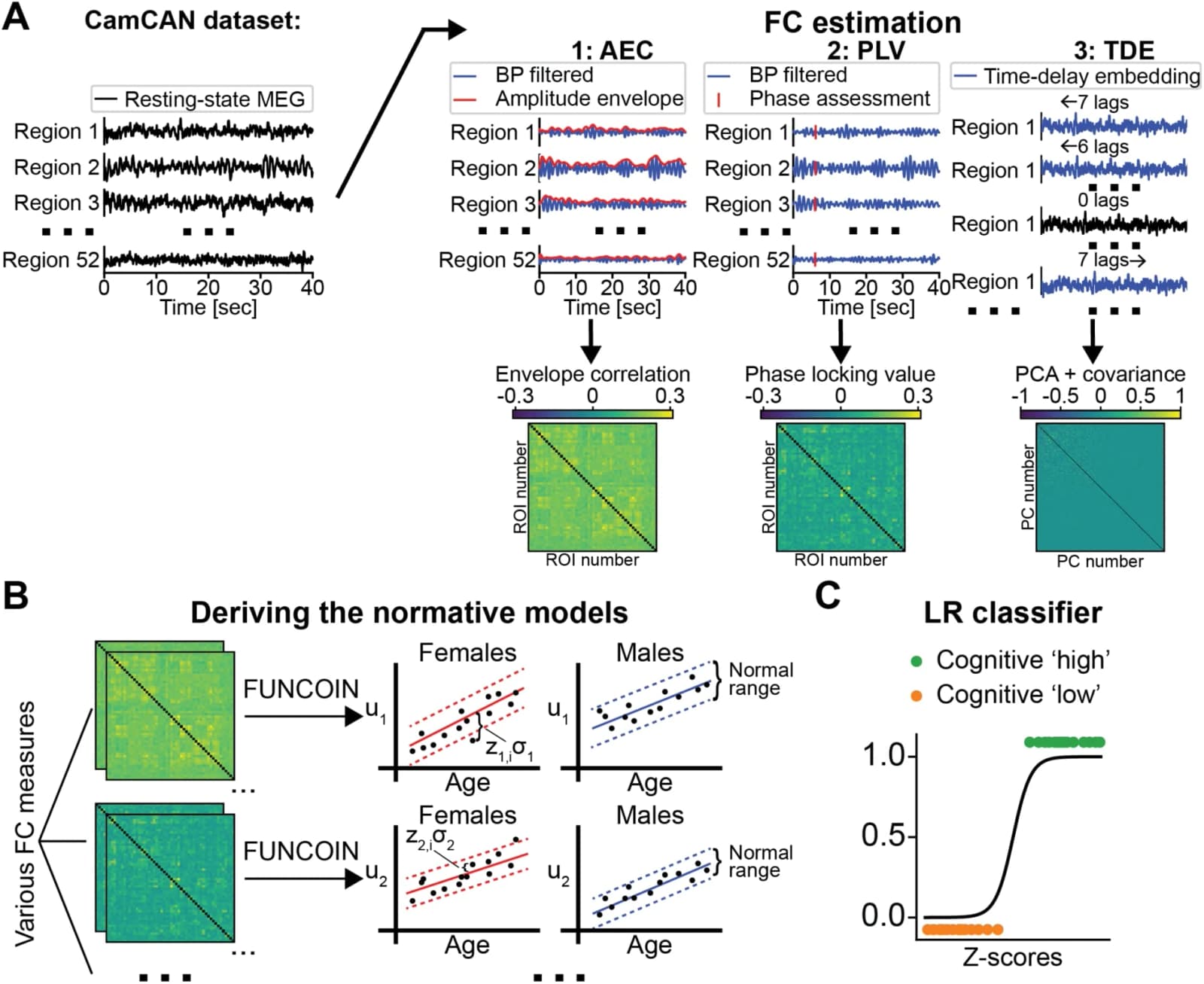
Brain-wave models offer age-based benchmarks in healthy people

An observational analysis of resting recordings from 1,564 neurologically healthy people aged 5–97 built age-adjusted references for interpreting brain-wave measures.An observational analysis of resting recordings from 1,564 neurologically healthy people aged 5–97 built age-adjusted references for interpreting brain-wave measures.

Cross-sectional · 1,564 peopleBiomarkers

Saturday, July 18

Genome Medicine

Genetic data improve models predicting cognitive decline

Models combined genetic information with brain scans, using 23,997 UK Biobank participants for development and 3,000 people from two other studies for validation.Models combined genetic information with brain scans, using 23,997 UK Biobank participants for development and 3,000 people from two other studies for validation.

Cohort · 3,000 peopleCognitive decline

Tuesday, July 7

Monday, June 29

Thursday, June 25

Imaging Neuroscience

Metabolic syndrome linked to altered brain energy estimates

A cross-sectional analysis of 25,697 adults aged 40–70 linked metabolic syndrome severity to brain network energy profiles suggesting accelerated aging.A cross-sectional analysis of 25,697 adults aged 40–70 linked metabolic syndrome severity to brain network energy profiles suggesting accelerated aging.

Cross-sectional · 25,697 peopleMetabolic syndrome

Monday, June 22

Wednesday, June 10

Thursday, June 4

Wednesday, June 3

medRxiv

Charts map brain oxygen extraction across human life

An observational study of 2,025 healthy people aged 0–93 found an age-related rise in extraction that slowed and plateaued later in life.An observational study of 2,025 healthy people aged 0–93 found an age-related rise in extraction that slowed and plateaued later in life.

Preprint: cross-sectional · 2,025 peopleBiomarkers

Thursday, May 28

Nature Communications

Brain scan model charts age patterns in human white matter

An observational analysis of brain scans from 54,583 people aged 4–91 across 19 datasets built age- and sex-based reference ranges.An observational analysis of brain scans from 54,583 people aged 4–91 across 19 datasets built age- and sex-based reference ranges.

Cross-sectional · 54,583 peopleAI & data

Monday, May 18

Thursday, May 14

Friday, April 17

Friday, April 10

Wednesday, April 8