Gait age clocks in health and disease
Abstract
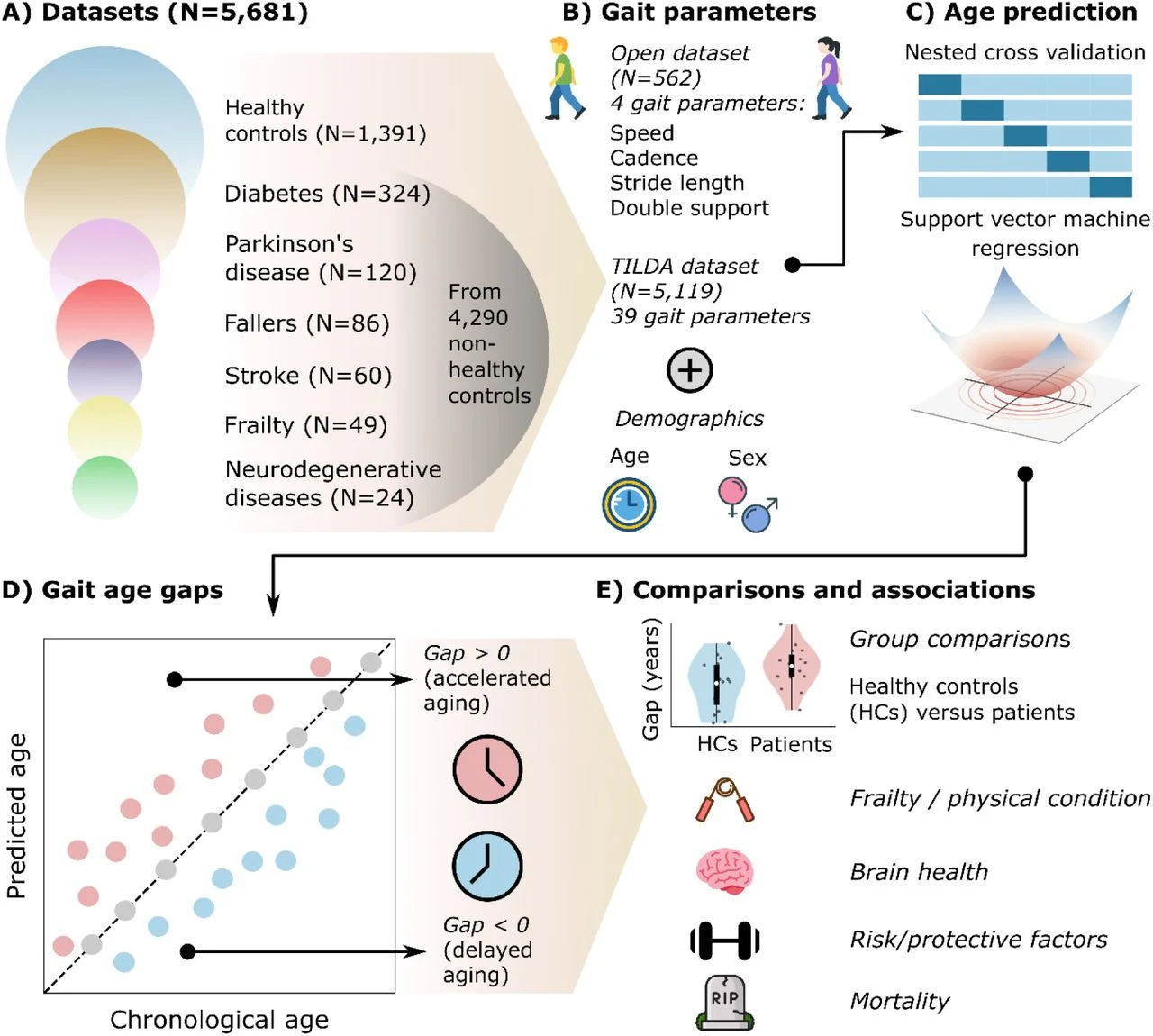
Gait is a scalable biomarker of functional, physical, and brain health, but most studies rely on gait speed alone. Here, we developed and validated gait age clocks that estimate age from multidimensional gait features and quantify deviations as gait age gaps, with gaps >0 (<0) for accelerated (delayed) aging. We included data from 5,681 participants, including healthy controls and clinical groups (Parkinsons disease, neurodegenerative diseases, stroke, diabetes, fallers, and frailty). Normative models trained in healthy controls showed robust age prediction (r=0.851, p<0.001), and full gait models outperformed gait speed alone ({Delta}R2=0.175). Gaps captured accelerated aging across neurological and physical conditions, tracked Parkinsons disease severity, and were associated with frailty, physical performance, white matter hyperintensities, and geriatric depression. Gait age gaps are also related to brain aging, risk/protective lifestyle factors, and mortality risk. These findings support gait age gaps as an interpretable biomarker for aging, risk stratification, and clinical monitoring.
The paper
Trinity College Dublin
medRxiv, 19 Aug 2026, CC BY-NC-ND, Preprint, not peer-reviewed