Aging measure linked to smaller brain regions in young adults
An observational analysis of 254 adults aged 28–30 also linked the DNA-based measure to lower intelligence-test scores in women.
Our read
Biomarkers- Studied:
- Cross-sectional study of 254 young adults
- What changed:
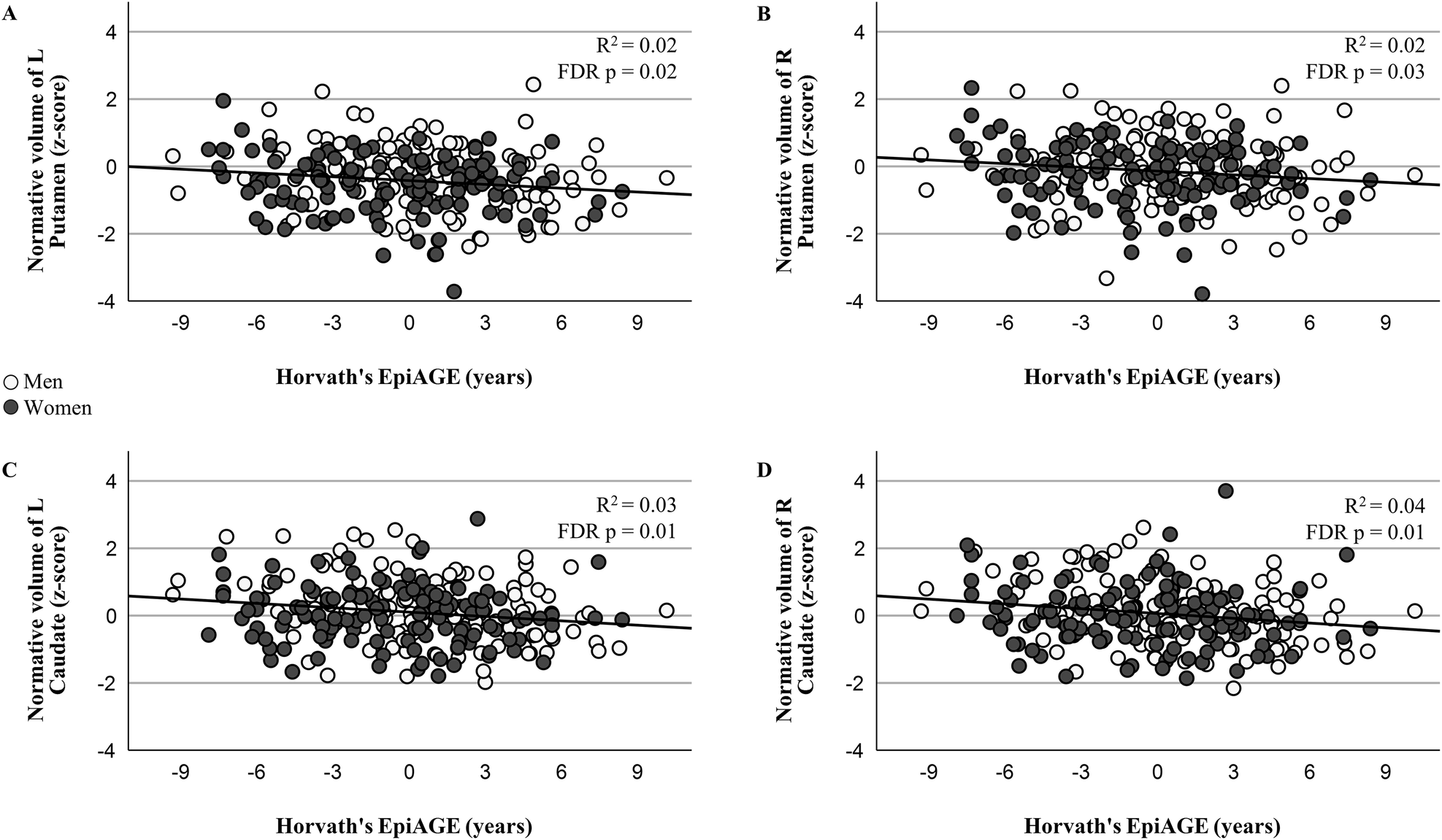
- Faster aging on Horvath’s clock was linked to smaller-than-expected putamen and caudate volumes in young adults
- The catch:
- Lifestyle factors linked to intelligence could affect both brain integrity and epigenetic aging
- Why it’s aging research:
- It measures an outcome that worsens with age.
Editor of record: Boris Djordjevic · AgingResearch.News
Among 254 young adults aged 28–30 from the ELSPAC birth cohort, an observational analysis compared DNA-based aging estimates, brain scans and intelligence-test scores. Researchers estimated epigenetic age, an age inferred from chemical marks on DNA, from cheek swabs using three clocks. They compared brain measurements with expectations for each participant’s age and sex.
Older-than-expected epigenetic age measured by Horvath’s clock was linked to smaller-than-expected volumes of the putamen and caudate, two brain regions. Other brain measurements showed no such links. In women, this aging measure was also linked to lower intelligence-test scores. Statistical modeling suggested that putamen volume helped account for that association in women. In men, cognitive scores had a U-shaped relationship with the aging measure. The other two clocks, CheekAge and AltumAge, showed no comparable associations.
Why it matters
The authors suggest that Horvath’s aging measure and departures from typical brain development may serve as early markers of poorer cognitive performance, long before clinical symptoms might emerge.
Caveats
Brain development was assessed against reference norms, not measured as change within individuals. The analysis could not determine whether DNA-based aging preceded differences in brain structure or cognitive performance.
From the paper
- Participants
A total of 254 young adults (51.6% male) aged 28–30 years (M = 28.97, SD = 0.68) from the European Longitudinal Study of Pregnancy and Childhood (ELSPAC) prenatal birth cohort also participated in its neuroimaging – epigenetic follow-up in young adulthood, the Health Brain Age (HBA) study …
Quoted word for word from the full text on nature.com.
The paper
Masaryk University
Translational Psychiatry, Aug 6, 2026, Open access


Comments
Be the first to comment.