Normative brain models reveal dopamine shifts in early amyloid
In cognitively unimpaired older adults, intermediate amyloid burden showed lower dopamine-transporter deviation scores than amyloid-positive status, with an adjusted difference of −0.582.
Our read
Biomarkers- Studied:
- Preprint: cohort study of 4,152 people
Editor of record: Boris Djordjevic · AgingResearch.News
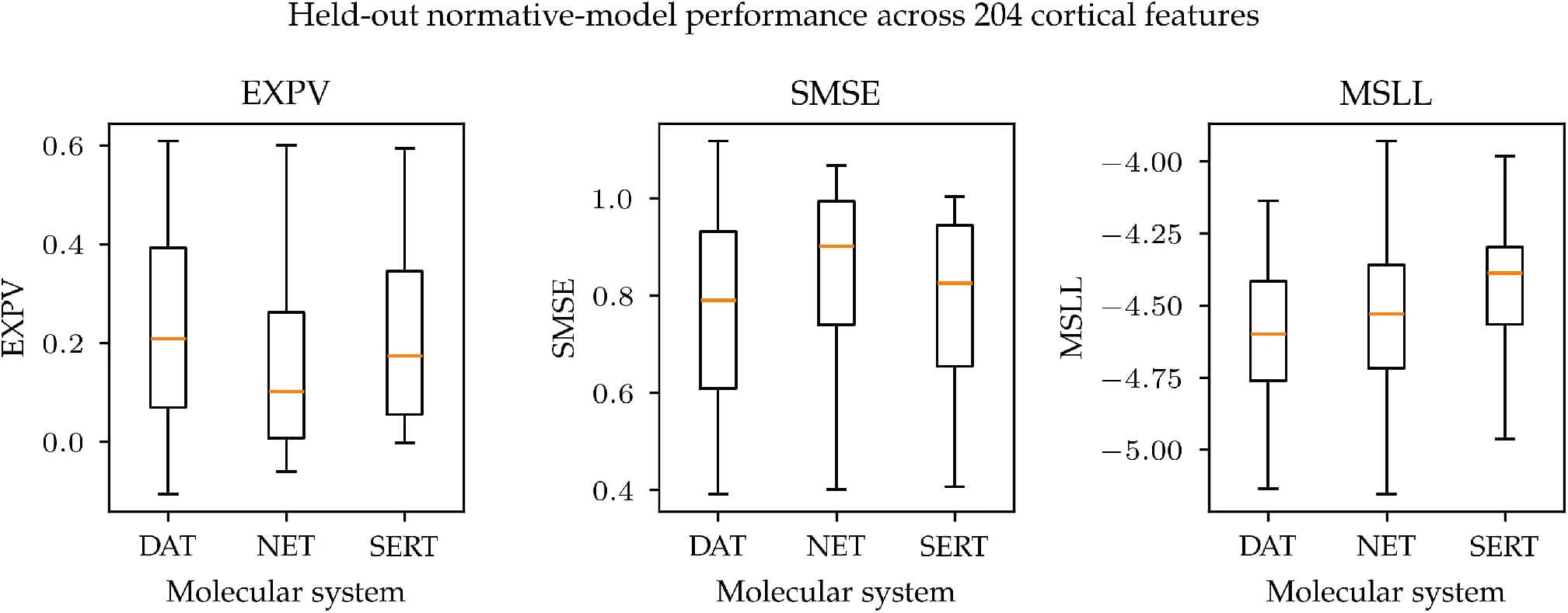
In a preprint analyzing brain imaging from human adults, researchers built normative models to identify individual deviations from healthy brain aging. The team trained hierarchical Bayesian models on resting-state functional connectivity enriched for dopamine, norepinephrine, and serotonin transporters across 204 cortical regions in 4,152 healthy adults aged 18.0 to 89.8 years.
They then applied these models to cognitively unimpaired older adults. Comparing 111 individuals with intermediate amyloid burden to 66 amyloid-positive individuals, dopamine-transporter deviation scores in the right caudal middle frontal cortex were lower in the intermediate group (adjusted difference = −0.582). This group also showed greater extreme dopamine deviation burden (difference = 0.032). However, continuous amyloid levels showed no linear associations, and norepinephrine- and serotonin-enriched measures showed no significant group differences.
Why it matters
Standard brain-aging metrics often rely on broad population averages that can mask early, individualized molecular changes. Spatially resolved, molecular-enriched normative modeling helps map specific neurotransmitter pathway alterations during preclinical stages of neurodegenerative pathology.
Caveats
This work is a cross-sectional observational study released as a preprint that has not yet undergone peer review. Furthermore, the observed group differences were modest and isolated to the dopamine system, while continuous amyloid levels showed no linear relationship with deviation scores.
From the paper
- Participants
The final healthy normative reference cohort comprised 4,152 participants from seven datasets, including 3,324 participants in the training set and 828 in the held-out healthy test set.
Results, Healthy normative reference cohort and internal model validation
- Result
… DAT RADB was lower in the amyloid-positive than in the amyloid-negative reference group (mean difference = −0.188, 95% CI [−0.302, −0.074], p = 0.001, q = 0.006) …
Results, Subject-level deviation burden across amyloid groups
- Limitation
First, the seven-dataset healthy reference cohort was intentionally heterogeneous in demographics and imaging protocols.
Quoted word for word from the full text on bioRxiv.
- Machine learning
- Modeling and theory
- DAT extreme-deviation burden
- DAT-enriched right caudal middle frontal functional connectivity deviation scores
- Molecular-enriched functional connectivity normative models
- Humans
The paper
University of Padua
bioRxiv, Sep 29, 2026, Open access, Preprint, not yet peer-reviewed

Comments
Be the first to comment.