Amyloid burden

Papers on amyloid burden

477 papers22 new in 30 days

Wednesday, November 11

Alzheimer's Research & Therapy

Spinal-fluid protein linked to Alzheimer’s progression

Higher levels of one spinal-fluid protein were linked to greater dementia risk, with a hazard ratio of 1.325, a measure of relative risk.Higher levels of one spinal-fluid protein were linked to greater dementia risk, with a hazard ratio of 1.325, a measure of relative risk.

Brain tissue with thinning branches, dense tangles, and clustered immune cells sits beside fuller tissue with fewer tangles and surrounding proteins.
Cohort · 706 peopleMechanisms
Journal of Neuroinflammation

Air pollution changed brain immune cell activity in mice

A 20-week mouse experiment found that genetic background shaped how brain immune cells responded to fine-particle air pollution.A 20-week mouse experiment found that genetic background shaped how brain immune cells responded to fine-particle air pollution.

Figure from Journal of Neuroinflammation
Mouse studyMechanisms

Tuesday, November 10

Friday, November 6

Thursday, November 5

Wednesday, November 4

Monday, November 2

Saturday, October 31

Alzheimer's & Dementia Behavior & Socioeconomics of Aging

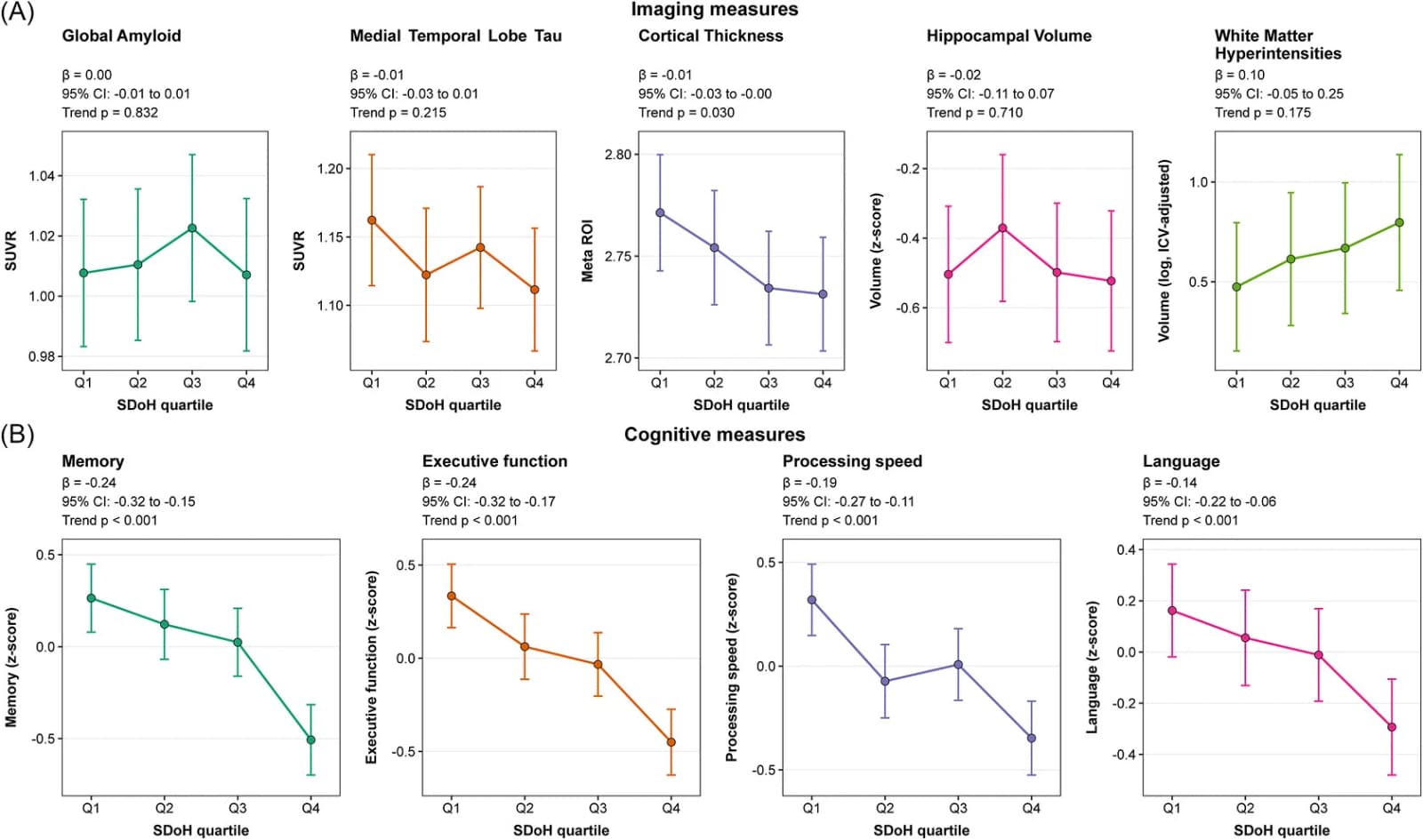
Social disadvantage linked to poorer thinking skills in Black men

Greater disadvantage was linked to lower memory scores in 331 non-Hispanic Black men; the coefficient, which measures the statistical link, was minus 0.23.Greater disadvantage was linked to lower memory scores in 331 non-Hispanic Black men; the coefficient, which measures the statistical link, was minus 0.23.

Figure from Alzheimer's & Dementia Behavior & Socioeconomics of Aging
Cross-sectional · 331 peoplePopulations

Thursday, October 29

Tuesday, October 27

JAMA Network Open

Estimated amyloid onset was later in Black study participants

Estimated mean onset was 83.86 years in Black participants versus 71.38 years in White participants in an observational US cohort.Estimated mean onset was 83.86 years in Black participants versus 71.38 years in White participants in an observational US cohort.

Line and Scatter Plots Showing the Mean Levels of Amyloid Positron Emission Tomography Centiloid Nonparametrically Estimated as a Function of Age From Unmatched Cohorts.
Cohort · 2,653 peoplePopulations

Monday, October 26

bioRxiv

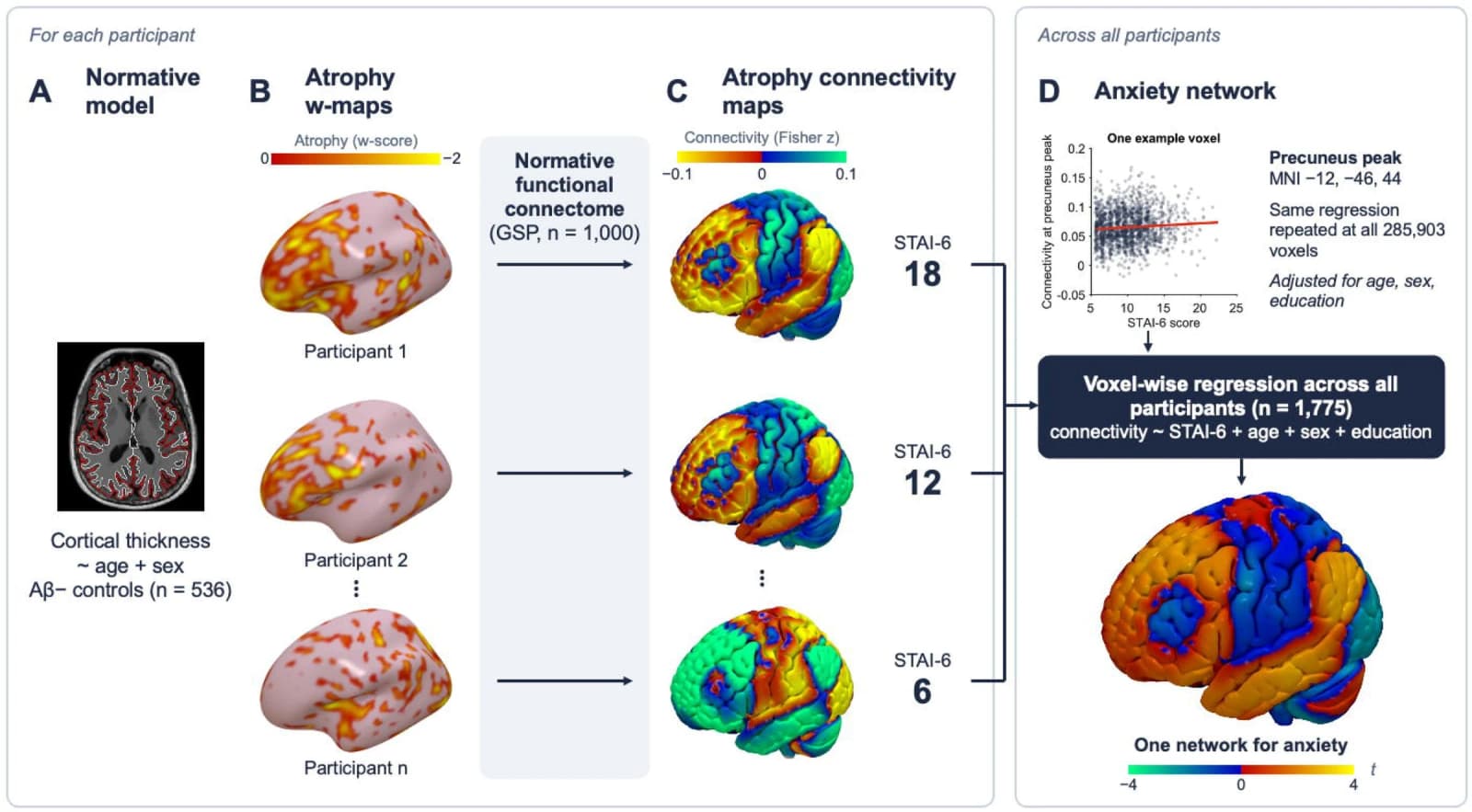
Anxiety linked to Alzheimer’s-related brain changes

Among 1,775 older adults without cognitive impairment, anxiety-related and Alzheimer’s-related brain networks resembled each other, with a correlation of 0.74.Among 1,775 older adults without cognitive impairment, anxiety-related and Alzheimer’s-related brain networks resembled each other, with a correlation of 0.74.

Atrophy Network Mapping of anxiety in A4/LEARN.
Preprint: cross-sectional · 1,775 peoplePreclinical Alzheimer's disease
ESC Congress 2026 Abstract

Blood test may flag early protein changes linked to heart disease

The assay reported 95% sensitivity and specificity for disease-related heart involvement—measures of how well it identified affected and unaffected people.The assay reported 95% sensitivity and specificity for disease-related heart involvement—measures of how well it identified affected and unaffected people.

A heart cross-section with thick walls and dark protein deposits sits beside a healthier heart and plasma pools with tangled versus compact proteins.
Case-control · 212 peopleBiomarkers

Friday, October 23

Brain Communications

Raising gene activity reduces brain protein deposits in flies

Female flies producing human amyloid protein had a median lifespan of 47.5 days with increased Wwox gene activity, versus 29 days in controls.Female flies producing human amyloid protein had a median lifespan of 47.5 days with increased Wwox gene activity, versus 29 days in controls.

Figure from Brain Communications
Fly studyMechanisms

Wednesday, October 21

Tuesday, October 20

Sunday, October 18

Thursday, October 15

Wednesday, October 14

Annals of Neurology

Mild brain amyloid linked to later thinking problems

People with mild amyloid levels were 43% more likely to develop cognitive impairment than those with the lowest levels, around 10 years after scanning.People with mild amyloid levels were 43% more likely to develop cognitive impairment than those with the lowest levels, around 10 years after scanning.

Brain tissue with branching neurons and scattered amyloid deposits sits between smaller fragments with sparse and dense deposits.
Cohort · 1,896 peopleBiomarkers

Sunday, October 11

Alzheimer's & Dementia

Depression and sleep links to protein build-up varied by genetic risk

An observational study of 110 adults aged 65–88 with depression found separate, additive links to amyloid, a protein, only in carriers of a genetic variant.An observational study of 110 adults aged 65–88 with depression found separate, additive links to amyloid, a protein, only in carriers of a genetic variant.

Individual moderation effects of APOE ɛ4 status by sleep efficiency and depression, regressed on PET global Aβ.
Cohort study of 110 peopleDepression

Friday, October 9

NPJ Dementia

Neighborhood deprivation linked to brain amyloid buildup

In an observational study of 1,110 people, living in more deprived areas was associated with lower cognitive scores and more amyloid build-up in unimpaired brains.In an observational study of 1,110 people, living in more deprived areas was associated with lower cognitive scores and more amyloid build-up in unimpaired brains.

Centiloids distribution and the Area Deprivation Index (ADI).
Cross-sectional study of 1,110 peoplePopulations

Thursday, October 8

Wednesday, October 7

Tuesday, October 6

Alzheimer's & Dementia

Genetic risk scores linked to faster progression to Alzheimer’s

In two observational cohorts, genetic scores were linked to faster progression to Alzheimer’s disease, with hazard ratios, a measure of risk over time, of 1.25 to 2.02.In two observational cohorts, genetic scores were linked to faster progression to Alzheimer’s disease, with hazard ratios, a measure of risk over time, of 1.25 to 2.02.

Overall study design in three phases.
Genetic association study in peopleBiomarkers