Estimated amyloid onset was later in Black study participants
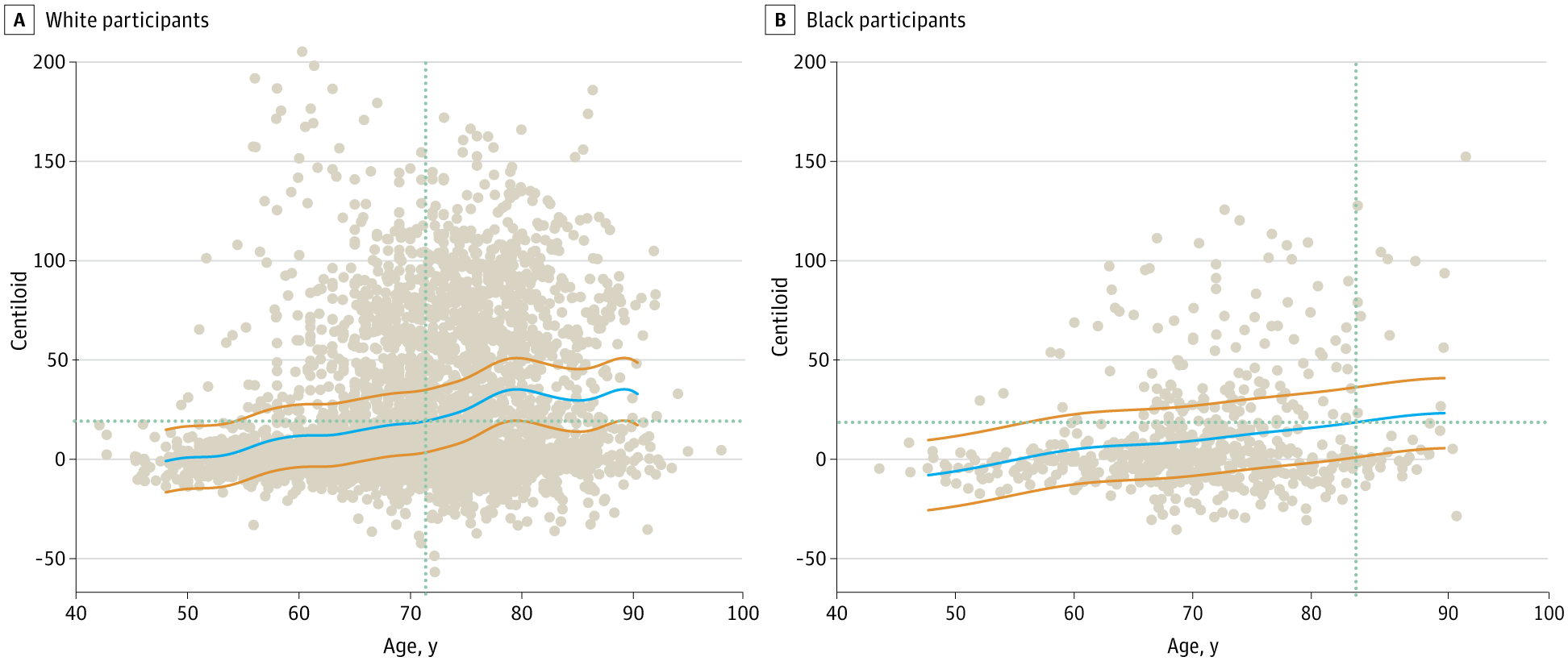
Estimated mean onset was 83.86 years in Black participants versus 71.38 years in White participants in an observational US cohort.
Multicenter
Limit: Onset timing relied on group-specific averages rather than individual onset ages
Edited by Boris Djordjevic · AgingResearch.News
This retrospective observational cohort study analyzed 2,653 middle-aged and older, self-identified Black and White participants at five US academic centers. Their mean age was 69; 59.3% were female. Researchers used brain scans to measure amyloid, a protein that can build up in the brain, and tests of thinking and memory.
Black participants had later estimated mean amyloid onset, including after matching on key characteristics. Overall, 24.1% of Black participants and 31.7% of White participants had scans positive for amyloid. Yet positive scans were more common among Black participants in almost every interval when grouped by age relative to their group’s estimated onset. The authors concluded that later onset partly explained the paradox of lower amyloid positivity despite higher reported dementia prevalence among Black US residents.
Why it matters
The authors suggested that Alzheimer disease trials might use timing relative to amyloid onset, rather than age alone, to decide eligibility and help improve Black representation.
Caveats
This observational study could not establish cause and effect, and its timing measure used group-specific averages. Participants came from five US academic centers studying memory and aging.
The paper
Simpson's Paradox, Amyloid Paradox, and Racial Differences
Washington University School of Medicine; Washington University School of Medicine in St Louis
JAMA Network Open, Oct 1, 2026


