Spinal-fluid protein linked to Alzheimer’s progression
Higher levels of one spinal-fluid protein were linked to greater dementia risk, with a hazard ratio of 1.325, a measure of relative risk.
Our read
Mechanisms- Studied:
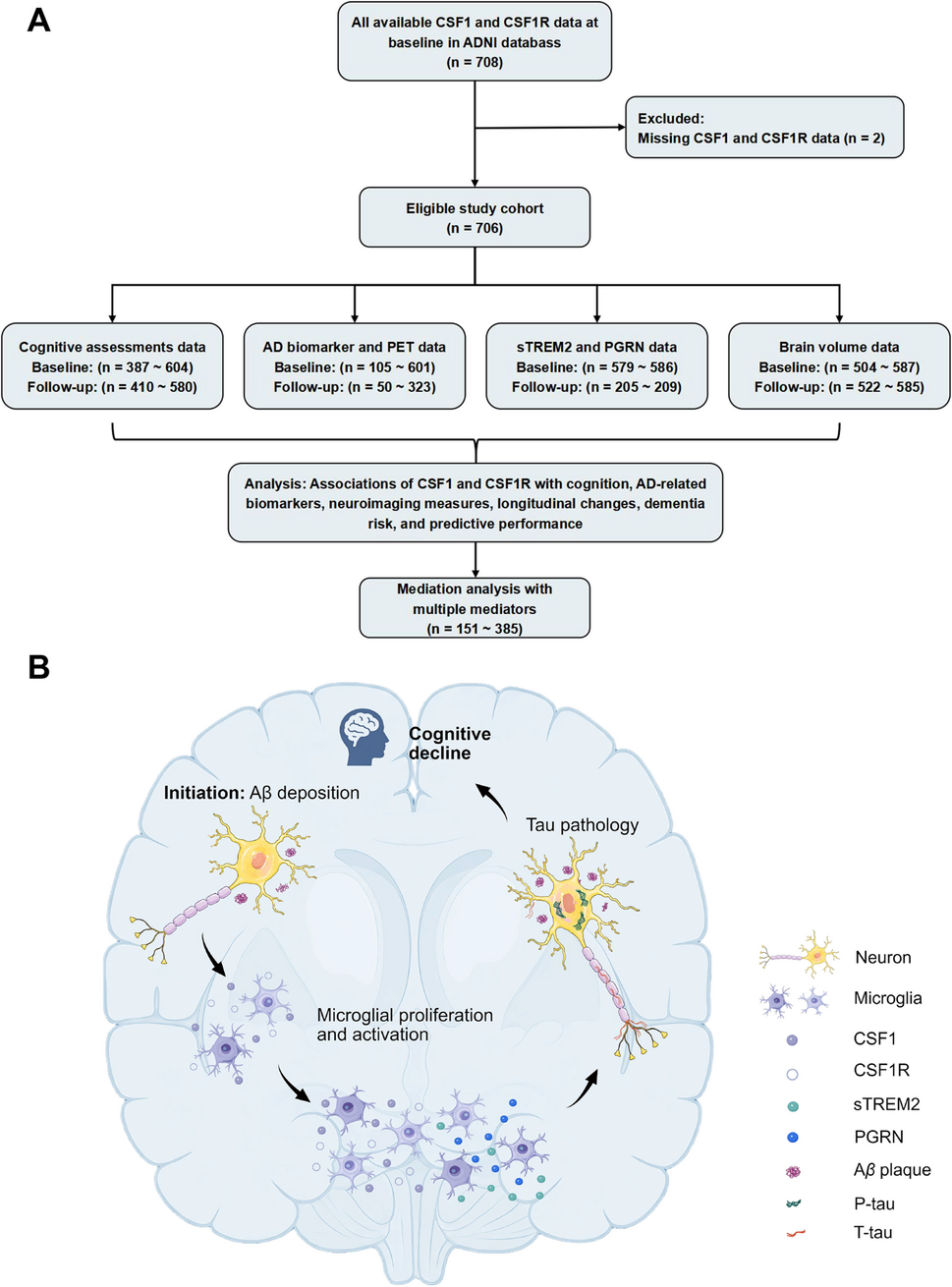
- Cohort study of 706 Alzheimer’s Disease Neuroimaging Initiative participants
- What changed:
- Dementia risk was higher with higher baseline spinal-fluid CSF1 (HR = 1.325)
- The catch:
- CSF1 could rise in response to existing tau pathology rather than drive disease progression
Editor of record: Boris Djordjevic · AgingResearch.News
Among 706 participants in the Alzheimer’s Disease Neuroimaging Initiative, a longitudinal study examined proteins in the fluid surrounding the brain and spinal cord. These included colony-stimulating factor 1 (CSF1), which helps support brain immune cells, and its receptor, a protein that receives its signals.
Higher levels of both proteins were associated with more abnormalities involving tau, a protein that builds up in Alzheimer’s disease. They were also linked to higher markers of microglia, the brain’s immune cells. Higher starting CSF1 levels were associated with later cognitive decline, greater dementia risk, worsening tau-related markers and shrinkage in some brain regions. The dementia association persisted after excluding participants who developed dementia within the first two years of follow-up.
Why it matters
Brain immune-cell responses may participate in processes linking amyloid protein buildup to tau abnormalities and brain degeneration, the authors suggest. They propose CSF1 as a promising marker for monitoring Alzheimer’s progression.
Caveats
The linked changes in spinal-fluid proteins and disease markers leave open whether these proteins contribute to disease progression or reflect an ongoing disease process.
From the paper
- Participants
This study included 706 participants from the Alzheimer’s Disease Neuroimaging Initiative with CSF measurements of CSF1 and CSF1R.
- Result
Higher baseline CSF1 was further associated with subsequent cognitive decline, increased incident dementia risk (HR = 1.325, 95% CI, 1.142–1.537), tau-related biomarker progression, and regional brain atrophy.
Quoted word for word from the full text on link.springer.com.
The paper
Alzheimer's Research & Therapy, Nov 11, 2026, CC BY-NC-ND
Comments
Be the first to comment.