Artificial intelligence beat a clinical risk-factor model for predicting one subtype, scoring 0.86 versus 0.78, but scored modestly lower for the other.Artificial intelligence beat a clinical risk-factor model for predicting one subtype, scoring 0.86 versus 0.78, but scored modestly lower for the other.
Who was studiedPeople without prior heart failure, 10 years, against a clinical risk-factor model
What changedPrediction scores were higher for reduced-ejection-fraction heart failure (0.86 versus 0.78) but lower for preserved-ejection-fraction heart failure (0.78 versus 0.81)
The catchThe evaluation measured prediction, not whether using predictions prevented heart failure
Experiments implicated a gene-regulating protein in senescence, a state in which cells stop dividing, in human retinal cells grown in the lab.Experiments implicated a gene-regulating protein in senescence, a state in which cells stop dividing, in human retinal cells grown in the lab.
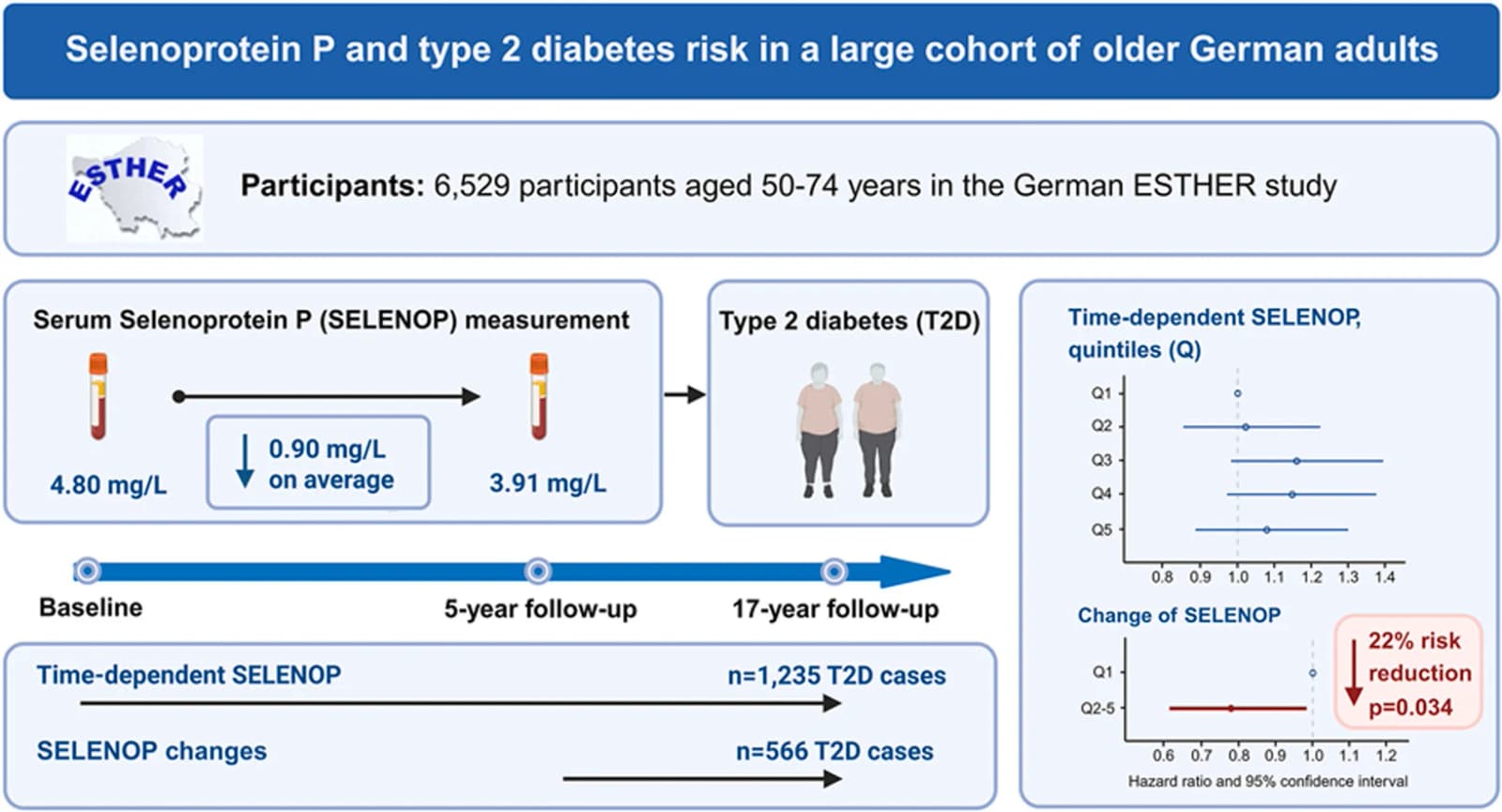
The highest versus lowest blood protein levels had a relative diabetes risk estimate of 1.08, with uncertainty spanning no difference.The highest versus lowest blood protein levels had a relative diabetes risk estimate of 1.08, with uncertainty spanning no difference.
In experiments with human artery cells, blocking a protein released by cells that stopped dividing restored signaling from insulin-like growth factor 1.In experiments with human artery cells, blocking a protein released by cells that stopped dividing restored signaling from insulin-like growth factor 1.