Blood protein showed no clear diabetes link in older adults
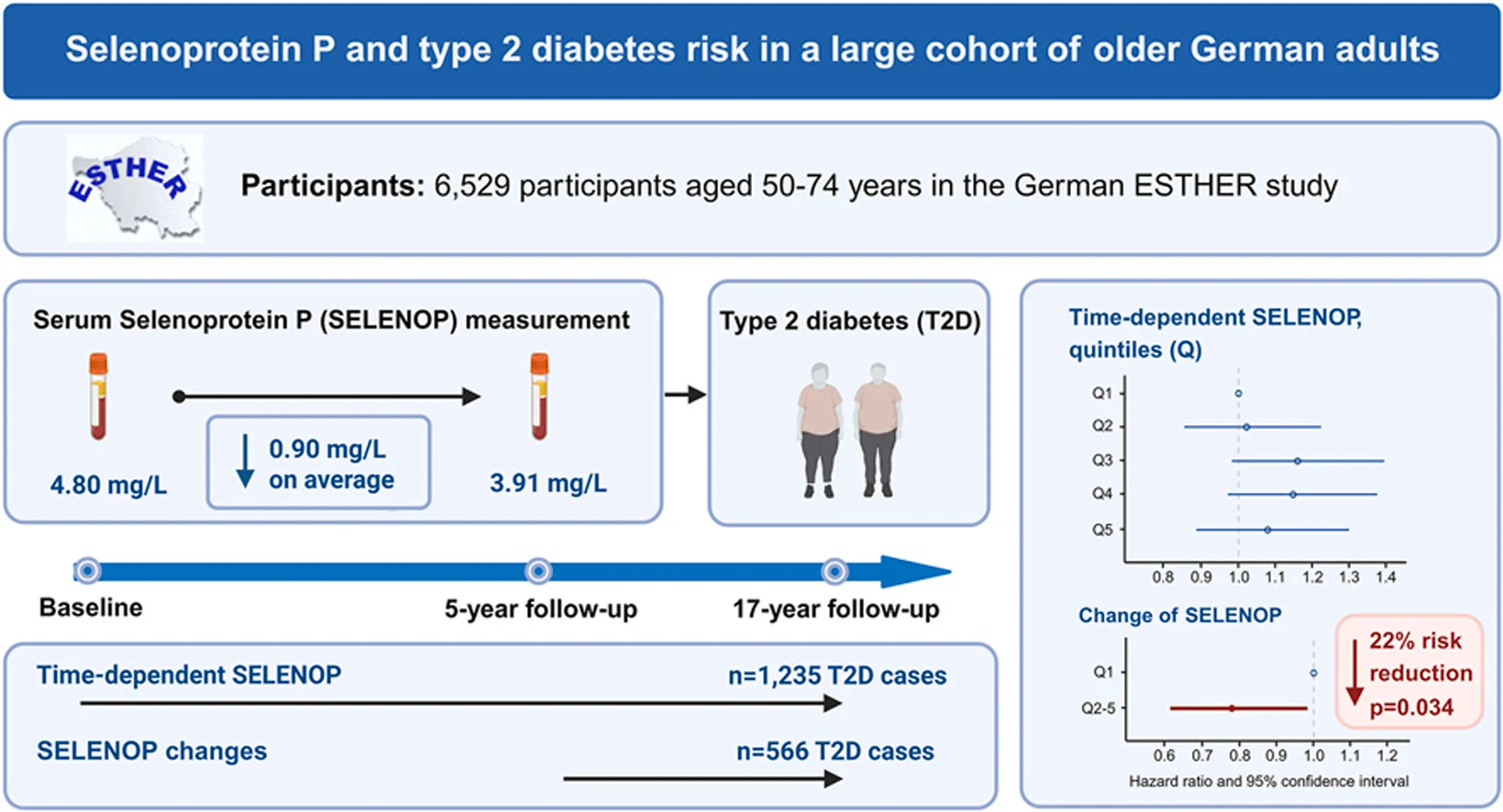
The highest versus lowest blood protein levels had a relative diabetes risk estimate of 1.08, with uncertainty spanning no difference.
Our read
Populations- Studied:
- Cohort study of 6,529 older adults living in Germany, against adults with lowest blood protein levels
- What changed:
- Diabetes risk showed no clear difference between highest and lowest protein levels: hazard ratio 1.08 [0.89-1.30]
- The catch:
- Other health changes could drive both protein declines and diabetes risk
- In the record:
- The 2nd paper on Selenoprotein P with results in people; 17 on record in all.
- Why it’s aging research:
- It bears on staying healthy in midlife and later life.
Editor of record: Boris Djordjevic · AgingResearch.News
Among 6,529 adults aged 50–74 living in Germany, a prospective observational cohort study examined whether selenoprotein P, a blood protein, was linked to later type 2 diabetes. Researchers measured the protein at enrollment and five years later. Over a median 11.5 years, 1,235 participants developed diabetes. Protein levels showed no clear association with diabetes risk in an analysis that accounted for measurements over time.
Levels fell by an average of 0.90 milligrams per liter over five years. The 80% of participants whose levels decreased by less than 1.83 milligrams per liter had a 22% lower relative diabetes risk than the 20% with larger declines.
Why it matters
Selenoprotein P normally declines with age. Tracking that change addresses how age-related shifts in blood chemistry relate to the development of type 2 diabetes.
Caveats
Other health changes could have contributed both to larger protein declines and to diabetes risk. Participants entered the study at ages 50–74 and lived in Germany, limiting how far the findings apply to younger people or other populations.
- Inflammation
- Oxidative stress and ROS signaling
- Selenoprotein P
- Type 2 diabetes
- Type 2 diabetes risk
- Humans
The paper
Selenoprotein P and type 2 diabetes risk in a large cohort of older German adults
German Cancer Research Center
Redox Biology, Oct 29, 2026, Open access

Comments
Be the first to comment.