miRNA

Papers on miRNA

1,552 papers46 new in 30 days

Thursday, November 26

Wednesday, November 25

npj Aging

Vesicles from mutant bacteria extend lifespan in worms

A short RNA carried by the vesicles increased worm longevity by 32.8% by directly reducing the activity of a target gene.A short RNA carried by the vesicles increased worm longevity by 32.8% by directly reducing the activity of a target gene.
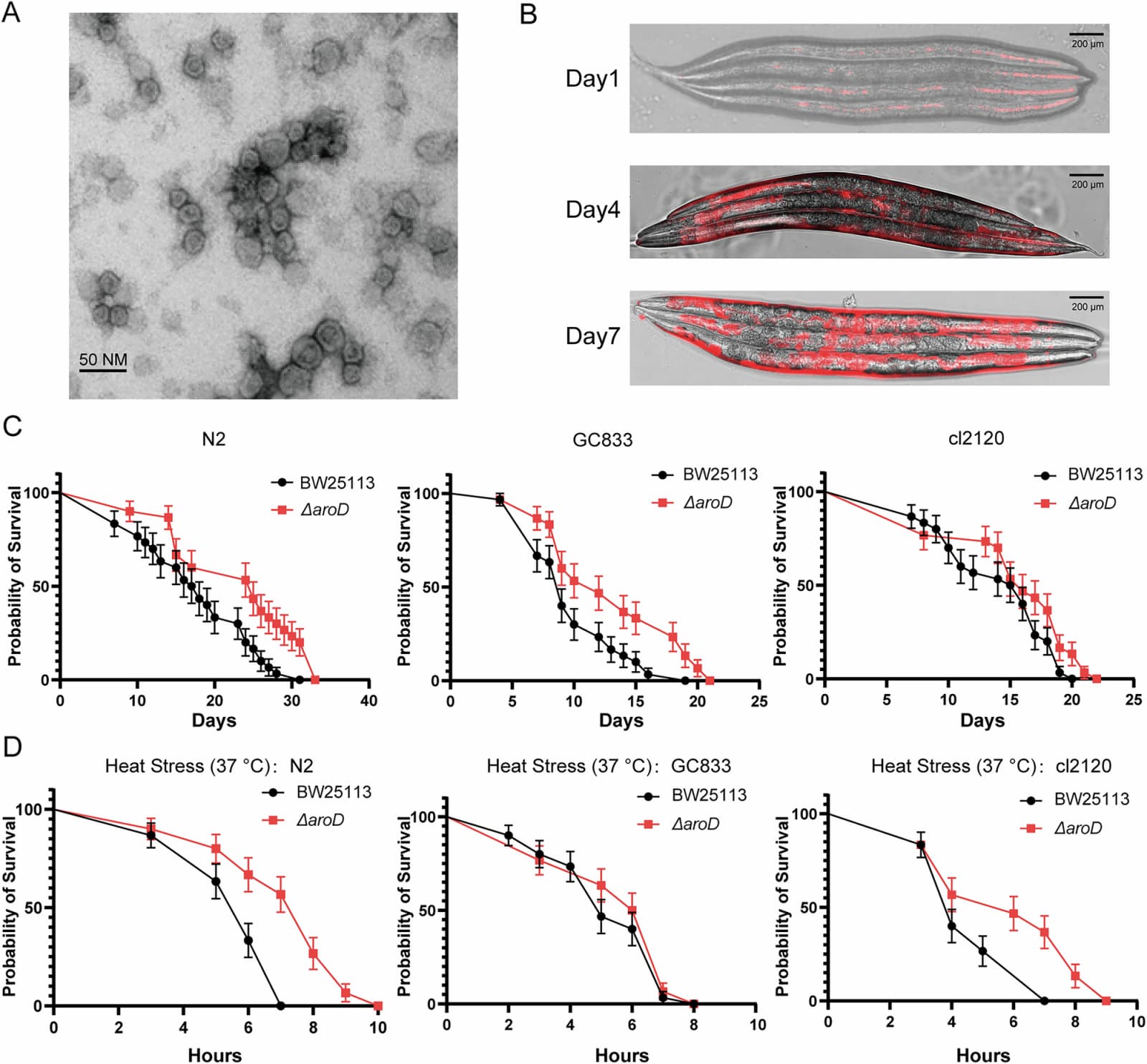
MDVs from ΔaroD mutant E. coli significantly prolonged the lifespan of C. elegans.
Worm studyInterventions

Tuesday, November 24

Monday, November 23

Friday, November 20

Thursday, November 19

Wednesday, November 18

Monday, November 16

Journal of Nanobiotechnology

Young-donor cell packages better eased osteoarthritis in mice

An experiment in male mice with surgically induced disease compared packages released by human joint-lining stem cells from young and aged donors.An experiment in male mice with surgically induced disease compared packages released by human joint-lining stem cells from young and aged donors.

Figure from Journal of Nanobiotechnology
Mouse studyOsteoarthritis

Saturday, November 14

Friday, November 13

Wednesday, November 11

American Journal of Respiratory Cell and Molecular Biology

Particles shed by cells alter lung vessels in newborn rats

In animal experiments, particles from senescent lung vessel cells—cells that had stopped dividing—induced high blood pressure in newborn rats’ lungs.In animal experiments, particles from senescent lung vessel cells—cells that had stopped dividing—induced high blood pressure in newborn rats’ lungs.

Lung artery cross-sections show an open vessel beside a thickened, narrowed vessel, with enlarged cells, scattered vesicles, and a small rat.
Rat studyLung

Tuesday, November 10

Monday, November 9

bioRxiv

Exercise data from humans, mice and rats get a common scale

A computational reanalysis standardized 1,037 exercise-versus-control comparisons from 448 independent study clusters, covering 20 tissue classes and seven kinds of…A computational reanalysis standardized 1,037 exercise-versus-control comparisons from 448 independent study clusters, covering 20 tissue classes and seven kinds of molecular data.

Muscle tissue in cross-section contains packed fibers and molecular shapes, with running and resting human figures and small laboratory mice below.
Preprint: computational studyExercise
Circulation Research

Particles from exercised muscle reduced heart injury in mice

Mouse experiments tracked tiny packages released by skeletal muscle after four weeks of exercise and tested their role in limiting heart damage.Mouse experiments tracked tiny packages released by skeletal muscle after four weeks of exercise and tested their role in limiting heart damage.

Heart muscle shows broken gray fibers beside intact dark blue-green fibers with folded mitochondria, near tiny vesicles, skeletal muscle, and a running mouse.
Mouse studyExercise

Sunday, November 8

Saturday, November 7

AHA Scientific Sessions 2026 Abstract

Gene therapy extended life in mice with inherited heart disease

Among male mice, 69% given gene therapy were alive at 270 days, while controls had a median survival of 197 days.Among male mice, 69% given gene therapy were alive at 270 days, while controls had a median survival of 197 days.

Heart cross-sections beside mice contrast thick dark blue-green walls and broad muscle fibers with thin gray walls and narrower fibers.
Mouse studyInterventions

Friday, November 6

Aging Cell

Immune-cell packages impair energy production in lab-grown cells

Experiments in lab-grown ovarian cells found that packages from dying immune cells disrupted energy production; inhibiting a small RNA molecule eased the effects.Experiments in lab-grown ovarian cells found that packages from dying immune cells disrupted energy production; inhibiting a small RNA molecule eased the effects.

Single‐cell analysis reveals enhanced pyroptosis of macrophages in aged ovaries and identifies miR‐103a‐3p‐enriched extracellular vesicles.
Human cell studyBlood and immune system