Exercise data from humans, mice and rats get a common scale
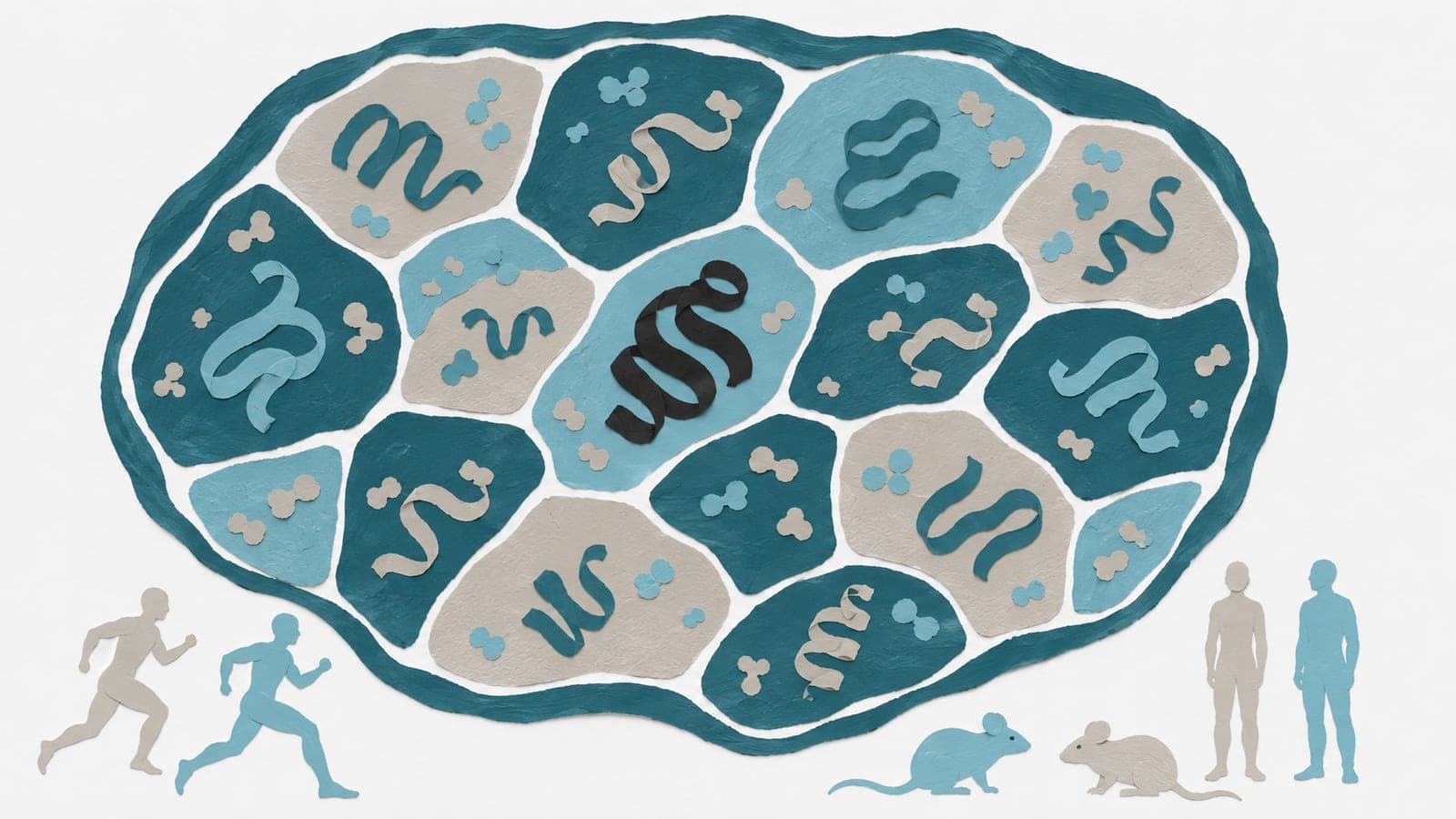
A computational reanalysis standardized 1,037 exercise-versus-control comparisons from 448 independent study clusters, covering 20 tissue classes and seven kinds of molecular data.
Our read
Interventions- Studied:
- Preprint: computational study of humans, mice and rats
- What changed:
- Molecular exercise results were standardized across 1,037 exercise-versus-control comparisons
- The catch:
- Exercise responses were measured at different sampling times across studies
Editor of record: Boris Djordjevic · AgingResearch.News
Humans, mice and rats were represented in a computational reanalysis of public exercise studies that put their molecular results on a common scale. The researchers defined exercise-versus-control comparisons using information about individual samples. The dataset included measurements of gene activity, proteins and small molecules.
The team also pooled results within 88 groups defined by tissue, exercise approach and type of molecular data. Each pooled analysis covered features measured in at least three independent studies. The researchers graded evidence using criteria set in advance and tested replication in two reference datasets held back for that purpose. They also included curation records, analysis code and a searchable website.
Why it matters
For research on exercise and healthy aging, the resource offers a common basis for looking up molecules, comparing evidence and planning studies.
Caveats
The pooled evidence came from studies that differed in species, tissue, exercise protocol and sampling time. The work is a preprint and has not been peer-reviewed.
Where the evidence stands
Exercise
- 1,412 independent labs in 89 countries
- 784 findings against
- 275 trials, 20 with no results posted
- Funders: National Institutes of Health and others
- 371 of 7,836 findings with company ties
Exercise is part of Bryan Johnson's Blueprint
The paper
Beijing Sport University
bioRxiv, Nov 9, 2026, Open access, CC BY, Preprint, not yet peer-reviewed

Comments
Be the first to comment.