Interferon-gamma

Papers on interferon-gamma

198 papers10 new in 30 days

Friday, November 20

Wednesday, November 18

Friday, November 13

bioRxiv

Bile acid reduced bone loss in mice with ovaries removed

In a 45-day experiment, deoxycholic acid improved bone structure in mice whose ovaries had been removed to model bone loss after menopause.In a 45-day experiment, deoxycholic acid improved bone structure in mice whose ovaries had been removed to model bone loss after menopause.

A sturdy dark blue-green bone cross-section with dense struts and small cells sits beside a fragile gray bone with broken struts and a small mouse.
Preprint: mouse studyBone loss

Monday, November 9

Immunity & Ageing

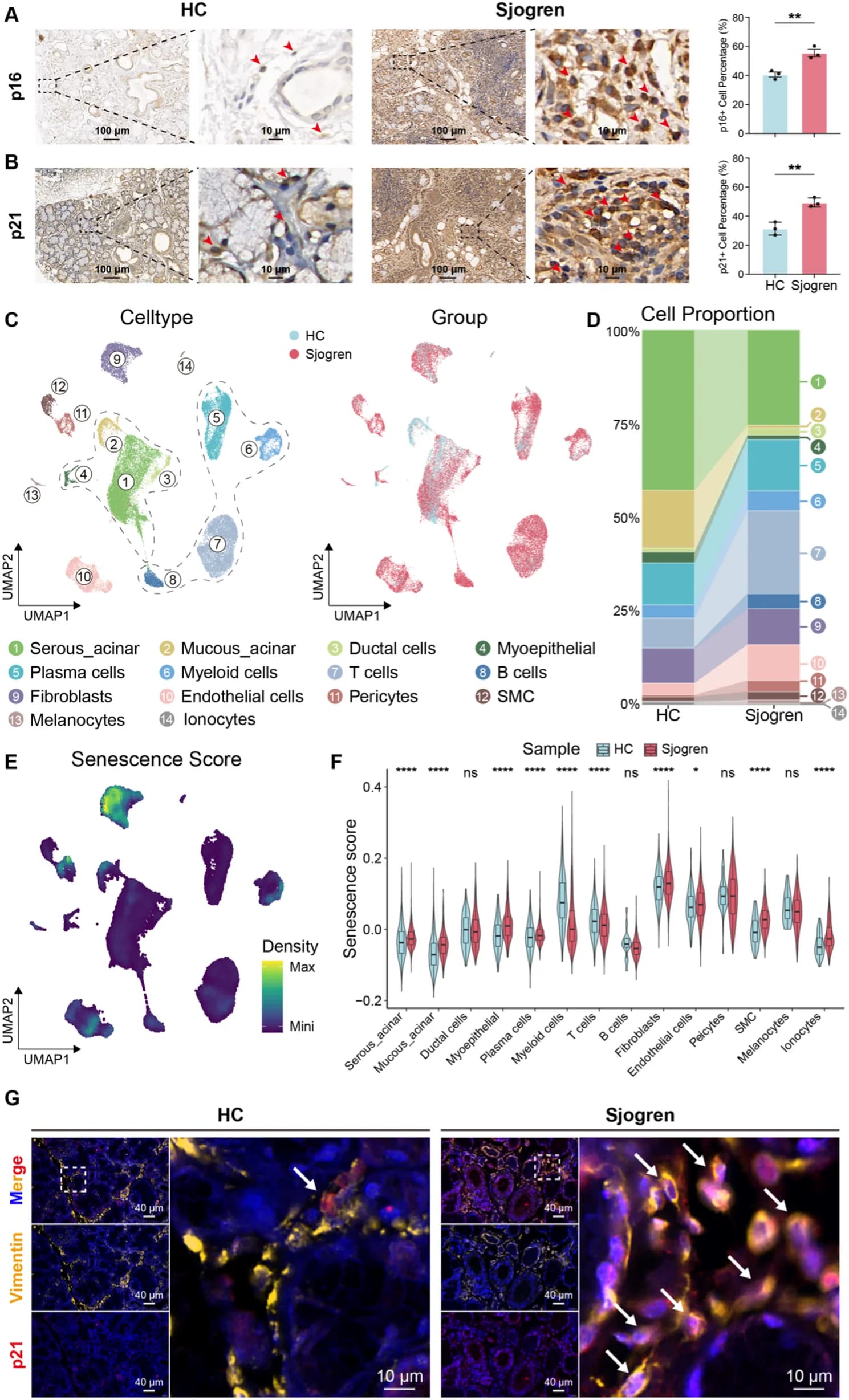
Drug pair restores saliva flow in mice modeling Sjögren’s disease

An experiment with six female mice per group tested dasatinib and quercetin, which reduced immune-cell buildup in salivary glands.An experiment with six female mice per group tested dasatinib and quercetin, which reduced immune-cell buildup in salivary glands.

ScRNA-seq analysis revealed fibroblast senescence in pSjD salivary glands.
Mouse studyInterventions

Saturday, November 7

AHA Scientific Sessions 2026 Abstract

Mouse model implicates vessel lining in inherited brain disease

Experiments compared mutant and control mice at 2 and 24 months, finding early changes in cells lining brain blood vessels.Experiments compared mutant and control mice at 2 and 24 months, finding early changes in cells lining brain blood vessels.

Brain blood vessels beside mice contrast a twisted, narrowed vessel with deposits and clustered inflammatory cells against a smooth, open vessel.
Mouse studyMechanisms

Sunday, November 1

Friday, October 30

Wednesday, October 28

bioRxiv

Immune signals linked to physical frailty in people

Blood analyses in two aging cohorts of 22 and 33 people linked physical frailty to immune signals involved in cell movement and inflammation.Blood analyses in two aging cohorts of 22 and 33 people linked physical frailty to immune signals involved in cell movement and inflammation.

Study design and derivation of age-adjusted TUG residuals.
Preprint: cohort · 55 peopleImmune response

Tuesday, October 27

Sunday, October 25

Friday, October 23

Science Advances

Respiratory syncytial virus vaccine prompted lasting T cell responses

Helper T cell responses persisted for 24 months after vaccination, with comparable responses in younger and older adults.Helper T cell responses persisted for 24 months after vaccination, with comparable responses in younger and older adults.

Study design. Created in BioRender.
Randomized trialLung

Tuesday, September 29

Journal of Molecular and Cellular Cardiology

Persistent IFN-γ links to worse cardiac remodeling in aged mice

In 2- and 18-month-old mice of both sexes, elevated interferon-gamma showed little acute impact after myocardial infarction but tracked with aggravated chronic cardiac…In 2- and 18-month-old mice of both sexes, elevated interferon-gamma showed little acute impact after myocardial infarction but tracked with aggravated chronic cardiac remodeling.

Figure from Journal of Molecular and Cellular Cardiology
Experiments in miceMechanisms

Sunday, September 20

Wednesday, September 9

The Journal of Investigative Dermatology

Antibody buildup may contribute to skin aging in mice

An experiment in young mice found that giving an antibody encouraged immune cells to enter the skin.An experiment in young mice found that giving an antibody encouraged immune cells to enter the skin.

Figure from The Journal of Investigative Dermatology
Mouse studySkin

Monday, September 7

Friday, August 28

Wednesday, August 5

Friday, July 24

Saturday, July 18

Thursday, July 16

Nature Communications

Human lung aging linked to shifts in cells and gene activity

An observational analysis of 184 human lung samples linked older age to smaller shares of air-sac renewal cells and altered immune-cell activity.An observational analysis of 184 human lung samples linked older age to smaller shares of air-sac renewal cells and altered immune-cell activity.

Cross-sectional studyLung

Saturday, July 11

Thursday, July 2

Monday, June 15

Thursday, June 11

The American Journal of Pathology

Human gene variant linked to chronic inflammation in older mice

An experiment in 14- to 16-month-old mice linked a human gene variant to weaker repair-related responses two weeks after chemotherapy.An experiment in 14- to 16-month-old mice linked a human gene variant to weaker repair-related responses two weeks after chemotherapy.

Mouse studyInflammation

Wednesday, May 20

Saturday, May 16

Wednesday, April 29

Tuesday, April 28

Monday, April 27

Wednesday, April 8