Persistent IFN-γ links to worse cardiac remodeling in aged mice
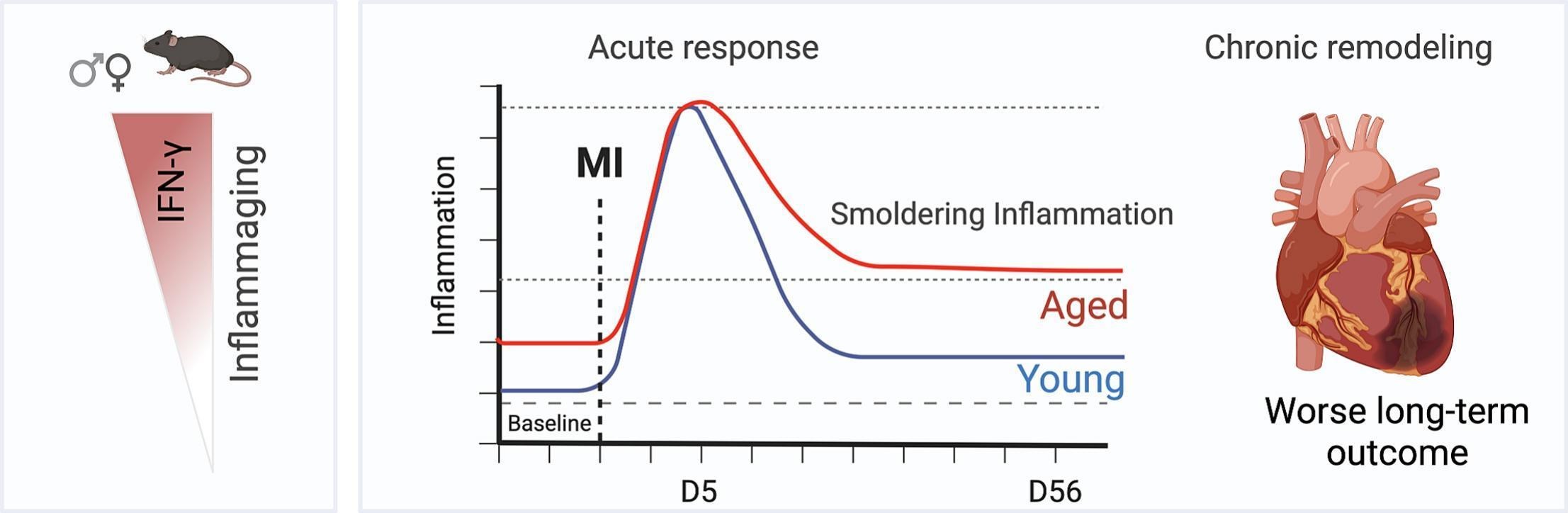
In 2- and 18-month-old mice of both sexes, elevated interferon-gamma showed little acute impact after myocardial infarction but tracked with aggravated chronic cardiac remodeling.
Journal of Molecular and Cellular Cardiology
In 2- and 18-month-old C57BL/6 J mice of both sexes, researchers evaluated inflammatory responses following myocardial infarction using Ifng-YFP reporter mice. The authors also observed a conserved interferon-gamma production signature during physiological aging in both mice and humans. In the aged mice, post-infarction myocardium displayed an increased pro-inflammatory gene expression signature and increased recruitment of interferon-gamma-expressing T cells. While this age-related inflammation had little effect on acute post-infarction responses, a persistent interferon-gamma signature in older animals was associated with an aggravation of chronic adverse cardiac remodeling. The authors suggest age-related smoldering inflammation may fuel ischemic heart failure progression.
Why it matters
The findings indicate that age-associated shifts in adaptive immunity, particularly sustained interferon-gamma activity, may impair long-term tissue repair following ischemic injury. This points to persistent smoldering inflammation as a potential contributor to heart failure in older populations.
Caveats
The cardiac remodeling outcomes were documented in mice, and the connection between persistent interferon-gamma signaling and aggravated remodeling remains an association. In addition, sample sizes and human validation details were not reported in the abstract.
The paper
Immune responses following myocardial infarction in aged mice
Show 6 more authors
Daphne Steder, Panagiota Arampatzi, Thorsten Bischler, Lisa Popiolkowski, Ulrich Hofmann, Stefan Frantz,Universitätsklinikum Würzburg · University of Würzburg
Journal of Molecular and Cellular Cardiology · 28 Sep 2026