Respiratory syncytial virus vaccine prompted lasting T cell responses
Helper T cell responses persisted for 24 months after vaccination, with comparable responses in younger and older adults.
Non-randomized trial
Limit: T cell responses measure immunity, not protection against RSV illness
Edited by Boris Djordjevic · AgingResearch.News
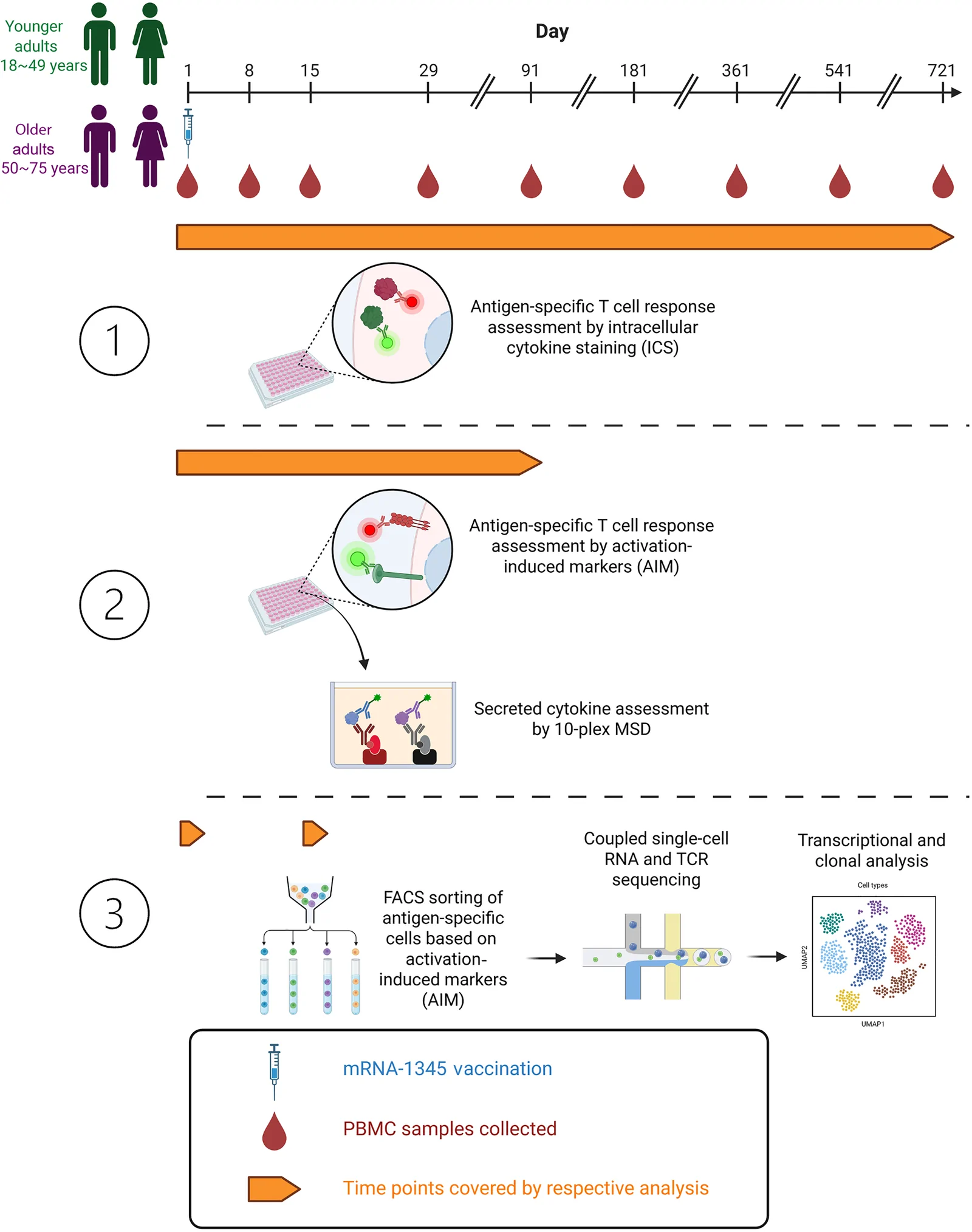
Researchers analyzed immune responses to mRNA-1345, a vaccine against respiratory syncytial virus (RSV), in younger and older adults. They used laboratory tests and analyses of individual cells to assess T cells, immune cells that help fight infections.
Both age groups developed comparable responses from CD4 T cells, which help coordinate immune defenses, and CD8 T cells, which can kill infected cells. CD4 responses persisted for 24 months. Both T cell types showed an increased ability to perform several functions at once, which remained elevated at two years. Analyses of individual cells also found similar patterns of gene activity across the age groups.
Why it matters
T cell function can decline with age, making the durability of vaccine-induced immune responses relevant to efforts to protect older adults from RSV.
Caveats
These immune-response findings do not establish how well the vaccine prevented RSV illness. The abstract did not report participant numbers, exact ages, vaccine dose or adverse events.
The paper
Moderna Therapeutics (United States)
Science Advances, Oct 21, 2026, Open access
